Washington-Slagbaai National Park With Kids: Our Bonaire Park Day Guide
Our day in Washington-Slagbaai National Park was the biggest day of our Bonaire trip. We hiked (almost) to the top of Mt. Brandaris with Jackson, snorkeled two of the park's beaches, and saw wild flamingos on the way out. It covers the whole northwest corner of Bonaire, it's rugged and wild, and it feels completely different from the rest of the island.
It also takes more planning than a typical beach day: the park has strict hours, rough roads, and almost no facilities. Here's everything to know before you go, plus exactly how we spent our park day.
Read More: Bonaire Itinerary: How We Spent 7 Days in Bonaire With Kids
This post contains affiliate links. If you book or buy through them, we may earn a small commission at no extra cost to you. As an Amazon Associate, we earn from qualifying purchases.
Before Your Park Day
What you need for Washington-Slagbaai
STINAPA Nature FeeRequired
Covers park entry and all your snorkeling. Buy it online before you go, and bring an ID for each adult.
High-Clearance RentalYour ride
A pickup, SUV, or Jeep for the rough park roads. Confirm it's allowed in the park when you book.
Chogogo Dive & Beach ResortWhere we stayed
We picked up our rental truck right at the resort.
What Is Washington-Slagbaai National Park?
Washington-Slagbaai covers roughly a fifth of Bonaire, in the island's northwest corner. It was set up in 1969 as the first nature sanctuary in the former Netherlands Antilles, on land that used to be two large plantations. Today it's cactus-covered hills, salt lakes with flamingos, rocky coastline, and some of the best snorkeling on the island. You might also see parrots, iguanas, wild donkeys, and goats along the way.
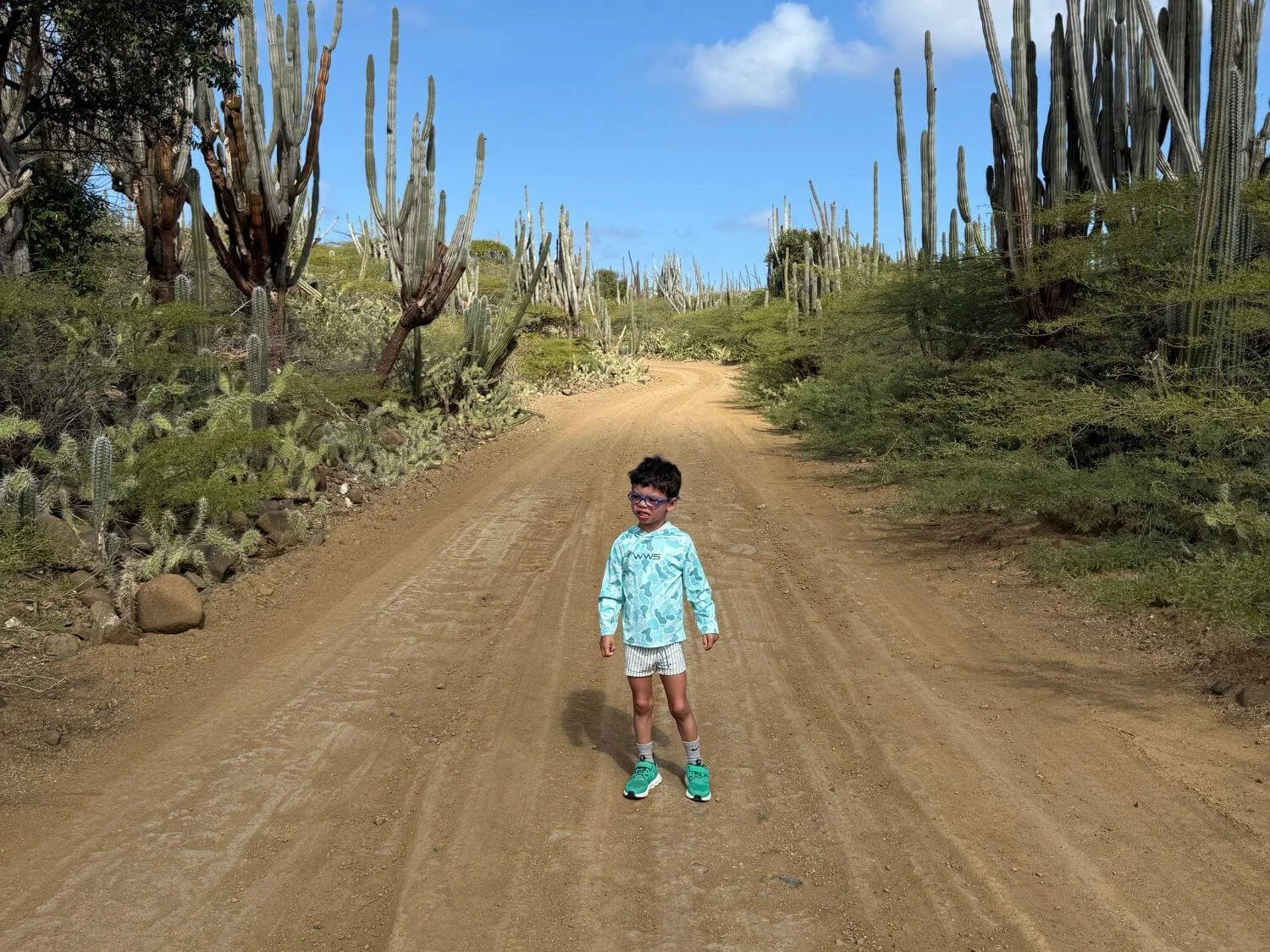
Jackson among the cactus in Washington-Slagbaai National Park.
Before You Go: What to Know
Tickets
There's no separate park ticket. Entry is covered by the STINAPA nature fee, the same one you need to snorkel anywhere on Bonaire, and there's no additional fee at the gate. Kids under 12 are exempt. You'll show your nature fee QR code and an ID at the entrance, so bring both for every adult.
Hours
Open Tuesday through Sunday, 8 a.m. to 5 p.m.
Closed Mondays and public holidays. If you're visiting over the holidays like we did, check the dates before you plan your park day, since Christmas Day and New Year's Day are both public holidays. We went on a Sunday.
Last entry is 2:30 p.m.
Start the Mt. Brandaris hike in the morning. There’s almost no shade, and midday is brutal.
Your vehicle
The roads inside the park are rough, rocky dirt tracks, and they're mostly one-way, so once you start a route, you finish it. STINAPA officially recommends a high-clearance vehicle like a pickup, SUV, or Jeep, and some guides say you need four-wheel drive for the long route. Our advice: rent a 4x4 if you can, and plan to drive slowly the whole way. Scooters, motorcycles, and quads aren't allowed. Fill up on gas before you go, since there are no gas stations inside.
Read More: Do You Need a Rental Car in Bonaire?
Need a vehicle that's allowed in the park? Compare Bonaire rental cars here.
Check your rental agreement before your park day. Rules vary by company: some only allow their pickup trucks or 4x4s in Washington-Slagbaai, and small cars are often not allowed on unpaved roads at all. If you take a vehicle into the park against your agreement, your insurance may not cover it, and you could be charged for any damage (flat tires are the most common problem). Some companies also make you pay for road service inside the park even with an allowed vehicle. When you book, tell the company you're going to the park and ask two things: is this vehicle allowed in Washington-Slagbaai, and is it insured on the park roads?
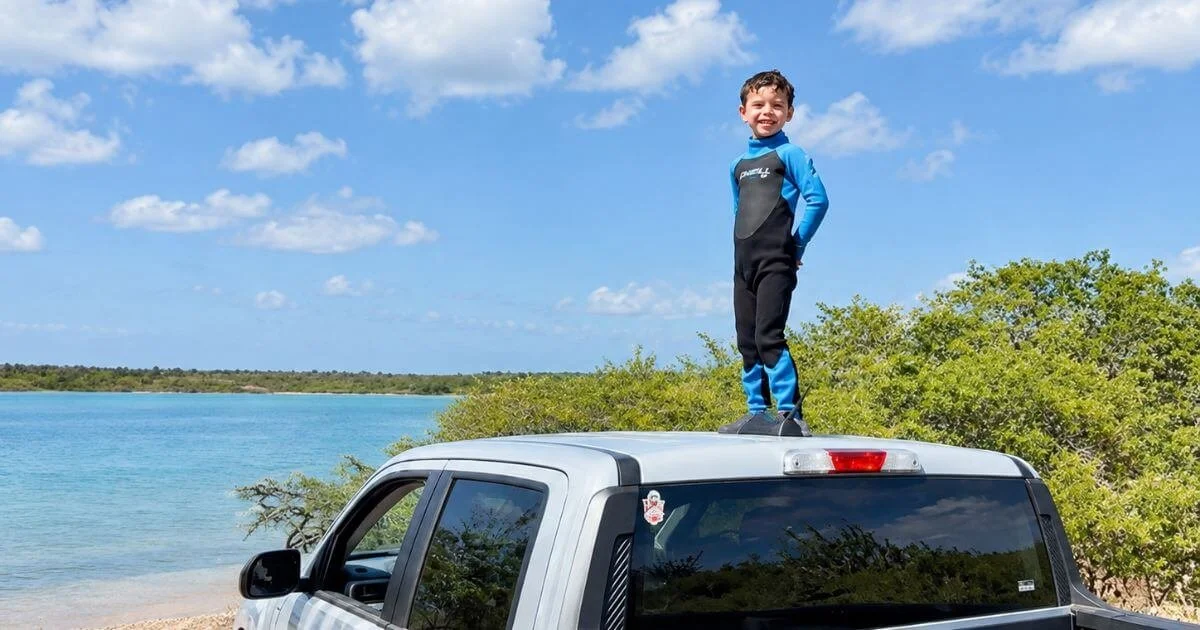
Jackson getting a better vantage point to check out the flamingos.
Facilities (or lack of them)
There are restrooms at the visitor center at the entrance and at Boka Slagbaai, and that's it. There are no restaurants and no drinking water inside the park. Use the restroom before you head out, and pack more water and snacks than you think you'll need.
A few rules
No scuba diving inside the park. Snorkeling and swimming are fine.
No drones.
STINAPA asks that you don't swim alone, since the park is so remote.
Short Route vs. Long Route
There are two driving routes through the park, and both are marked from the entrance.
The short route cuts through the middle of the park and takes about 1.5 hours of driving. It's the only way to reach the Mt. Brandaris trailhead.
The long route follows the wild windward coast past Boka Kokolishi and the Seru Bentana lighthouse. It takes about 2.5 hours of driving.
Both routes join up and continue down the west coast past the park's best snorkel beaches, including Playa Funchi, Wayaka, and Boka Slagbaai. Add time for every stop, hike, and snorkel. We took the short route, since it's the only way to reach the Mt. Brandaris trailhead, and it still got us to Wayaka II and Playa Funchi for snorkeling afterward.
Start at the Visitor Center
The visitor center at the entrance has a small museum about the park's plantation history and wildlife, including a Bryde's whale skeleton put together by local high school students. For little kids, there's a short nature trail with a swing set, and there are picnic tables if you want breakfast before you head in.
Hiking Mt. Brandaris With a Kid
Mt. Brandaris is the highest point on Bonaire, at 241 meters (about 790 feet). It's more of a big hill than a mountain, but the hike is a real one: rocky the whole way, with a steep scramble near the top. Plan on 2 to 3 hours round trip, longer with little legs. On a clear day, you can see across to Curaçao from the summit.
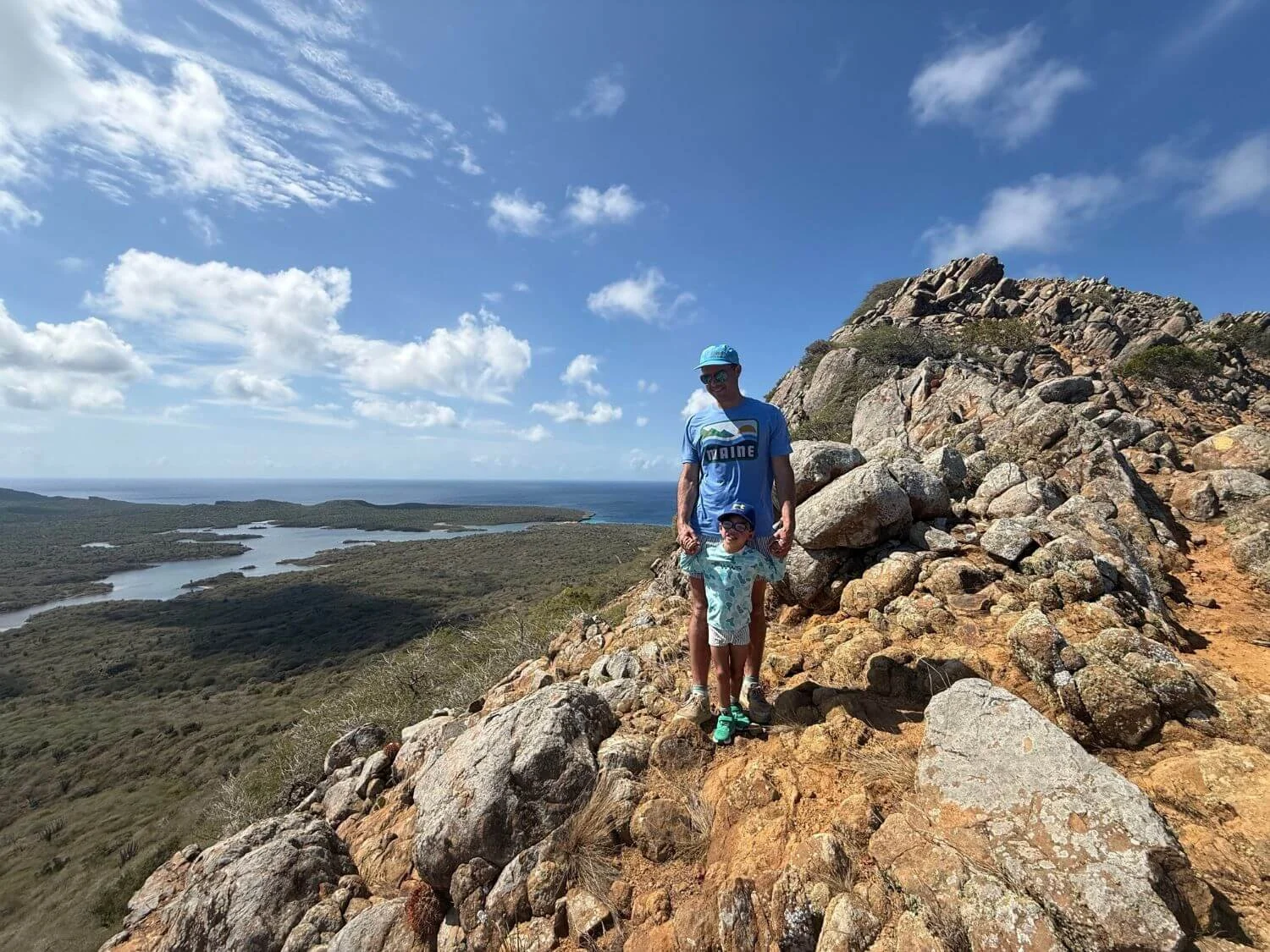
Matt and Jackson (almost) to the top!
The first part of the trail was pretty manageable. Closer to the top, it turns to rock, and there were spots where we had to actually climb, using our hands as well as our feet. As the trail got more technical and the drop-offs got more real, I got nervous with Jackson. We decided not to push on to what we assumed was the summit, but we think we got pretty close, and the views were already amazing.
That's a completely fine place to stop. Bonaire.com notes that you can stop at the second-to-last plateau if you're unsure about the final scramble, and the view from there is still excellent. They also warn that loose rock can give way on the last section. We agree with plenty of other hikers: coming back down the rocky section was harder than going up.
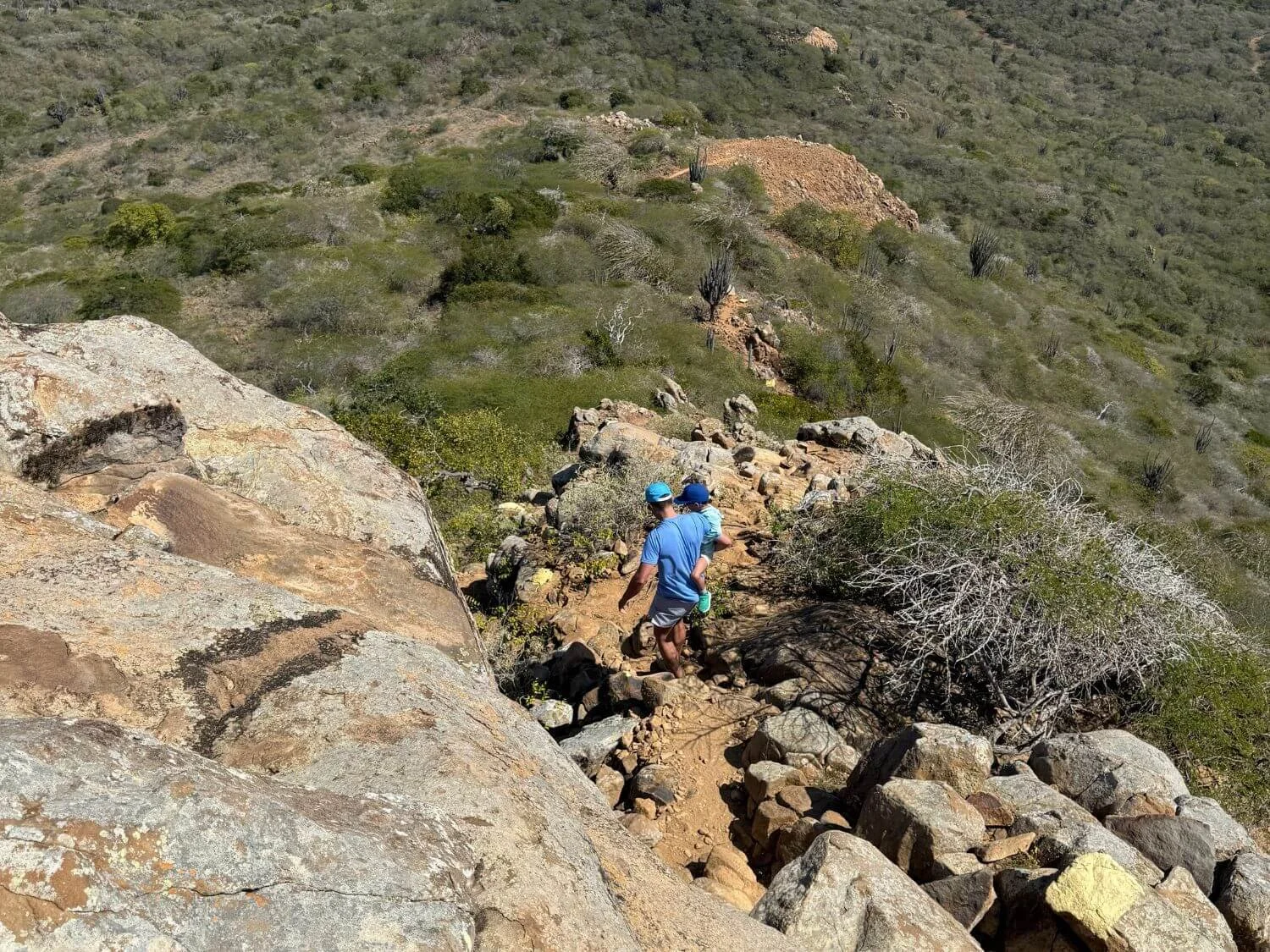
Matt and Jackson hiking back down Mt. Brandaris.
Tips for hiking Brandaris with kids:
Start early. There’s almost no shade, and the trail gets hot fast.
Bring lots of water. It was hot, and there’s nowhere to buy water once you’re inside the park.
Wear real shoes. Closed-toe shoes with grip, not water shoes. There are cacti everywhere.
Keep your hands free. Carry everything in a backpack, since you'll need your hands on the rocky section.
We used this packable daypack
Keep kids within arm's reach once the trail turns to rock, and test each handhold and foothold before trusting it.
Decide your turnaround point ahead of time. The top isn't the only goal, and turning back early is always the right call if it starts to feel dicey.
Skip it after rain, since the rocks get slippery.
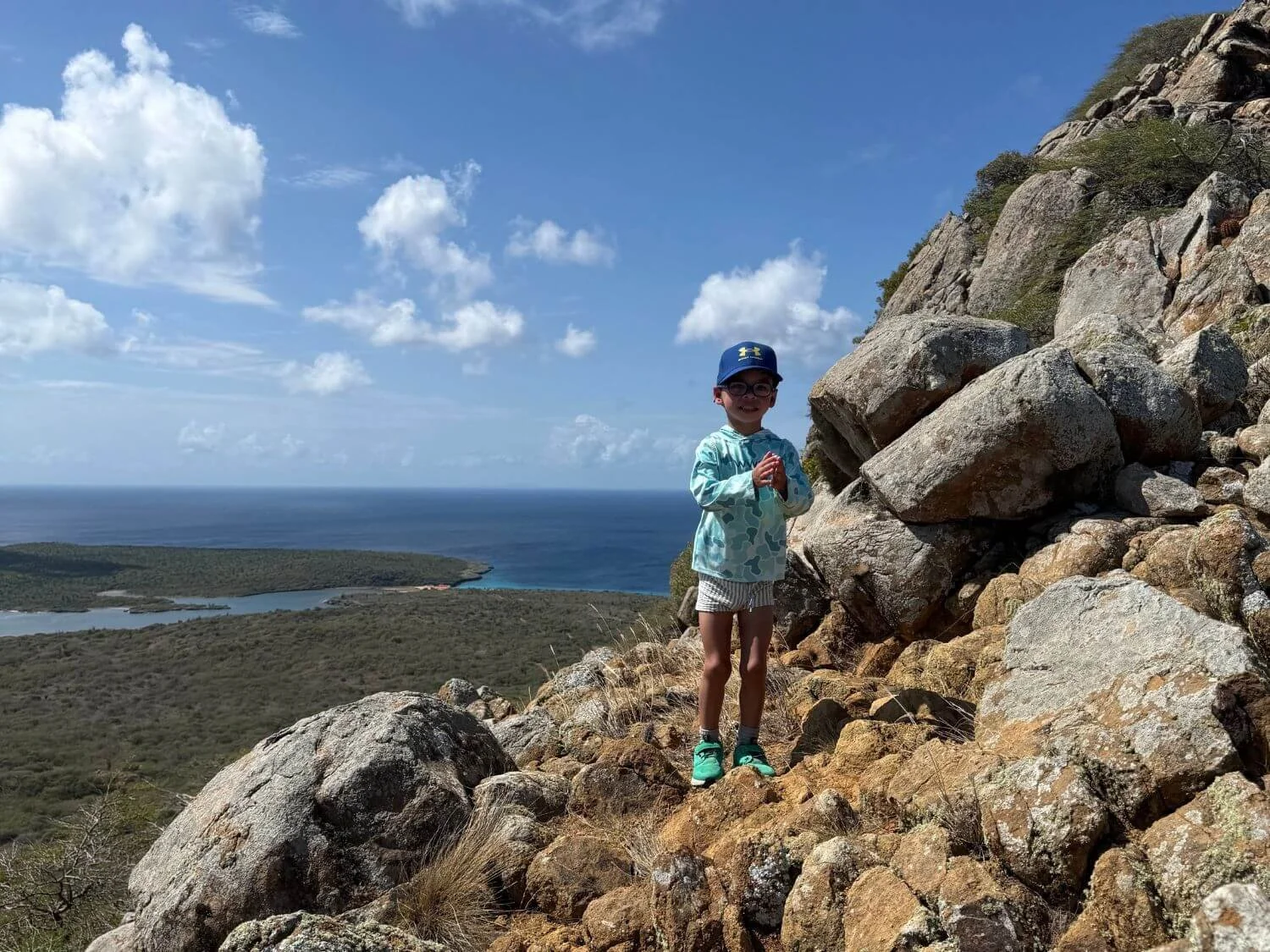
Almost to the top of Mt. Brandaris, the highest point on Bonaire.
Snorkeling Inside the Park
After the hike, we cooled off with snorkeling at two of the park's beaches.
The snorkeling inside the park was very pretty. Honestly, we didn't see more variety of fish and coral than at the spots outside the park, but the beaches where you get in the water are beautiful, and the two we visited each have their own personality.
Wayaka II: best for snorkeling and swimming. A small white-sand beach tucked into the rocky coast, with an easy entry into clear water and colorful reef. Look for big parrotfish. It's one of the most popular snorkel spots in the park, and the beach is tiny, so it can feel busy.
Playa Funchi: best for a picnic break. This is the one set up for picnics, with shaded palapas and picnic tables, and it was full of people eating and hanging out. The entry is rockier, so water shoes help. The iguanas here are very bold (don't be surprised if one climbs onto your table looking for food, and please don't feed them), and there's a saliña right behind the beach where you can often spot flamingos.
Here are the kids’ water shoes and adult water shoes we used.
Our tip: snorkel Wayaka II first, then head to Playa Funchi to eat and dry off.
Only snorkel in the park when the water is calm, since conditions can change quickly this far north.
Jackson wore his usual setup: a wetsuit, a swim vest, and his bright pink swim buoy so we could keep him close. Here's exactly what he used:
Shop on Amazon
Jackson's snorkel gear
As an Amazon Associate, we earn from qualifying purchases.
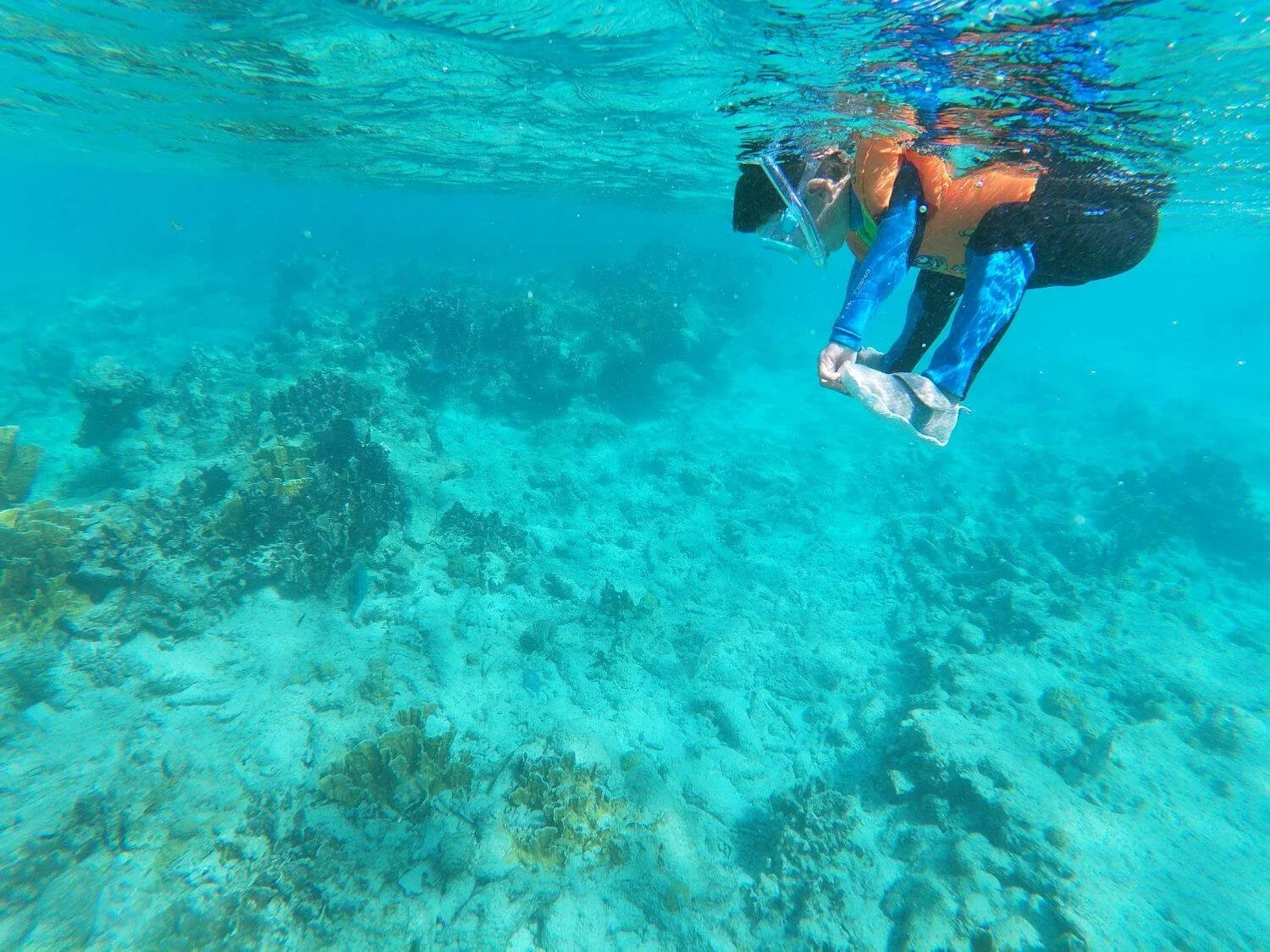
Snorkeling inside the park.
Other Stops Worth Making
Boka Slagbaai: restored yellow plantation buildings, a calm bay for swimming and snorkeling, restrooms, and picnic tables. It makes a good lunch stop if you pack a picnic.
The saliñas (salt lakes): watch for flamingos wading in the shallow lakes around the park.
Long route extras: crashing waves at Boka Kokolishi and the Seru Bentana lighthouse on the north coast.
Flamingos at Gotomeer
On our way out, we stopped at Gotomeer, the big salt lake along the road near the park, to see wild flamingos.
Where to Eat on Your Park Day
There's no food inside the park, so plan to pack snacks and eat before or after. After our park day, we stopped in Rincon, Bonaire's oldest village, which sits on the road to the park.
Posada Para Mira: local Bonairean food on the edge of Rincon. The day we went, they had a holiday buffet with dishes marked gluten free, which made eating easy for us. There's also a swing set that Jackson loved. It's casual and fun, and a great stop with kids.
John's Homemade Ice Cream: right on the road to the park, and exactly what you want after a hot hike. It was closed the day we went, so check the hours before you plan around it.
Pizza Mare: we had dinner back near our resort in Kralendijk. They have gluten-free options.
Our Park Day, Start to Finish
Morning: drive to the park, check in at the visitor center, take the short route, and hike Mt. Brandaris
Midday: snorkel at Wayaka II and Playa Funchi
Afternoon: flamingos at Gotomeer and lunch at Posada Para Mira in Rincon
Evening: dinner at Pizza Mare
What to Pack for Washington-Slagbaai
Nature fee QR codes and an ID for every adult (you'll need both at the entrance)
A full tank of gas
Plenty of water and snacks (or a picnic lunch)
Hiking shoes, plus water shoes for snorkeling
Snorkel gear, towels, and a swim buoy for kids
Mineral sunscreen (no oxybenzone or octinoxate), hats, and sunglasses
A downloaded offline map in case you lose signal, or a paper map from the visitor center
Shop on Amazon
Our park day gear
Sun protection
Hats and sunglasses
For the water
As an Amazon Associate, we earn from qualifying purchases.
Is Washington-Slagbaai Worth It With Kids?
Absolutely, if your kids are up for a long, active day. It was our biggest day of the trip, and one of our favorites. Start early, pack more water than you think, and don't try to see everything. Pick a hike or a couple of snorkel spots and enjoy them.
More From Bonaire
Our Bonaire guides
Start here
Plan your trip
On the island
Free for the Crew
Plan your own Bonaire week
Our free Trip Planning Command Center keeps your days, bookings, and packing in one place, so your week in the water is the easy part.
Get the Free Trip Planner →Free. Sent straight to your inbox.