This post contains affiliate links. If you book or buy through them, we may earn a small commission at no extra cost to you. As an Amazon Associate, we earn from qualifying purchases.
Bonaire is built for snorkeling. The reef starts right off the shore almost everywhere on the west coast, so instead of booking boat trips every day, you drive to a yellow-painted rock, park, and walk into the water. We spent most of our week in Bonaire doing exactly that with Jackson, who snorkeled every single stop in his wetsuit and swim vest, with a bright pink buoy tied to him so we could always spot him.
Here are the 10 spots we snorkeled, grouped by area so you can plan your days around them. For each one: where it is, what the entry is like, what you're likely to see, and how it works with a kid.
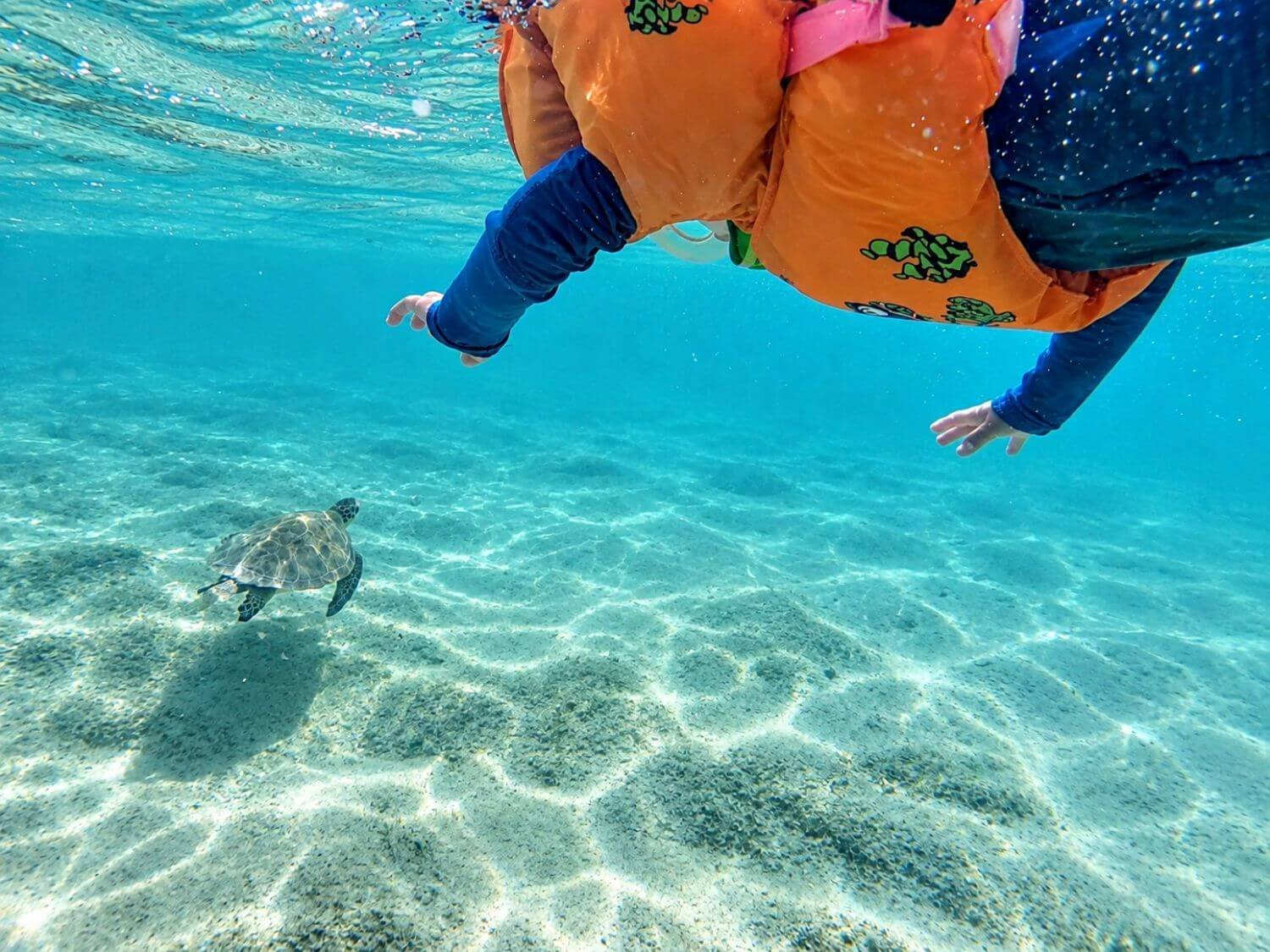
Jackson snorkeling with a turtle near Salt Pier.
At a Glance
The 10 spots we snorkeled
Gold = our favorites with a kid. Grouped by area so you can plan your days.
Klein BonaireBy boat · jump in from the boat
Drift snorkelSalt PierSouth · rocky entry
Turtles!Pink BeachSouth · sandy entry
Easiest entryAngel CitySouth · gravel entry
Double reefTori's ReefSouth · flat rocks
EelsBari ReefKralendijk · ramp entry
Most fish speciesAndrea I & IINorth · rocky entry
Calm + shallow1000 StepsNorth · 67 steps down
TurtlesWayaka IINational park · sand
Soft sandPlaya FunchiNational park · rocky
Calm days onlyHow Shore Snorkeling Works in Bonaire
You'll need a car. Shore snorkeling means driving from site to site, so a rental car or truck is a must. We rented a truck, which made hauling wet gear easy.
Look for the yellow rocks. Snorkel and dive sites along the coast road are marked with yellow-painted stones that show the site name.
Get your STINAPA nature tag first. You need it to snorkel anywhere in the marine park, and it also covers Washington-Slagbaai National Park.
Wear water shoes or fin booties. Many entries are over rock, coral rubble or ironshore. Only a few are soft sand.
Leave nothing in the car. Shore sites are remote, so lock up and take your valuables, or leave them at the hotel.
Check the water before you go in. If it looks rough, skip it and try another site. There are dozens.
Read More: Is Bonaire Safe for Families?
Snorkeling by Boat
1. Klein Bonaire
Klein Bonaire is the small, uninhabited island about half a mile off the Kralendijk waterfront. It's a protected nature reserve and one of Bonaire's most important sea turtle nesting spots, and its reefs are some of the healthiest around. There are no restaurants, bathrooms or real shade on the island, so most people go with a snorkel tour or a water taxi.
How we did it: we started our week with a Woodwind trip, three drift snorkels with a guide in each group. On a drift snorkel, you're dropped at one spot and float along with the current while the boat meets you farther down, so the current does most of the work. That makes it a great option for kids who tire out from swimming. We saw turtles and a huge variety of fish.
With kids: once you're in the water, the drift does most of the work, and having a guide along is a nice way to start the week. The catch is getting in. There's no walking in from the shore here, so your kid needs to be comfortable jumping off the boat into deep water. If your child is still getting used to their gear, practice at an easy shore spot first, like Pink Beach.
Read More: Bonaire Itinerary: How We Spent 7 Days in Bonaire With Kids
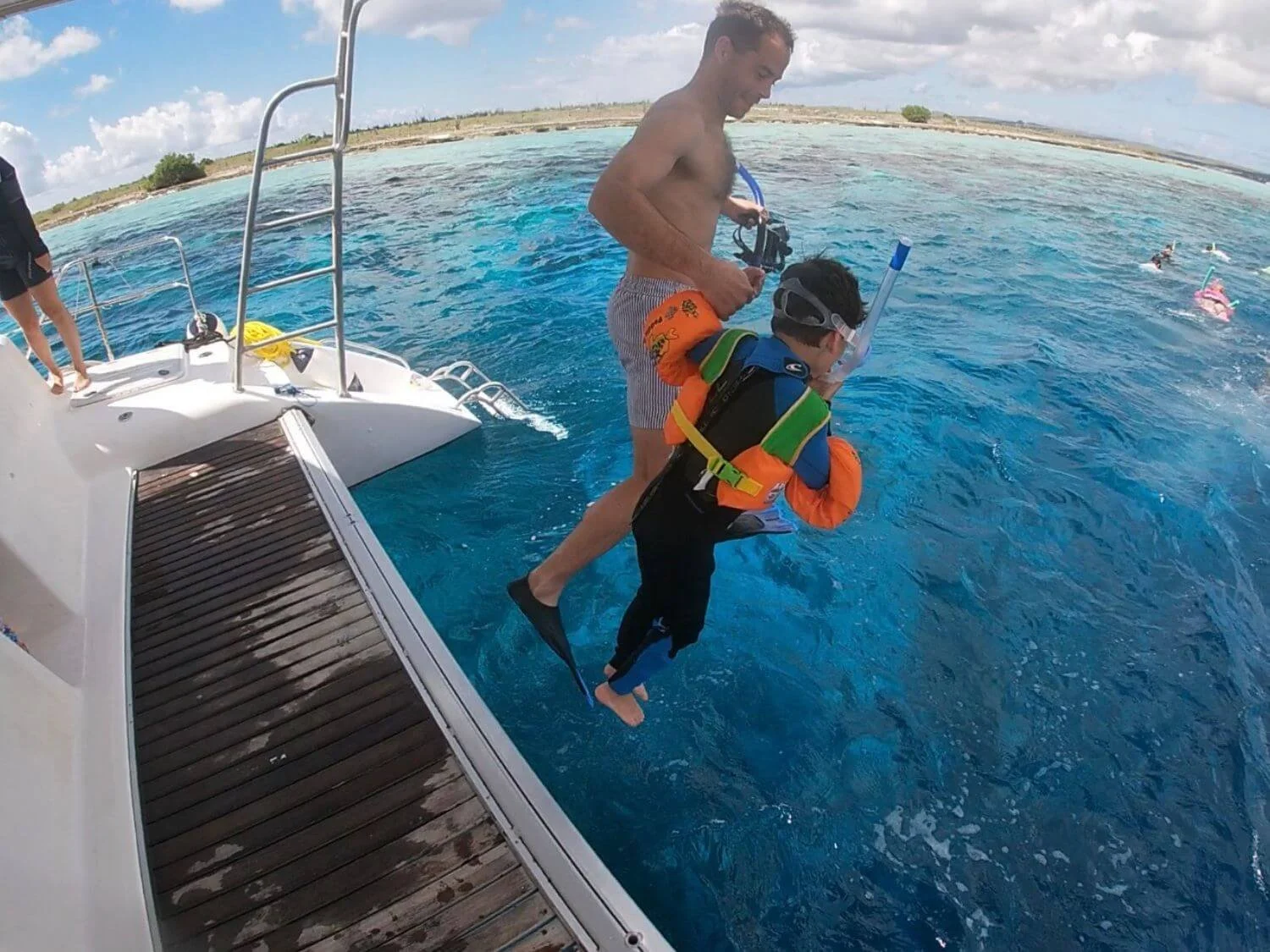
Matt and Jackson jumping off the Woodwind snorkeling boat at Klein Bonaire.
South of Kralendijk
These four are all along the coast road south of town, so they pair well in one day. We did Salt Pier, Pink Beach and Angel City together, then looped around the south end.
2. Salt Pier
Salt Pier is the giant industrial pier used to load salt onto ships, and the pilings underneath are covered in coral and sponges. Fish school in the shade under the pier, and the sandy and seagrass areas around it are known for turtles. This was one of our favorite spots of the whole trip. We saw so many fish and SO many turtles here.
Entry: rocky, so wear water shoes. The easiest way in is usually through the sandier break on the right side. You walk over hard rock bottom for a bit before it's deep enough to float.
With kids: the shallow area near shore works well with a vest and buoy, and the turtles made it a highlight. The water gets deeper around the pilings, so keep little ones close.
Know before you go: snorkeling isn't allowed when a salt ship is docked at the pier, so look before you get in. Follow any posted signs, and expect some wind, chop and current on rougher days.
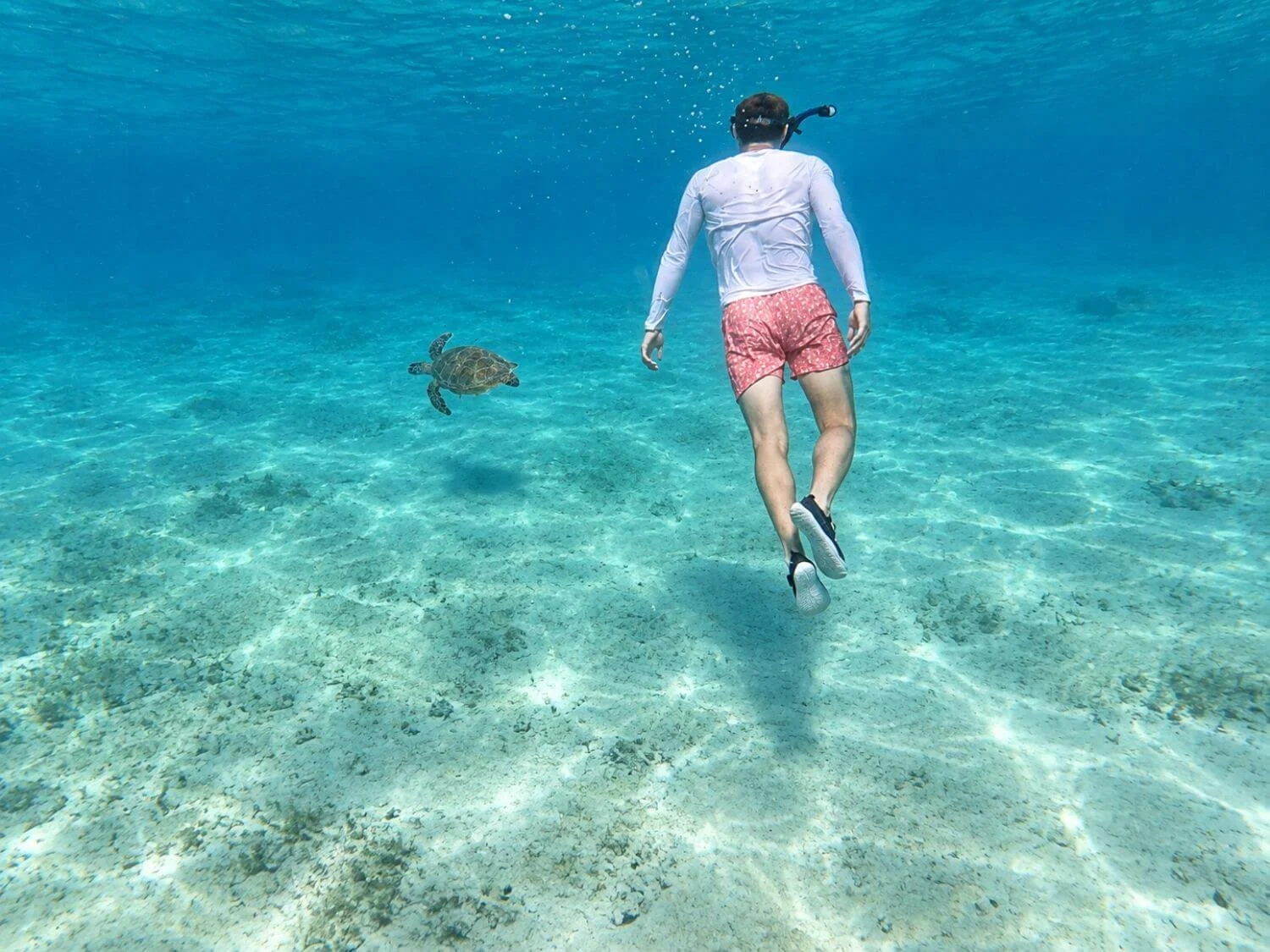
Matt swimming with a turtle at Salt Pier.
3. Pink Beach
Pink Beach is one of the few real sandy beaches on the south end. It got its name from a pinkish tint in the sand, which is pretty faint these days. The snorkeling area is shallow, with the reef dropping off a little farther out. We backed our truck right up to the beach and used the tailgate as our home base for gear and snacks between swims.
Entry: sandy and gradual, which is rare for Bonaire.
With kids: one of the easiest entries on the island. Kids can walk in instead of climbing over rocks, which makes it a good warm-up spot. Watch for sea urchins in the shallows.
Know before you go: there's very little shade, so bring water and sun protection.
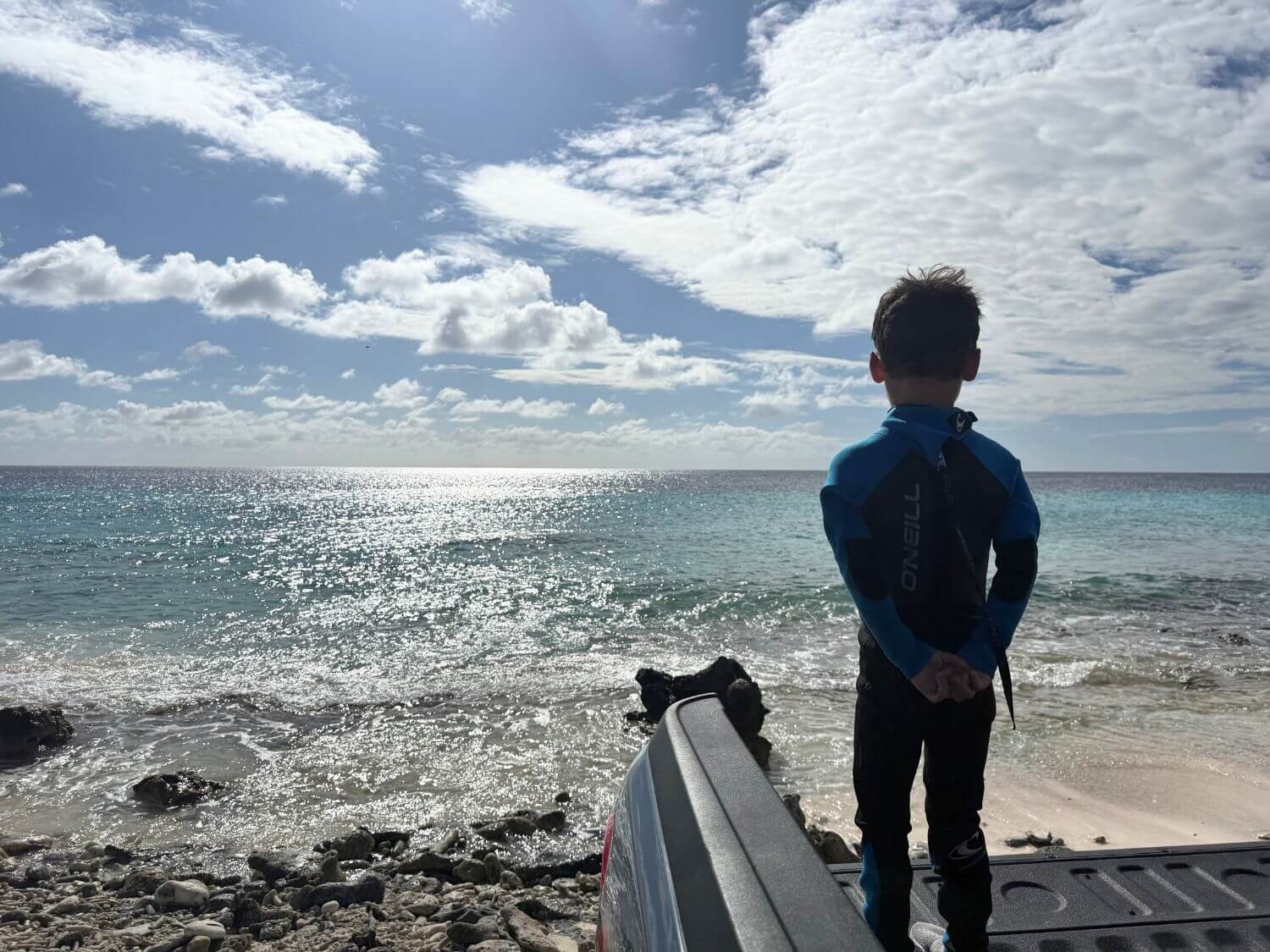
Jackson checking out the water from the tailgate at Pink Beach.
4. Angel City
Angel City sits between Alice in Wonderland and the Hilma Hooker wreck, two popular dive sites. It's known for its double reef, two reefs separated by a sandy channel. Snorkelers stay over the first, shallower reef, which starts just after you get in. It's known for big schools of blue tang, parrotfish and angelfish, and eagle rays are sometimes spotted in the shallows.
Entry: through a gap in the ironshore over coral gravel, so sturdy water shoes help.
With kids: calm and shallow over the first reef, with lots to look at without swimming far.
Know before you go: there are no facilities here.
5. Tori's Reef
Tori's Reef is past Salt Pier on the south end, where a channel connects a salt pond to the ocean. The reef shelf runs right along the shoreline, and it's known for eels (spotted, chain and green morays), plus barracuda, parrotfish, porcupinefish and trumpetfish.
Entry: over flat rocks near the channel, then a sandy bottom. Water shoes recommended.
With kids: the snorkeling is right along the shore, so you don't have to go far.
Our visit: we snorkeled here on our open day, near the end of the trip.
Kralendijk
6. Bari Reef
Bari Reef is right in Kralendijk, next to our resort, Chogogo. Its claim to fame: volunteer fish surveys by the REEF organization have recorded more fish species here (over 300) than at any other site in the Caribbean. Look for the "Aquarium," a collapsed pier structure near shore where fish gather, plus octopus, frogfish, tarpon and moray eels if you're lucky.
Entry: down a concrete ramp, which can be slippery, so take it slowly.
With kids: an easy, close-to-town spot. We used our last morning to snorkel here before flying home, and it was a great last look.
North of Kralendijk
Andrea and 1000 Steps are both on the coast road north of town, so we snorkeled them on the same morning.
7. Andrea I and Andrea II
Andrea I and Andrea II are twin sites just north of the desalination plant, each marked by its own yellow rock and about a 10 to 15 minute drive north of Kralendijk. The water is calm and shallow near shore, with brain and lettuce coral and plenty of reef fish: blue tang, rainbow parrotfish, French angelfish, filefish and trunkfish. Turtles and rays turn up here too, and divers sometimes spot seahorses.
Entry: rocky and a little tricky, so wear water shoes and watch for sea urchins.
With kids: shallow and calm once you're in, so it's a relaxed spot for younger snorkelers. Hold hands over the rocks on the way in.
Know before you go: there's free parking right at the site, and it's an easy stop on the way to or from 1000 Steps.
8. 1000 Steps
Despite the name, there are only about 67 limestone steps down to the water. The joke is that it feels like 1,000 on the way back up with all your gear. It's one of the best-known turtle spots on the island, and the reef starts just off the small beach at the bottom.
Entry: down the steps to a small beach of rocks and sand. The limestone is slippery when wet, so wear water shoes.
With kids: count the steps on the way down! Once you're in, it's shallow near shore with the reef close by. Carry little legs (and gear) back up the stairs.
Know before you go: parking along the road is limited, so go early. Waves can push you toward the beach on rougher days.
Our visit: we snorkeled here the morning of our fishing charter, along with Andrea.
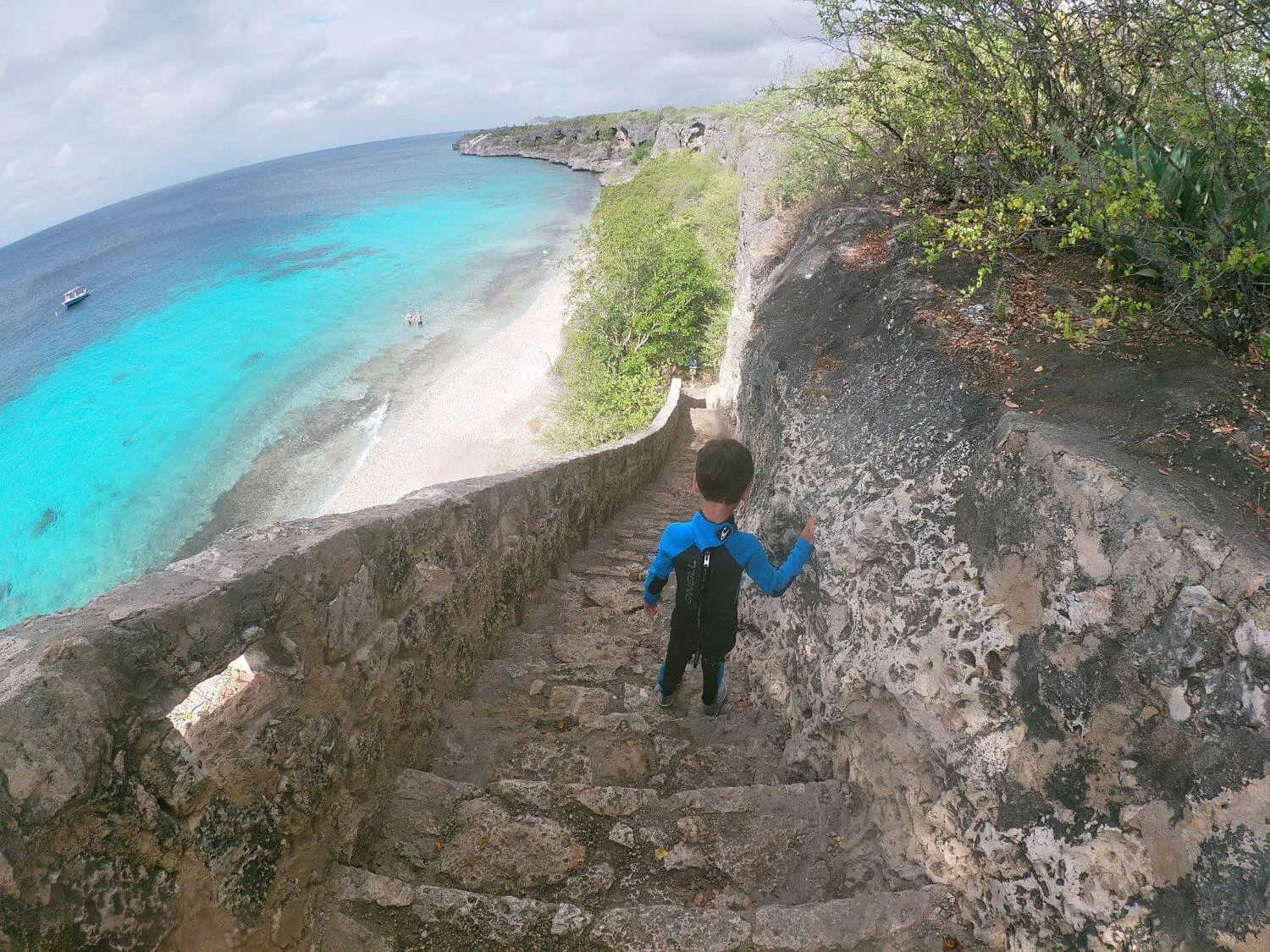
Jackson on his way down the “1000 steps”!
Inside Washington-Slagbaai National Park
We snorkeled both of these on our national park day, after the Brandaris hike. The park snorkeling was pretty, but we didn't see more variety than at the sites outside the park. If you're short on time, don't plan your park day around the snorkeling.
9. Wayaka II
Wayaka II is a small, pretty beach with soft sand, reached by stone steps. It's known for big schools of blue tang and parrotfish (you can sometimes hear them crunching on the coral). The water is shallow, so you swim around the reef rather than over it.
Entry: soft sand, easy.
With kids: one of the easier park entries. Put your towels and shoes up on the rocks well above the waterline, because waves can wash them away.
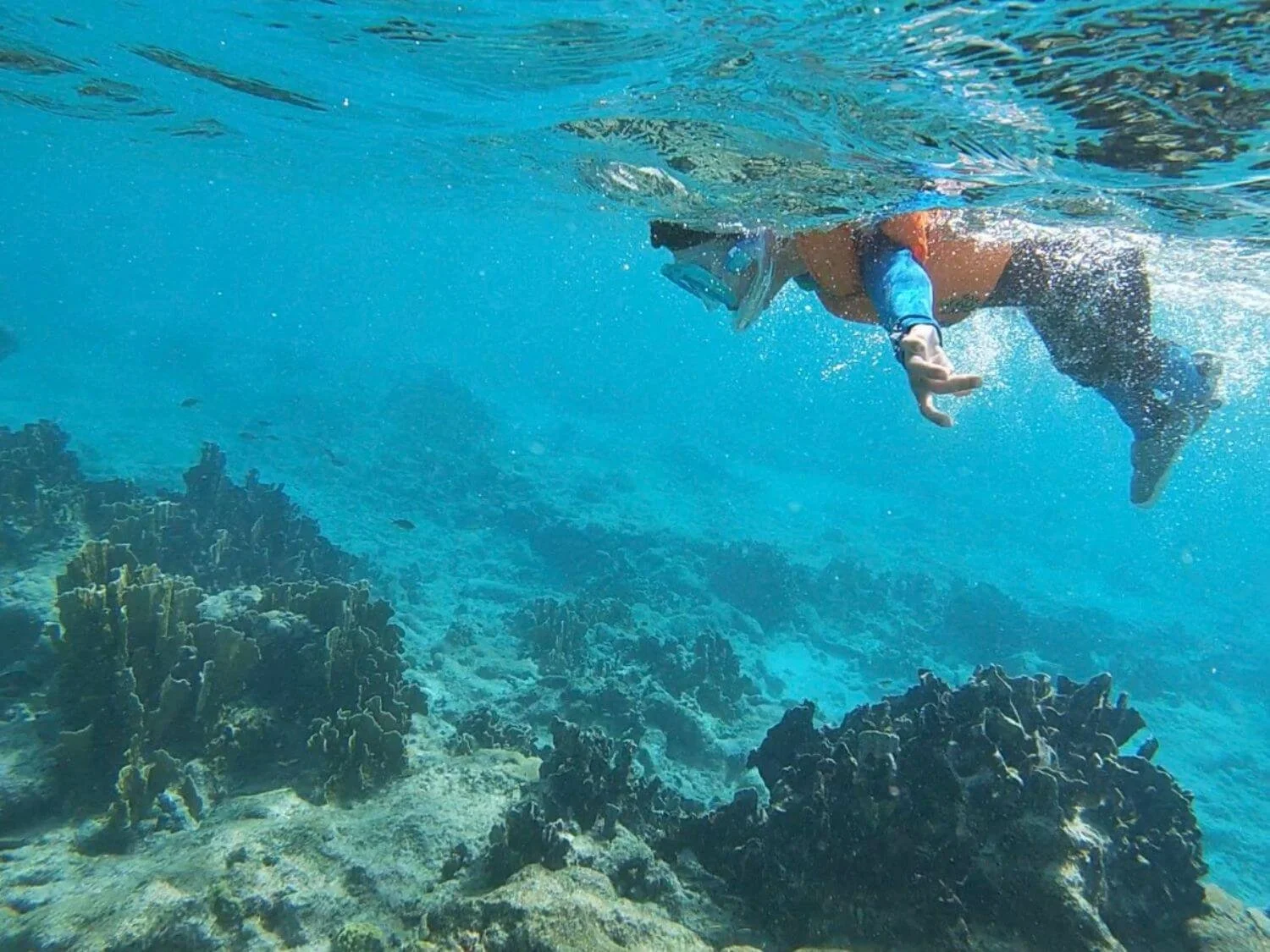
Jackson snorkeling in Washington-Slagbaai National Park.
10. Playa Funchi
Playa Funchi is next to a salt flat where flamingos often hang out, and the picnic tables under the shade huts are famous for iguanas that come right up looking for snacks. The snorkeling has brain and lettuce coral, blue tang, parrotfish and black durgons.
Entry: rocky, so wear water shoes.
With kids: the iguanas and flamingos might be the real highlight here. Only snorkel when the water is calm, since waves and current can make the entry tricky.
Read More: Washington-Slagbaai National Park With Kids: Our Bonaire Park Day Guide
Our Favorites With a Kid
Easiest: Pink Beach (sandy walk-in entry).
Best first day: Klein Bonaire. The drift snorkel with a guide is a great way to start, as long as your kid is comfortable jumping off the boat.
Best wildlife: Salt Pier for turtles and fish, our favorite of the trip.
Closest to town: Bari Reef, right next to Chogogo.
Skip if you're short on time: the park sites, unless you're already there for the hike.
Tips for Snorkeling Bonaire With Kids
Tie a bright buoy to your kid. It made Jackson easy to spot and let us hold him close in open water.
Use a swim vest. Jackson wore a kids' swim vest (not a puddle jumper) for every snorkel, so he could float face-down and still stay buoyant.
Bring a kids' wetsuit. Even in warm Caribbean water, kids get cold after a long snorkel. Jackson wore his at every stop.
Water shoes or fin booties for everyone. Most entries are rocky.
Go early. Calmer water, easier parking and fewer people.
Give turtles space. Look, don't touch, and never stand on coral.
Mineral sunscreen only. Bonaire bans sunscreens with oxybenzone and octinoxate, and a rash guard means less to reapply.
Read More: What to Pack for Bonaire With Kids: Our Family Packing List
Shop on Amazon
Our snorkel gear
Jackson's gear
Matt's and my gear
For everyone
As an Amazon Associate, we earn from qualifying purchases.
Shop on Amazon
Cameras and sun protection
Cameras
Sun protection
As an Amazon Associate, we earn from qualifying purchases.
More From Bonaire
Our Bonaire guides
Start here
Plan your trip
On the island
Free for the Crew
Plan your own Bonaire week
Our free Trip Planning Command Center keeps your days, bookings, and packing in one place, so your week in the water is the easy part.
Get the Free Trip Planner →Free. Sent straight to your inbox.