Is the JR Pass Worth It? We Did the Math for Our Family’s Real Route
Before our trip, we went back and forth on whether to buy a Japan Rail Pass. We ended up booking individual Shinkansen tickets instead, and once we got home and started building out our full cost breakdown, we finally had real numbers to check whether that was the right call. It wasn't close.
Traveled: Late May / Early June 2026. This post contains affiliate links. If you book through them, we may earn a small commission at no extra cost to you.
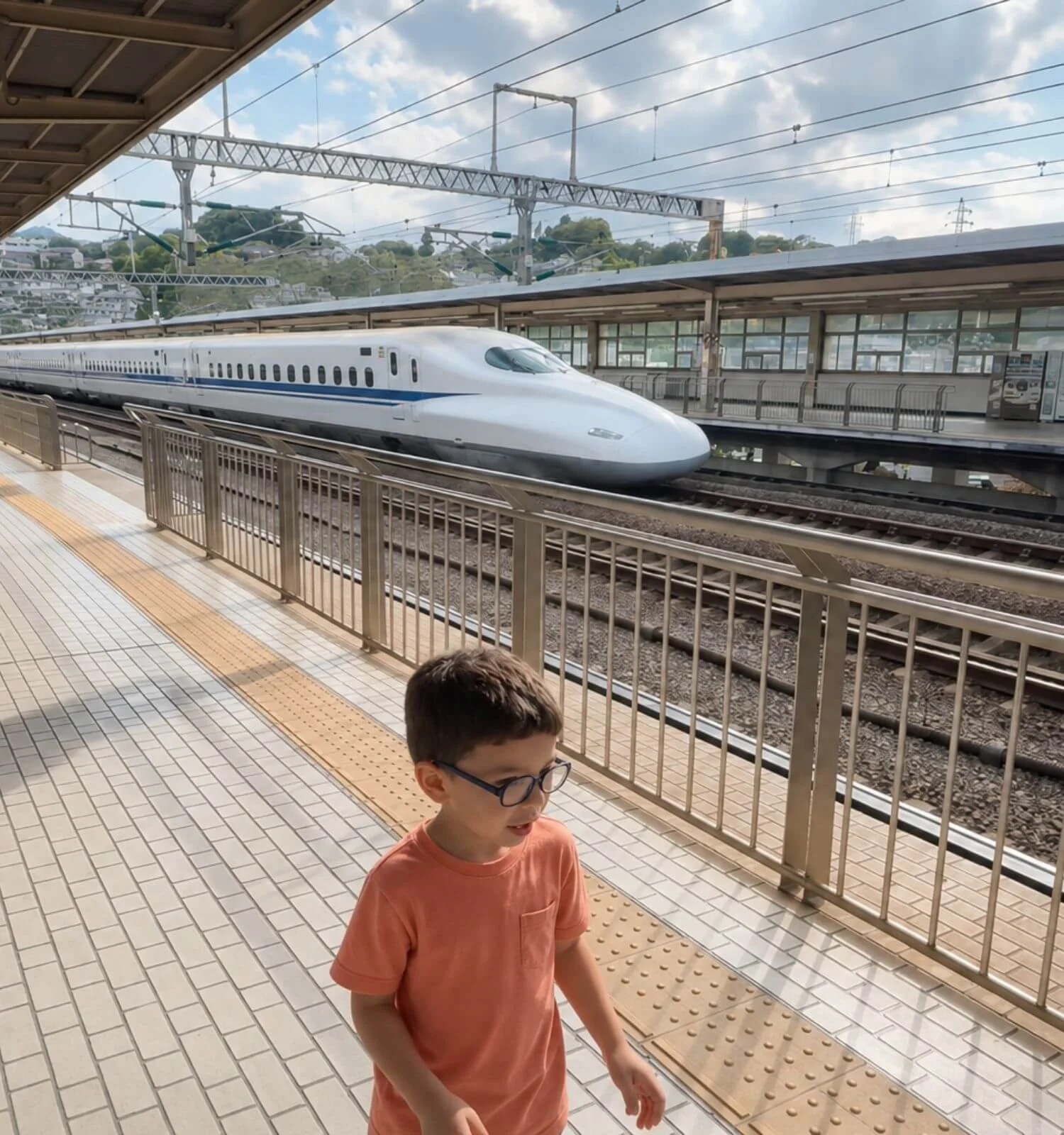
Our Route, and What We Actually Paid
We took four Shinkansen legs on this trip: Hakone (Odawara) → Kyoto, Kyoto → Hiroshima, Hiroshima → Osaka, and Osaka → Tokyo. All four together cost us $649.68 for both of us, booked as individual tickets. That figure is confirmed in our full cost breakdown.
We also took a round-trip commuter train from Osaka to Nara for a day trip, which we’ve confirmed runs on a JR line and would have been pass-eligible. At current fares, that added about $20 for both of us. You can see the rest of that day's costs in our Nara day trip breakdown.
What we actually spent on JR trains, total: about $670.
What a 14-Day JR Pass Would Have Cost Us
Our route spanned Hakone to Tokyo over about 8 days, so a 7-day pass wouldn’t have covered the full span. The pass we’d have needed was the 14-day Ordinary pass, currently ¥80,000 per adult. For the two of us, that’s ¥160,000, or roughly $980 at current exchange rates.
The 14-day pass would have cost us about $310 more than what we actually spent.
Why the Math Worked Out This Way
The JR Pass earns its cost back when you’re making frequent long-distance runs, generally somewhere around the equivalent of two round-trip Tokyo–Kyoto journeys is the usual break-even point. Our route had one long stretch of one-way Shinkansen travel, each leg ridden once, not back and forth, plus one short regional hop to Nara. For our itinerary the pass doesn’t pay for itself: we weren’t riding it enough times to outrun its price.
One Leg the Pass Never Would Have Covered Anyway
Our first travel day, Tokyo to Hakone, was on the Odakyu Romancecar, a private railway, not JR. A JR Pass wouldn’t have covered that leg no matter what, so it wasn’t part of this comparison either way, but it’s worth knowing if you’re doing your own math: not every train in Japan is JR, and the Romancecar is one of the most common ones visitors ride that isn’t.
Book it: Tokyo to Hakone: Romancecar Tickets
What About the Miyajima Ferry?
We took the non-JR ferry to Miyajima and the JR-operated one on the way back. The JR ferry is pass-covered; the other company’s isn’t. It’s a small fare either way, a few hundred yen, so it doesn’t meaningfully change the math, but if your itinerary includes more JR-covered extras like this, it’s worth factoring in for your own trip.
The Honest Caveat: Our Daily Local Trains
We don’t have a clean record of exactly which local trains we rode day to day in Tokyo, Kyoto, and Osaka. We just followed whatever Google Maps said was fastest, which meant a mix of JR lines (like Tokyo’s Yamanote Line or Osaka’s Loop Line, both pass-covered) and subway or metro lines (not JR, and never covered by the pass no matter what). A generous estimate, a couple hundred yen per ride, a handful of rides a day, across the trip, might add up to $100–150 total for the two of us in JR-eligible local fares. Even at the high end of that estimate, it doesn’t close the $310 gap.

We caught a glimpse of Mount Fuji from the Shinkansen on our way from Osaka to Tokyo, and Jackson was thrilled LOL
Our Honest Take
For our specific route, skipping the JR Pass and booking individual tickets saved us hundreds of dollars. That won’t be true for every itinerary. If your trip loops back through the same city multiple times, or covers more ground with more long-distance legs than ours did, the math could easily tip the other way. The only real way to know is to do what we did after the fact: add up your actual point-to-point fares and compare them against the pass price for the number of days you’d need.
If Your Trip Is More Concentrated
If your itinerary stays within one region instead of crossing the country the way ours did, a regional pass is worth checking before you default to the nationwide one. Options like the JR West All Area Pass or the JR Kansai Area Pass cover a smaller footprint for a lot less money, and could make more sense than either the nationwide pass or individual tickets, depending on your route.

Where to Next
Curious about the rest of our numbers? Read: What Our 14-Day Japan Trip Actually Cost
Curious how the Shinkansen itself actually works? Read: Riding the Shinkansen (Japan's Bullet Train)
Want the full rundown on trains, Suica, and getting around? Read: How to Get Around Japan
See our full route, day by day: Read: Our 14-Day Japan Itinerary