Our 14-Day Japan Itinerary: Tokyo, Hakone, Kyoto, Hiroshima, Miyajima, Nara & Osaka
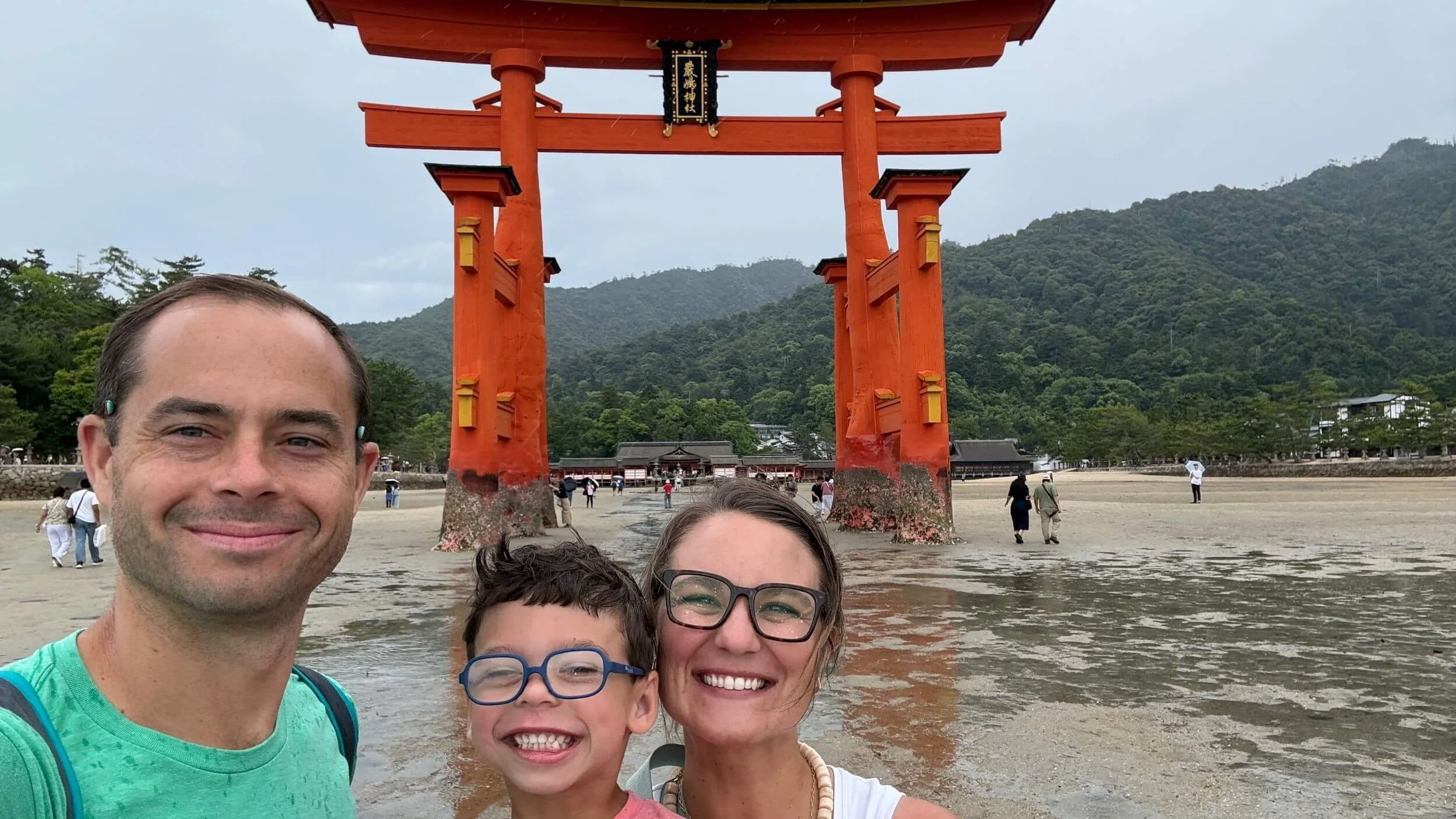
Fourteen days, seven destinations, one route through Japan - here's the whole trip, start to finish.
Planning a trip to Japan can feel overwhelming. There are so many incredible places to visit that deciding where to go and how to fit it all together can be one of the hardest parts of planning the trip.
When we planned our family’s 14-day trip to Japan, we wanted to experience a little bit of everything: huge modern cities, traditional Japan, beautiful scenery, cultural experiences, incredible food, and some of the country’s most famous sights.
We ultimately traveled through Tokyo, Hakone, Kyoto, Hiroshima, Miyajima, Nara, and Osaka.
And while we packed a lot into two weeks, we tried to create an itinerary that felt like an adventure rather than a race.
This post contains affiliate links, which means we may earn a small commission if you book or buy through them, at no extra cost to you. As an Amazon Associate I earn from qualifying purchases. We only recommend things we've used ourselves or would genuinely use on our own family trips, and all opinions are our own.
Our 14-Day Japan Itinerary at a Glance
| Day | Where | Highlights | We Slept In |
|---|---|---|---|
| Day 0 | Tokyo | Arrive, settle in, and adjust to the time change | Shibuya |
| Day 1 | Tokyo | Asakusa and a sumo experience | Shibuya |
| Day 2 | Tokyo | Harajuku, Shibuya, and a gluten-free sushi-making class | Shibuya |
| Day 3 | Tokyo | Tsukiji Outer Market and teamLab Borderless | Shibuya |
| Day 4 | Hakone | The Hakone Loop, the Romancecar from Tokyo, and a traditional ryokan stay | Hakone |
| Day 5 | Hakone to Kyoto | Shinkansen from Odawara Station | Kyoto |
| Day 6 | Kyoto | Arashiyama and historic Gion | Kyoto |
| Day 7 | Kyoto | Fushimi Inari Taisha, downtown Kyoto, and Nishiki Market | Kyoto |
| Day 8 | Kyoto to Hiroshima to Miyajima | Shinkansen to Hiroshima, the Peace Memorial area, then Miyajima’s floating torii gate and deer | Miyajima |
| Day 9 | Miyajima to Hiroshima to Osaka | Bullet train to Osaka | Osaka |
| Day 10 | Osaka | Shinsekai and Dotonbori | Osaka |
| Day 11 | Nara (day trip) | Deer and historic temples | Osaka |
| Day 12 | Osaka to Tokyo | A lighter day and the Shinkansen back to Tokyo | Haneda |
| Day 13 | Tokyo | Heading home | — |
| 14 days | 7 destinations | Our exact route through Japan | 6 hotels |
Day 0: Arriving in Tokyo
After traveling all the way to Japan, our first day was intentionally simple.
We arrived in Tokyo, made our way to our hotel in Shibuya, and focused on getting settled rather than trying to immediately cram sightseeing into the day.
We stayed in Shibuya for our first four nights, which gave us a convenient home base for exploring several of Tokyo’s major neighborhoods.
The goal for arrival day: get through immigration, get to the hotel, adjust to the time change, and save our energy for the next morning.
Read More: Where We Stayed in Japan: Honest Reviews of Our 6 Hotels (13 Nights as a Family) .
Day 1: Traditional Tokyo - Asakusa & First Cultural Experiences
Our first full day in Japan started in Asakusa, one of the neighborhoods that gives visitors a very different feel from the skyscrapers and neon of Shibuya.
This was also where some of our food experiences became a bigger part of the trip. Because we were traveling gluten-free, food required considerably more planning than it would for the average traveler. We had researched restaurants and experiences before leaving home so that we weren’t trying to figure everything out while standing on a Tokyo sidewalk hungry and exhausted.
The day also included a sumo experience, which turned out to be one of the more memorable cultural moments of the whole trip.
If you’re traveling to Japan with celiac disease or a gluten-free diet, we’ve written much more about what this was actually like in Is Japan Gluten-Free Friendly? Our Honest Experience Traveling With Dietary Restrictions
Day 2: Harajuku & Shibuya
Our second day in Tokyo moved through a few of Shibuya and Harajuku’s most iconic corners, anchored by a hands-on food experience that ended up being one of our favorite memories of the whole trip: a gluten-free sushi-making class.
The experience was particularly memorable because the entire meal was prepared gluten-free (advance notice required), which made it possible for us to participate in something we otherwise might have had to skip. For travelers with dietary restrictions, this was one of the moments that made us realize just how valuable advance planning can be.
This was also one of the days where our planning paid off in a different way. Rather than bouncing all over Tokyo, we grouped nearby areas together and worked our way through the city - a strategy we leaned on for the rest of the trip.
Read More: What to Do in Tokyo, Japan With Kids
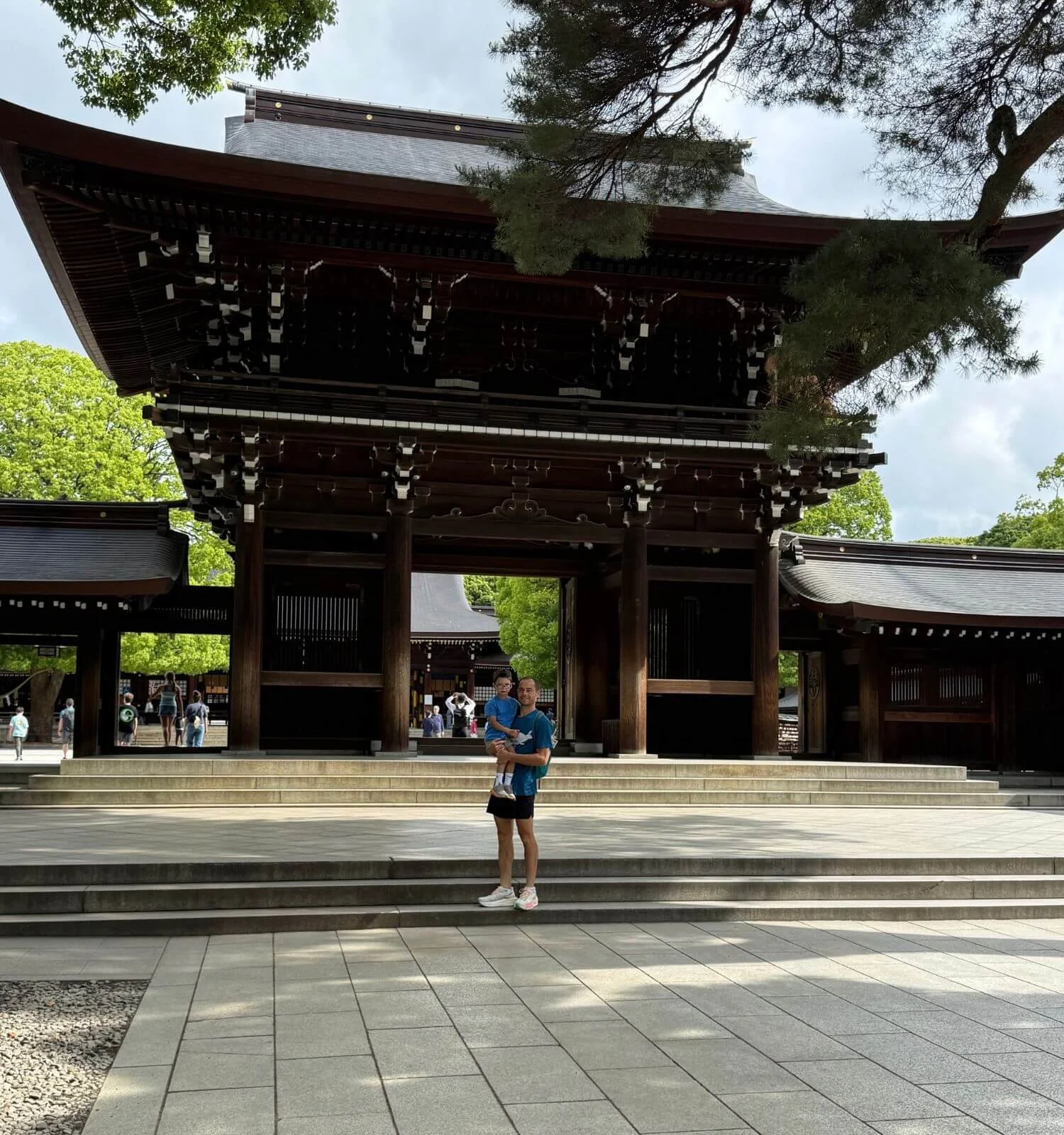
We started in Tokyo—modern, historic, and endlessly walkable—before working our way west across the rest of the country.
Day 3: Tsukiji Market & Immersive Digital Art
Our final full day in Tokyo mixed food, market browsing, and one of the most talked-about attractions in the city.
We spent the morning at Tsukiji Outer Market before heading to TeamLab Borderless, an immersive digital art museum that turned out to be one of the experiences we were most excited about going in.
Tokyo was also where we learned one of the biggest lessons of the trip:
You can see a lot in Japan, but you cannot see everything.
Choosing a few experiences that really mattered to us made the trip much more enjoyable than trying to check every box.
Want a Local Guide for Your First Day in Tokyo?
We explored Tokyo on our own, but the first day can feel like a lot with jet lag and a brand-new train system. If you'd rather have someone show you the ropes, GoWithGuide offers private Tokyo tours with local guides.
Day 4: Hakone
We left Tokyo and headed toward Hakone, which gave us a completely different side of Japan.
After several busy days in Tokyo, Hakone was a welcome change of pace.
We stayed at a traditional Japanese ryokan - one of the highlights of the entire trip.
Hakone was also one of the places where weather played a role in our plans. Our original schedule had to be adjusted, but we were still able to experience the famous Hakone Loop and its combination of transportation and scenery.
For us, Hakone was worth including because it broke up the intensity of Tokyo and Kyoto. Instead of going directly from one huge city to another, we had a chance to slow down and experience a very different side of Japan.
Read More: Is Hakone, Japan Good for Kids? Our Honest Take
Read More: What We Spent in Hakone: A Real Cost Breakdown
Book It: Romance Car Tickets
Day 5: Hakone to Kyoto
From Hakone, we made our way to Odawara Station and boarded the Shinkansen for Kyoto.
Taking the bullet train was an experience in itself.
The Shinkansen made traveling between major destinations incredibly efficient, and it was one of the transportation experiences we were most excited to have as a family.
Read More: Riding the Shinkansen (Japan’s Bullet Train)
Book it: Hakone (Odawara) → Kyoto: Shinkansen (Bullet Train) Tickets
Day 6: Kyoto - Arashiyama & Historic Gion
Kyoto was where the trip became much more focused on traditional Japan.
Our first full day here centered on Arashiyama in the morning before we made our way toward Gion in the afternoon and evening - one of Kyoto’s most historic districts, known for its narrow streets and traditional teahouses.
Kyoto can easily become overwhelming because there is so much to see. One of the biggest planning decisions we made was resisting the temptation to create a giant checklist of attractions. Instead, we grouped our sightseeing and tried to build days that actually made sense geographically.
Day 7: Kyoto - Fushimi Inari & Downtown Kyoto
Our second Kyoto day was slightly slower-paced, built around Fushimi Inari Taisha and its thousands of torii gates in the morning, followed by an afternoon exploring downtown Kyoto and Nishiki Market.
Read More: Is Kyoto Good for Kids? Our Honest Take
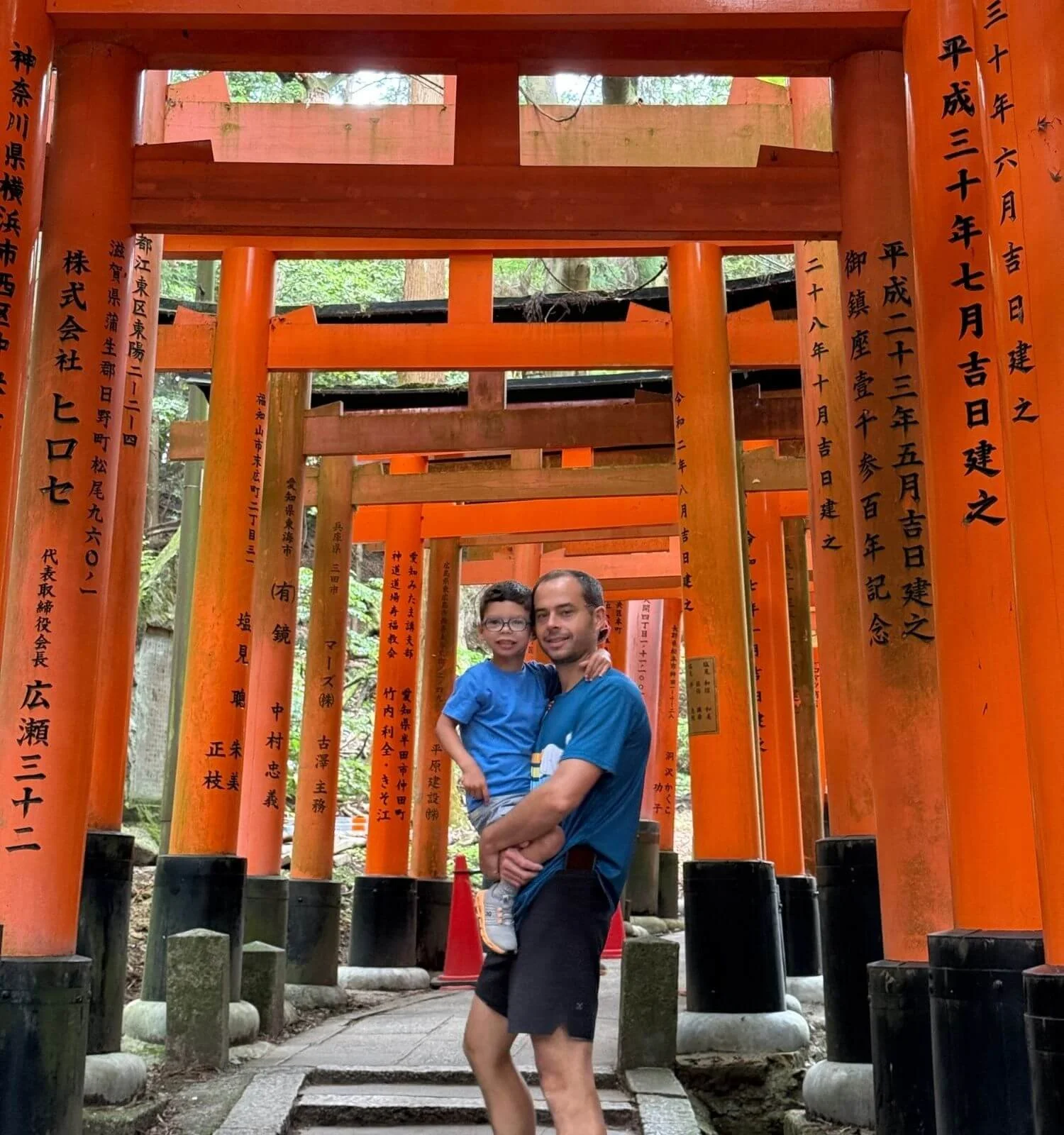
From Tokyo's neon streets to Kyoto's endless red gates, the route was designed to show as many sides of Japan as possible in one trip.
Day 8: Kyoto → Hiroshima → Miyajima
This was one of our bigger travel days, and also one of our most memorable.
We took the Shinkansen from Kyoto to Hiroshima, where we quickly walked through the Peace Memorial area as we learned a typhoon would be approaching the area soon and we needed to expedite our itinerary a bit.
From there, we continued on to Miyajima, famous for its iconic floating torii gate, beautiful scenery, temples and shrines, and its famously friendly deer. We stayed overnight on the island.
Weather complicated part of our original plan for this stretch of the trip, which turned out to be a good reminder that even the most carefully planned Japan itinerary needs some flexibility. Despite that, Miyajima ended up being one of the most memorable stops of our entire trip.
Read More: Is Hiroshima & Miyajima Good for Kids? Our Honest Take
Read More: What We Spent in Hiroshima & Miyajima: A Real Cost Breakdown
Want Help Navigating Kyoto's Temples?
Kyoto's temples and shrines are spread across the city, and the famous ones get busy fast. If you'd like someone who knows the city to help map out your day, GoWithGuide offers private Kyoto tours with local guides.
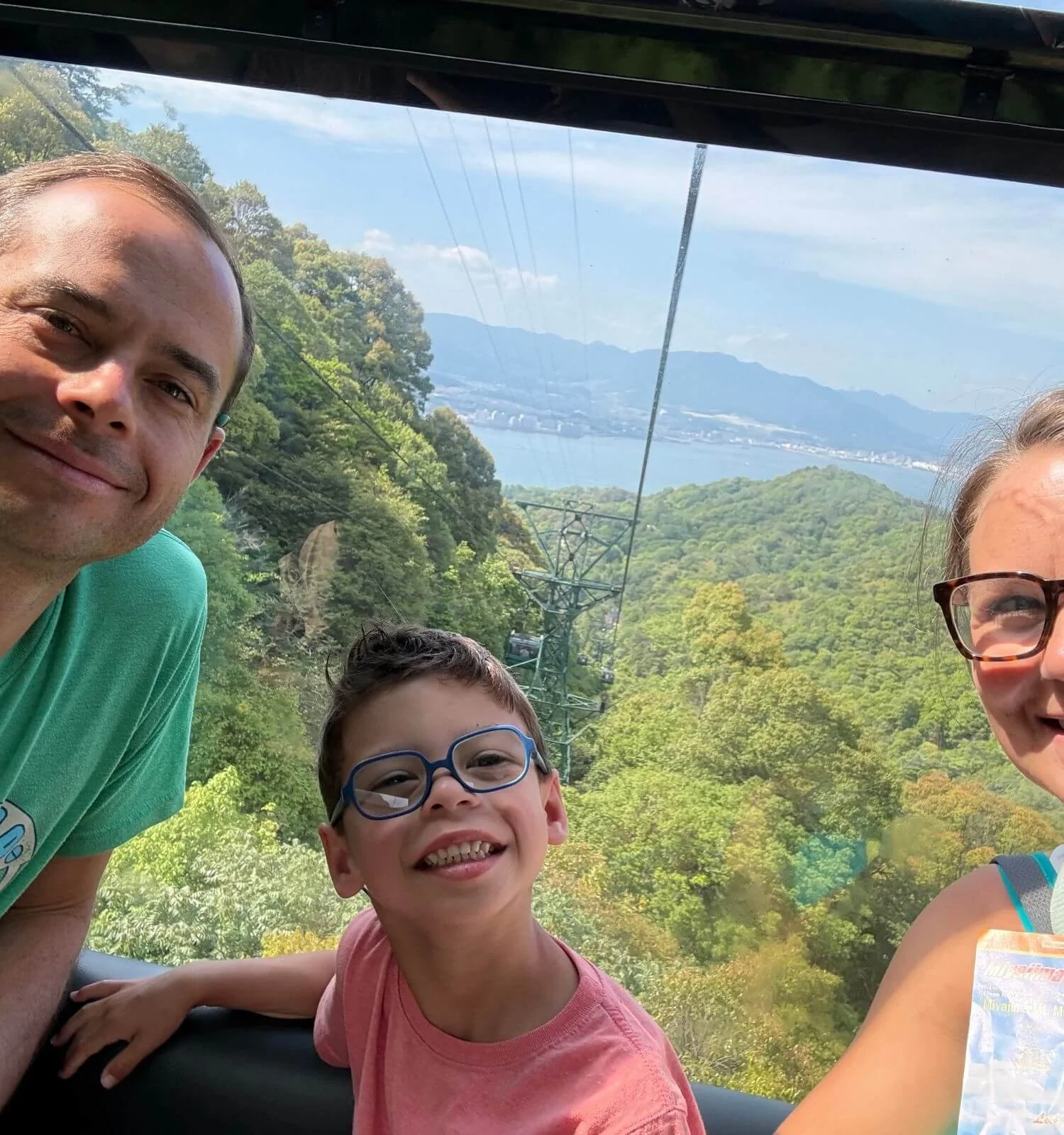
Riding the Miyajima Ropeway with views of the water and Hiroshima below.
Day 9: Miyajima → Hiroshima → Osaka
After a night on Miyajima, we made our way back through Hiroshima and on to Osaka once again utilizing Japan’s bullet trains, our final major destination.
After the traditional atmosphere of Kyoto and the history of Hiroshima, Osaka brought us back into a busier, more energetic city environment.
Book It: Shinkansen tickets - Hiroshima to Osaka
Day 10: Osaka - Shinsekai & Dotonbori
We spent our first full day in Osaka exploring two of its most iconic neighborhoods: the retro entertainment district of Shinsekai, followed by Dotonbori’s canal, lights, and food scene in the afternoon and evening.
One of the things we loved about ending the trip in Osaka was that it felt different enough from Tokyo that it didn’t feel like we were simply repeating the same city experience.
Read More: Is Osaka Good for Kids? Our Honest Take
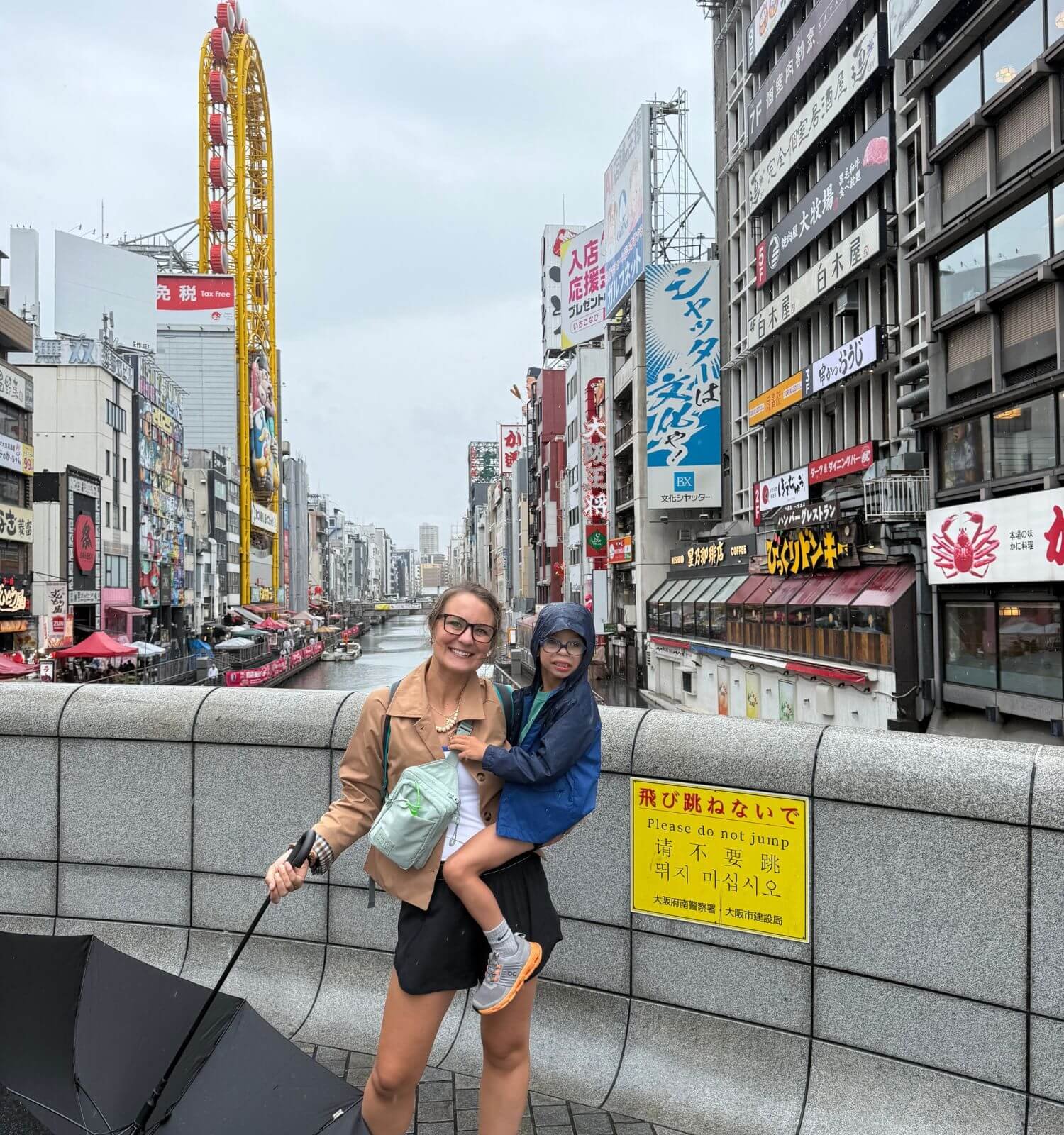
Looking out over the Dotonbori Canal in Osaka.
Day 11: Day Trip to Nara
From Osaka, we took a day trip to Nara, famous for its deer and historic temples.
Nara was an easy addition to our itinerary as a day trip rather than a full destination change, and it gave us another opportunity to experience a side of Japan that felt completely different from Tokyo or Osaka.
And, of course, the deer were a huge hit with our son.
By this point, we’d also become much more comfortable navigating Japan’s transportation system.
Read More: Is Nara Good for Kids? Our Honest Take
Read More: Nara Day Trip Cost: A Real Family Breakdown
Want a Local to Show You Around Osaka?
Osaka is known for its street food, and busy spots like Dotonbori can be a lot to take in with kids in tow. If you'd like a local to point you toward the best bites and easiest routes, GoWithGuide offers private Osaka tours with local guides.
Day 12: Osaka to Tokyo
Our second-to-last day was built around the transition back toward Tokyo ahead of our flight home, with time for a final stop in Osaka before boarding the Shinkansen.
After nearly two weeks of walking, trains, sightseeing, new foods, and constant stimulation, we intentionally kept this day lighter rather than turning it into another maximum-effort sightseeing day. This is something we’d recommend to anyone planning a longer Japan trip: leave yourself some breathing room, especially near the end.
Read More: Where to Stay Near Haneda Airport with Kids
Book It: Shinkansen Tickets - Osaka to Tokyo
Day 13: Heading Home
And then, far too quickly, it was time to go home.
Fourteen days gave us enough time to experience several very different parts of Japan, but it also made one thing very clear:
We could have stayed much longer.
Japan is one of those destinations where two weeks can feel like a lot of time when you’re planning it and surprisingly short once you’re actually there.
Read More: What Our 14-Day Japan Trip Actually Cost: A Full Family Breakdown
Would We Do This Japan Itinerary Again?
Yes! Absolutely!! We loved it so much we created a ready-made trip following our exact itinerary with tips and suggestions to make your trip even better!

Planning Japan? Keep It All in One Place
Hotels in every city, train legs, timed tickets, and a packing list for the whole crew add up fast. Our free Trip Planning Command Center keeps it organized so you can focus on the fun part.
- Plan each day, city by city
- Track hotels, trains, and tickets you've booked
- Keep everyone's packing in one list
Get the Free Trip Planner →