Japan With Kids: Everything I Wish I Knew Before Our Trip
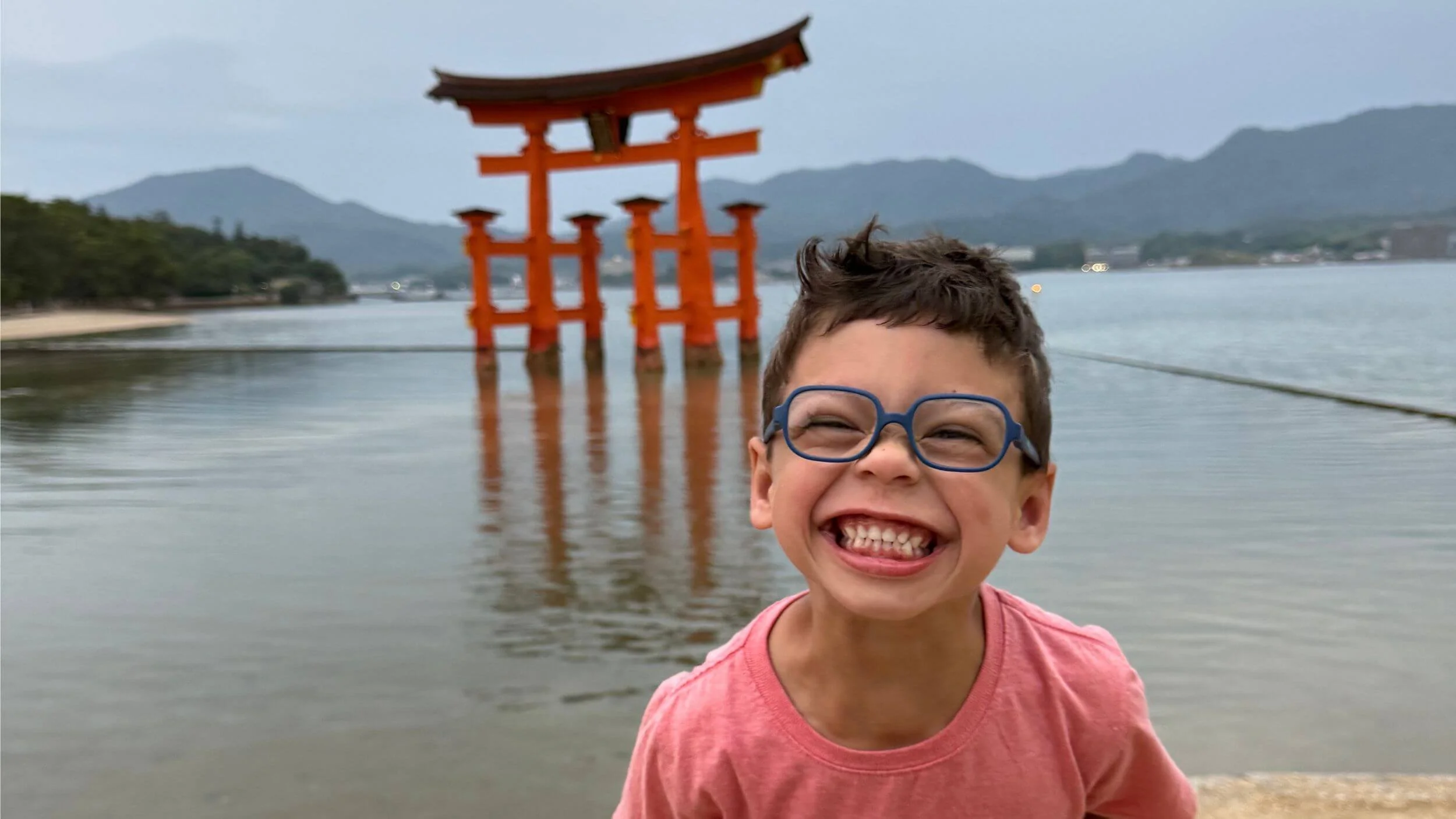
Japan is kid-friendly in a different way than you might expect not because everything is designed for children, but because of how much they get to experience.
This post contains affiliate links, which means we may earn a small commission if you book or buy through them, at no extra cost to you. As an Amazon Associate I earn from qualifying purchases. We only recommend things we've used ourselves or would genuinely use on our own family trips, and all opinions are our own.
If you’re considering taking your kids to Japan, you probably have a long list of questions.
Will they be able to handle all the walking? Is Japan actually kid-friendly? Do you need a stroller? How difficult is public transportation? Are restaurants easy with children? What happens when your kid inevitably gets tired, hungry, or covered in something?
We wondered about many of the same things before our trip.
After spending 14 days traveling through Japan with our son, we learned that Japan is absolutely doable with kids but it isn’t necessarily easy in the ways you might expect.
The biggest thing I wish I had understood before we went?
You are going to walk. A LOT.
And that matters more than almost anything else when deciding whether your child is ready for a trip to Japan. On our full days in Japan, I averaged about 18,000 steps a day. The lightest days, usually when we were switching hotels, came in around 11,000 to 12,000 steps, and our biggest sightseeing days topped 23,000. Five days of the trip went over 20,000 steps.
Prepare for WAY More Walking Than You Think
This is the biggest piece of advice I can give parents planning a Japan trip.
We are an active, fit family. Our son is used to being outside and being active, and he walked a lot during our trip.
But even with all of that, there were times when he simply hit a wall.
Japan’s cities are incredibly walkable, but “walkable” doesn’t mean you’ll only walk a few blocks between attractions.
You’re walking:
To and from train stations
Through enormous stations
Between train lines
Around neighborhoods
Through temples and shrines
Through parks
While sightseeing
While looking for food
While figuring out where you are
And then you’re doing it again the next day.
The walking itself isn’t necessarily difficult. It’s the cumulative amount that gets you.
Our son handled an impressive amount of it, but there were definitely moments when he was simply done.
If your child isn’t accustomed to long days on their feet, I’d start preparing for this before your trip.
Want a Local Guide for Part of Your Trip?
We explored Japan on our own, but a private guide can make a busy city or a long day of sightseeing much easier with kids. GoWithGuide offers private tours with local guides you can message before booking, so you can plan the day around your family's pace.
Choose Your Stop
Should You Bring a Stroller?
This is where I’m going to give you a very honest answer:
We hated using one.
We found the stroller annoying and felt like it slowed us down. We didn’t bring one but instead rented one from our hotel after our son began complaining. We only had it for 30 minutes before we decided to return it.
Japan’s train stations can involve stairs, elevators, crowds, narrow spaces, and a lot of navigating. Having a stroller meant one more thing to maneuver through all of that.
So we eventually chose not to use one.
But that doesn’t mean I wouldn’t recommend bringing one.
If you have a younger child who isn’t capable of walking long distances, a stroller could be incredibly useful. Our son is small for his age, which worked in our favor here since it made him easier to carry when he needed a break.
There were definitely moments when we wished we had something to put our son in when he was completely exhausted. We saw plenty of families with strollers, some pushing children much older than ours.
However, our solution was that we were able to carry him when necessary. That worked for us. It might not work for you.
If you’re traveling with a toddler or younger child, I’d seriously consider a lightweight, compact stroller rather than a large travel system.
The key is recognizing that a stroller can be both helpful when your child is exhausted, and annoying when you’re navigating crowded transportation and sightseeing areas. You have to decide which problem you’re more likely to encounter.
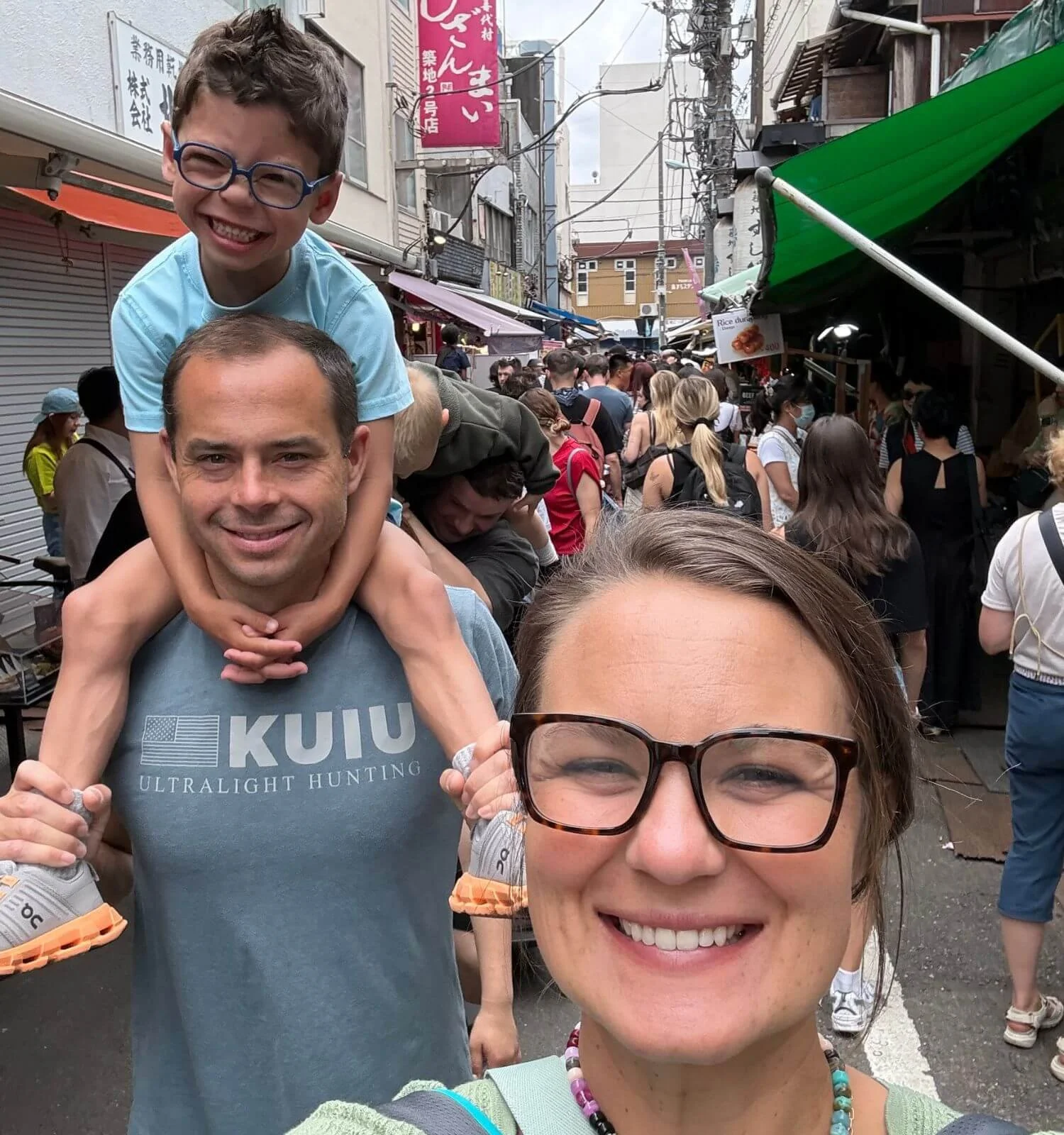
Have a plan for when your child gets tired whether that's carrying them, building in more breaks, or trimming the itinerary to match their pace.
Pack Light
This is related to the stroller issue but deserves its own section.
Pack lighter than you think you need to.
You’re already keeping track of your child. You don’t need to simultaneously keep track of three giant suitcases, five backpacks, jackets, toys, water bottles, and everything else your family owns.
We found that traveling with less stuff made the entire trip easier. It was also especially helpful when our son got tired, because we could carry him without also having to deal with an enormous amount of luggage.
This applies to entertainment too. You probably don’t need to bring every toy, activity, and piece of gear you own. Japan itself is stimulating enough that our son didn’t need a suitcase full of things to keep him occupied. Every extra item you bring becomes one more thing you have to carry, store, or remember, and when you’re already navigating a foreign country with a child, simplicity is your friend.
And yes, bring fewer clothes than you think you need. Which brings me to…
Laundry Is Your Friend
If you know, you know.
Kids + travel + food = stains.
We brought a stain pen, which was helpful, but laundry was widely available throughout our trip.
Instead of packing enough clothes for every possible disaster, plan to do laundry. This allowed us to pack significantly lighter and made moving between destinations much easier.
For us, having fewer things to keep track of was worth far more than having a different outfit for every day.
Read More: What We Packed for Japan (Family of 3, 14 Days, Carry-On Only)
Consider Luggage Forwarding
One of the best ways to travel lighter between cities is to skip carrying your suitcases on the train. In Japan, many hotels can arrange luggage forwarding, which sends your bags ahead to your next hotel while you travel with just a small overnight bag.
We used it three times on our trip:
Tokyo to Kyoto, with a night in Hakone in between. We sent our bags straight to Kyoto and took only an overnight bag to Hakone.
Kyoto to Osaka, with a night in Miyajima in between. Same idea: our bags went ahead to Osaka while we took a small bag to Miyajima.
Osaka to Tokyo, for the last leg of the trip. Our bags went ahead so we didn't have to haul them on the train on the way back.
With a tired kid and a crowded train station, not hauling suitcases up stairs and through crowds makes a big difference. You'll want to arrange it a day or two before you leave, so ask at check-in about how it works and when your bags will arrive - each hotel has their own process. Pack a small bag with a change of clothes and anything you need for the overnight.
Hello, World!
Young Kids Can Be Surprisingly Affordable
One of the things that pleasantly surprised us was how many things our son didn’t need a separate ticket for.
During our trip, children age 6 and under were free for many things, including transportation situations where we expected we’d need to purchase another ticket.
For example, our son was able to ride the trains with us without needing his own ticket in many situations. He was also able to stay with us in our hotel without requiring an additional room or bed simply because of his age.
However, don’t assume this applies everywhere. Age rules and ticket requirements can vary by attraction, transportation system, pass, and hotel. Always check the specific requirements for the things you’re booking. This becomes especially important when you’re using regional passes or special transportation passes.
Pay Attention to Train Pass Requirements
If you’re planning to use transportation passes, don’t assume that your child’s situation will be exactly the same as yours.
For example, if you’re planning to use something like the Hakone Free Pass, make sure you check the current age requirements and purchasing rules before your trip. At the time of our trip, everyone who needed a pass had to have their own smartphone if using digital passes. Our son didn’t need a pass due to his age, so this didn’t impact us but if your child is older, keep in mind they may need their own separate pass, either via a phone or a printed pass.
Transportation rules can be confusing enough for adults. The last thing you want is to discover that you misunderstood a child’s ticket or pass requirement while you’re standing at a station trying to figure out where to go.
This is one of those details that is worth checking before you leave home.
Read More: How to Get Around Japan: A First-Time Visitor’s Guide to Trains, Suica Cards, Google Maps & More
Book It: Hakone Free Pass
Book It: Riding the Shinkansen
Read More: Riding the Shinkansen (Japan’s Bullet Train)
Don’t Expect to Eat on the Go
This was another difference that caught our attention.
In Japan, eating while walking isn’t generally the norm, and eating on trains is also not something you should assume is acceptable.
That means you can’t necessarily rely on the American habit of “here, eat this snack while we’re walking to the next thing.”
Instead, think ahead about when your child is going to eat. If your child gets hangry like ours does, this becomes especially important.
Build actual snack and meal breaks into your day. This is another reason I wouldn’t recommend creating an itinerary that has you running from attraction to attraction with no breathing room.
Read More: Japan Etiquette Tips: What Travelers Should Know Before Visiting
Restaurants Can Be Small
Japanese restaurants can be quite different from what many American families are used to.
Some restaurants are very small, with limited seating and tight spaces. That doesn’t mean you can’t eat there with children. It just means that if you have a particularly energetic or rambunctious child, you may need to be more strategic about where you eat.
And if your family is large, restaurant size becomes even more important.
We found that some dining experiences required a little more planning than simply walking into the first restaurant we saw. This was especially true for us because we were also navigating a gluten-free diet.
If you’re traveling with dietary restrictions, you can read more about our experience in Is Japan Gluten-Free Friendly? Our Honest Experience Traveling With Dietary Restrictions
Japan Is Generally Quiet in Public
This is something parents should know before they go.
Japan has a strong culture of being considerate of the people around you, and that includes keeping public spaces relatively quiet.
You’ll notice this particularly on trains.
It’s not that children aren’t welcome. It’s that loud behavior isn’t generally encouraged, especially on public transportation and in other shared spaces.
So if you have a child who is used to talking loudly, singing, watching videos without headphones, or generally making a lot of noise, it’s worth talking about expectations before the trip.
I did find myself reminding our son quite a few times to lower his voice. It wasn’t a huge deal, but knowing the cultural expectation ahead of time makes it easier to prepare your child.
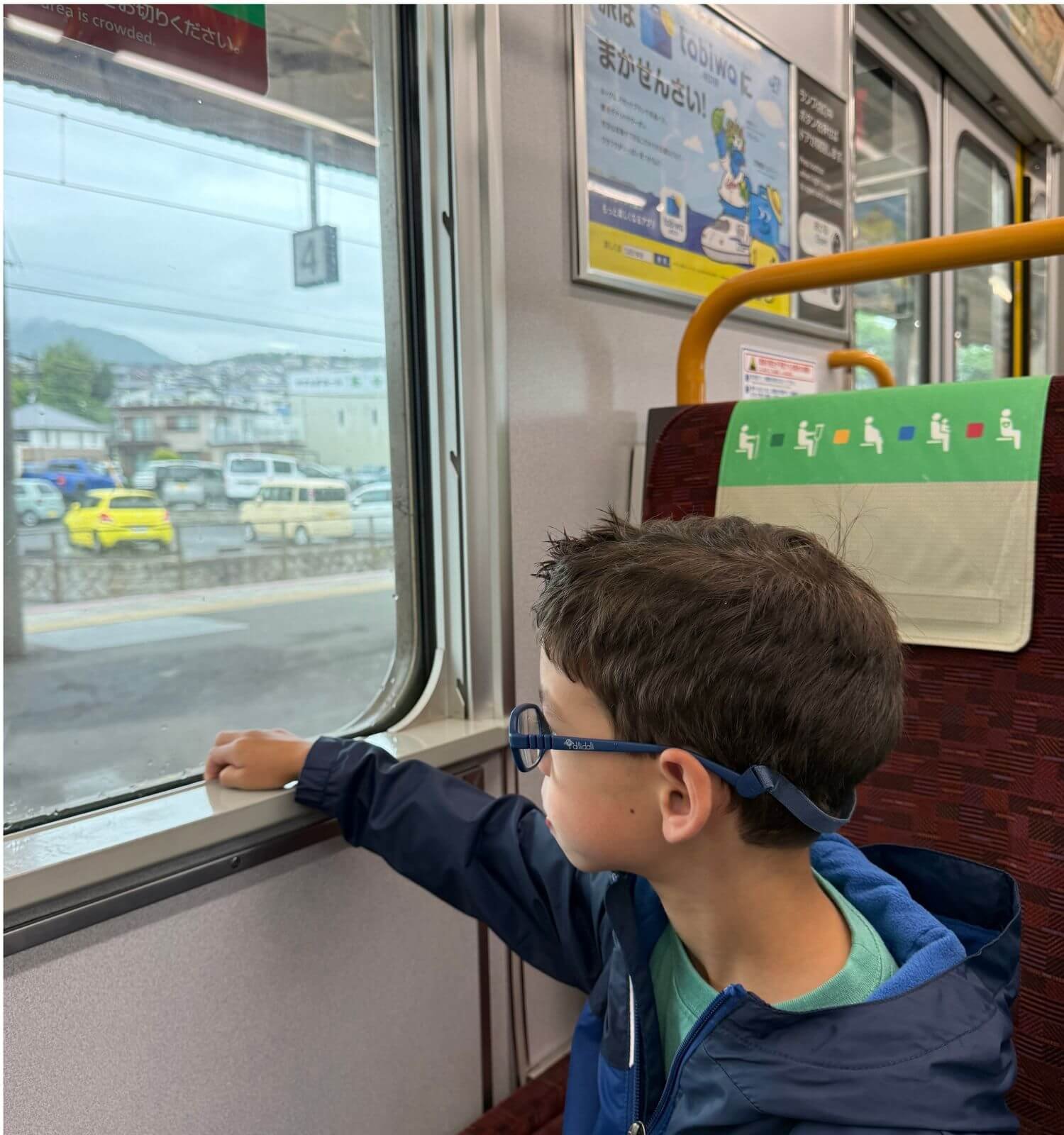
Public spaces in Japan tend to be quieter than what many American families are used to. Worth talking through with kids before the trip so it's an easier adjustment once you're there.
Small Hotel Rooms Can Be a Challenge
Japanese hotel rooms can be smaller than many American families are accustomed to.
This wasn’t a huge problem for us, but it’s something I’d think about carefully if you’re traveling with a larger family.
Once you add:
Luggage
Clothes
Shoes
Souvenirs
A tired child
Everyone’s general stuff
…a small room can start feeling very small.
If you’re traveling with multiple children, pay close attention to the room’s actual size and sleeping arrangements—not just the number of people the hotel says the room accommodates.
We stayed in several different accommodations during our trip, and you can read our Where We Stayed in Japan: Honest Reviews of Our 6 Hotels (13 Nights as a Family) if you want to see how they worked for our family.
Build in Downtime
This may be the hardest advice for an excited parent to follow.
You went all the way to Japan. You want to see EVERYTHING. I get it.
But your child doesn’t care that you flew 7,000 miles to Japan. At some point, they’re just tired. You probably are too.
We found that having some flexibility in our schedule made the trip much more enjoyable.
Instead of thinking “we have to see everything today,” think “what are the few things we really want to experience today?” The rest can wait.
So… Is Japan Good for Kids?
Absolutely.
But I’d define “kid-friendly” a little differently than I would for some other destinations.
Japan isn’t necessarily easy because everything is designed around children. It’s kid-friendly because children are able to experience so much.
The trains are an adventure. The food is an experience. The cities are fascinating. The temples and shrines feel completely different from what kids are used to seeing at home. And there are endless opportunities for kids to experience a culture very different from their own.
Our son walked more than we ever expected him to, adapted to a completely different environment, rode trains all over Japan, and experienced things he’ll hopefully remember for a very long time.
Was he exhausted sometimes? Absolutely.
Did we have to carry him? Yes.
Did we occasionally wonder why we thought dragging a tired child halfway around Japan was a good idea? Also yes.
But would we do it again? Absolutely.
Our Biggest Advice for Families Traveling to Japan
If I could give parents just a few takeaways from our experience, they would be:
Prepare your child for LOTS of walking.
Pack light.
Consider a stroller if your child can’t comfortably handle long walking days but know it may slow you down.
Plan actual meal and snack breaks.
Check child ticket and transportation rules before your trip.
Prepare your kids for Japan’s quieter public culture.
Don’t underestimate how much downtime your family needs.
And most importantly: don’t take everything so seriously. If plans change to fit your family’s needs, it’s okay! You’re on the trip of lifetime!
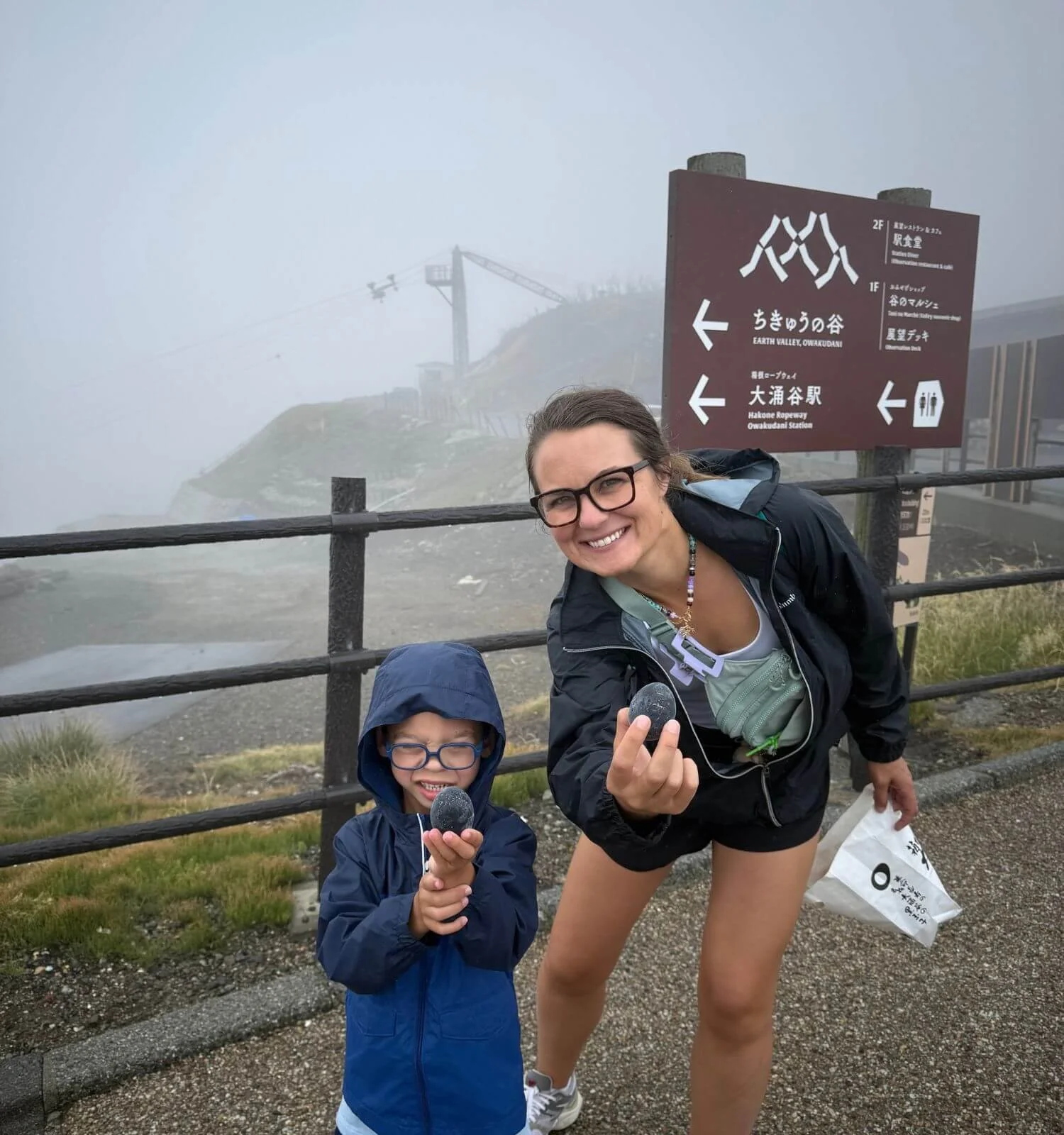
Not every moment needs to be a checklist item. Some of the best parts of traveling with kids in Japan are the small, unplanned ones.

Planning Japan? Keep It All in One Place
Hotels in every city, train legs, timed tickets, and a packing list for the whole crew add up fast. Our free Trip Planning Command Center keeps it organized so you can focus on the fun part.
- Plan each day, city by city
- Track hotels, trains, and tickets you've booked
- Keep everyone's packing in one list
Get the Free Trip Planner →