Japan Etiquette Tips: What Travelers Should Know Before Visiting
This post contains affiliate links, which means we may earn a small commission if you book or buy through them, at no extra cost to you. As an Amazon Associate I earn from qualifying purchases. We only recommend things we've used ourselves or would genuinely use on our own family trips, and all opinions are our own.
Japan has a strong culture of consideration for the people around you, and a lot of that shows up in small, everyday customs that aren’t always obvious to first-time visitors.
None of what follows are strict rules you’ll get in trouble for missing. They’re just common courtesies that keep you from feeling awkward if you don’t know them.
We already covered train-specific etiquette like quiet conversations, wearing your backpack on your front, not eating on commuter trains in our post How to Get Around Japan: A First-Time Visitor’s Guide to Trains, Suica Cards, Google Maps & More. This post covers the broader everyday customs we picked up on outside of trains and stations.
Shoes Come Off More Often Than You’d Expect
Removing your shoes before entering a home is common knowledge for most travelers, but it also applies in more places than you might assume. Many ryokans, some traditional restaurants, and certain temples or indoor cultural sites have a no shoes policy.
Watch for a designated shoe area near the entrance, usually a step up in floor level or a rack of shoe cubbies, and follow what everyone else is doing. Keep this in mind when you’re packing for Japan, maybe leave the dirty pairs with holes at home!
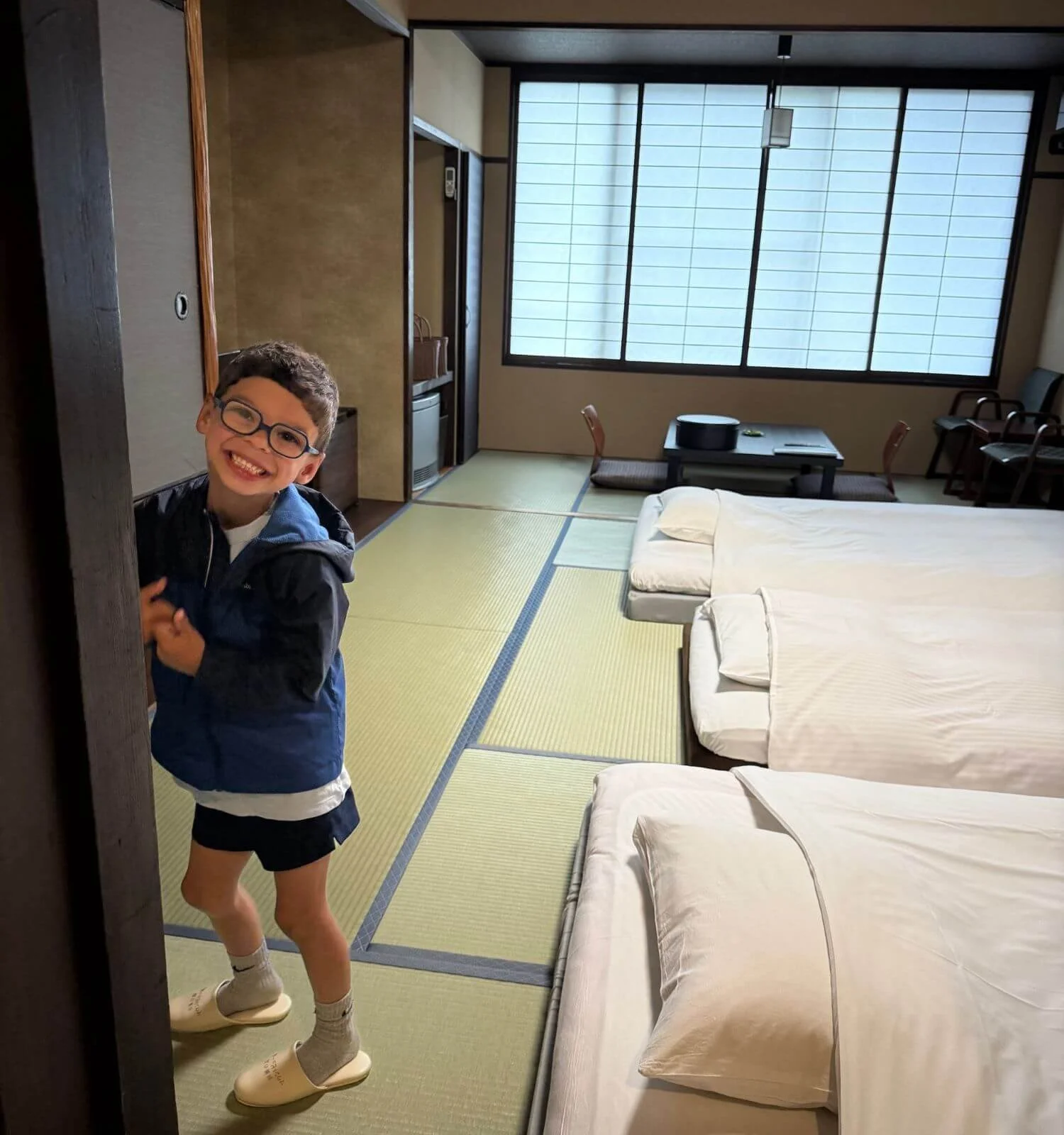
Shoes come off more often than you'd expect — many ryokan, traditional restaurants, and some indoor sites provide slippers once you step inside.
Onsens Have Their Own Set of Rules
If a ryokan or hotel stay includes an onsen, there are a few customs worth knowing before you go in.
You’ll wash and rinse thoroughly at the provided shower stations before entering the bath. The bath itself is for soaking, not washing. Swimwear generally isn’t worn. Many onsens also have rules around visible tattoos, so it’s worth checking a specific property’s policy in advance if that applies to your family. Public onsens are usually separated by gender, though some ryokan also offer private onsens you can reserve for your own family. We purchased tattoo covers on Amazon prior to leaving for Japan. We never encountered a situation where we needed them but they were nice for peace of mind!
Read More: Where to Stay in Hakone With Kids: Our Honest Take
Read More: Is Hakone Good for Kids?
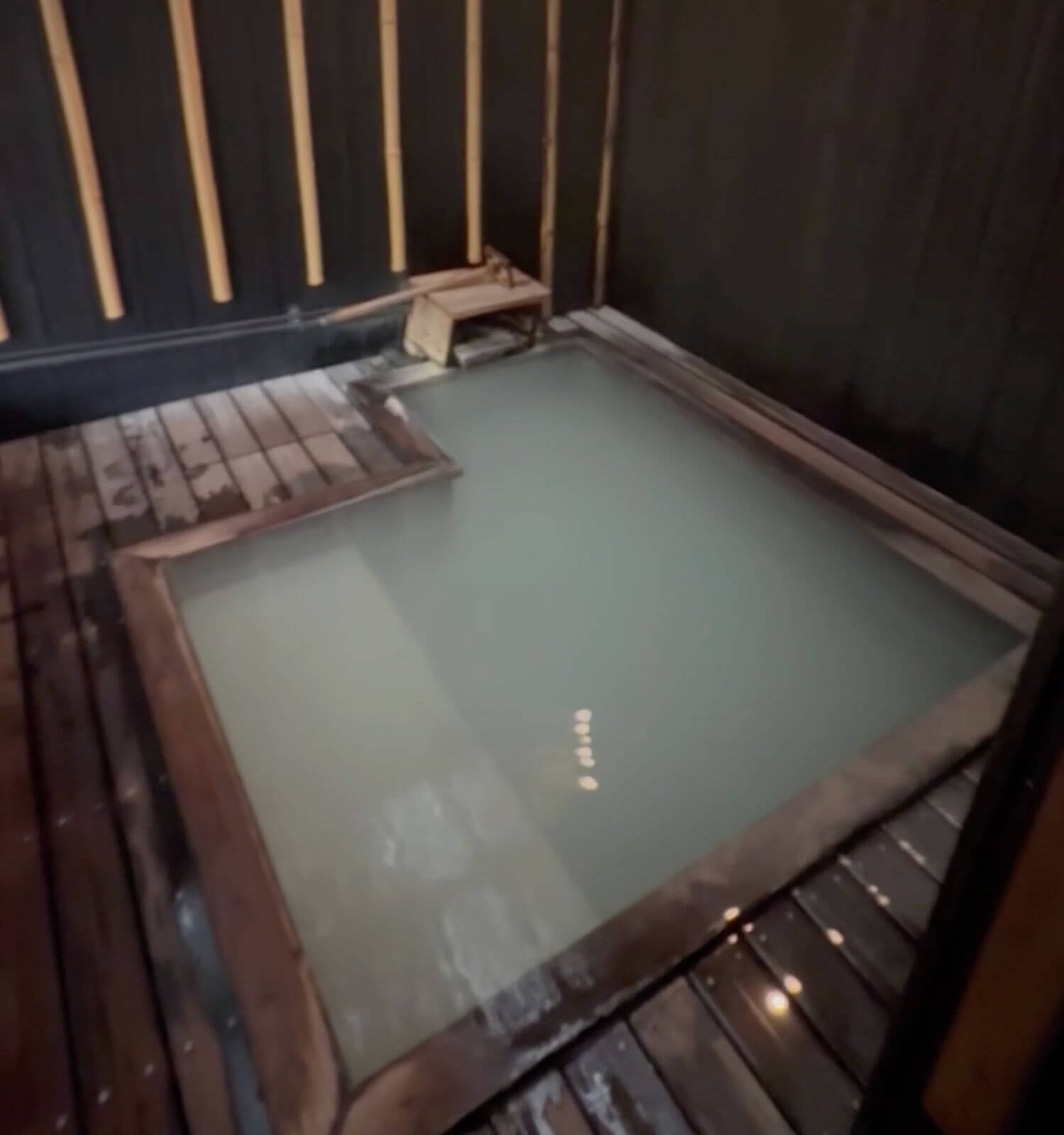
Onsen etiquette has its own set of rules — many ryokan, including ours, offer private onsens you can reserve for just your family.
Trash Cans Are Surprisingly Hard to Find
This one catches a lot of visitors off guard.
Public trash cans are far less common in Japan than in most Western countries, even in busy areas. The general expectation is that you carry your trash with you until you find a bin, rather than assuming one will be nearby. We got in the habit of keeping a small bag for exactly this purpose especially, since we were traveling with a young kid who tends to be pretty messy!
Tipping Isn’t Expected
Tipping isn’t part of Japanese dining or service culture the way it is in the US, and in some cases, trying to leave a tip can actually cause confusion or be politely declined.
Good service is simply the standard, not something added on top and paid for separately.
Paying at Shops: Look for the Tray
At many shops, restaurants, and convenience stores, you'll notice a small tray near the register. Place your cash or card on it rather than handing it directly to the cashier. Your change will usually come back on the tray or be handed to you with both hands.
It's a small courtesy, and once we noticed it, we started doing it automatically. Remember that tipping isn't expected, so there's nothing extra to leave.
Eating and Drinking Norms Vary by Setting
Eating while walking down the street isn’t the norm in most of Japan, even though street food itself is common the expectation is usually to step to the side and finish before continuing on.
This extends to trains too, with one notable exception: the Shinkansen. Unlike local and commuter trains, eating and drinking on the bullet train is completely normal, and buying a bento box before boarding is part of the experience for a lot of travelers.
Read More: Riding the Shinkansen (Japan’s Bullet Train)
Chopstick Manners To Know
Chopsticks are used at most meals in Japan, and a few habits are worth knowing so you don't accidentally do something considered rude.
Never stand your chopsticks upright in a bowl of rice. It resembles a ritual associated with funerals. For the same reason, don't pass food directly from one pair of chopsticks to another. Set the food on a plate instead. It's also best not to spear food with them or point at people while holding them.
When you're not eating, rest them on the chopstick rest if there is one, or lay them neatly across your bowl or plate. If you're sharing a dish and there are no serving chopsticks, turn yours around and use the clean ends to take food.
Want a Local to Show You the Ropes?
There's a lot to remember your first time in Japan. A local guide can explain customs as they come up, so you're not second-guessing yourself at temples, restaurants, or on the train. GoWithGuide offers private tours with local guides you can message before booking, so you can plan the day around your family's pace.
Choose Your Stop
Queuing Is Taken Seriously
Whether it’s boarding a train, waiting for a restaurant, or lining up at a popular attraction, waiting in an orderly line is a genuinely strong cultural norm in Japan. Lines tend to be respected and well-organized, even when they’re long.
Escalators: Which Side to Stand On
On escalators, people usually stand on one side and leave the other free for anyone in a hurry. In Tokyo, that means standing on the left. In Osaka and much of the Kansai region, it's the opposite: stand on the right. If you're traveling between the two cities, like we did, it's worth watching what everyone around you does.
Many stations also post signs asking people not to walk on escalators at all, so if you're with a young child, hold their hand, stand still, and don't worry too much about keeping to a side.
Wear Your Bag on Your Front in Crowded Spaces
On packed trains and platforms, it's common to see people wearing backpacks on their front instead of their back. A bag worn behind you takes up space you can't see, and in a crowded train car, that often means bumping into other passengers without realizing it.
We got into the habit of swinging our bags around before boarding anything crowded. It was less to keep track of, and far less chance of accidentally bumping the person standing behind us.
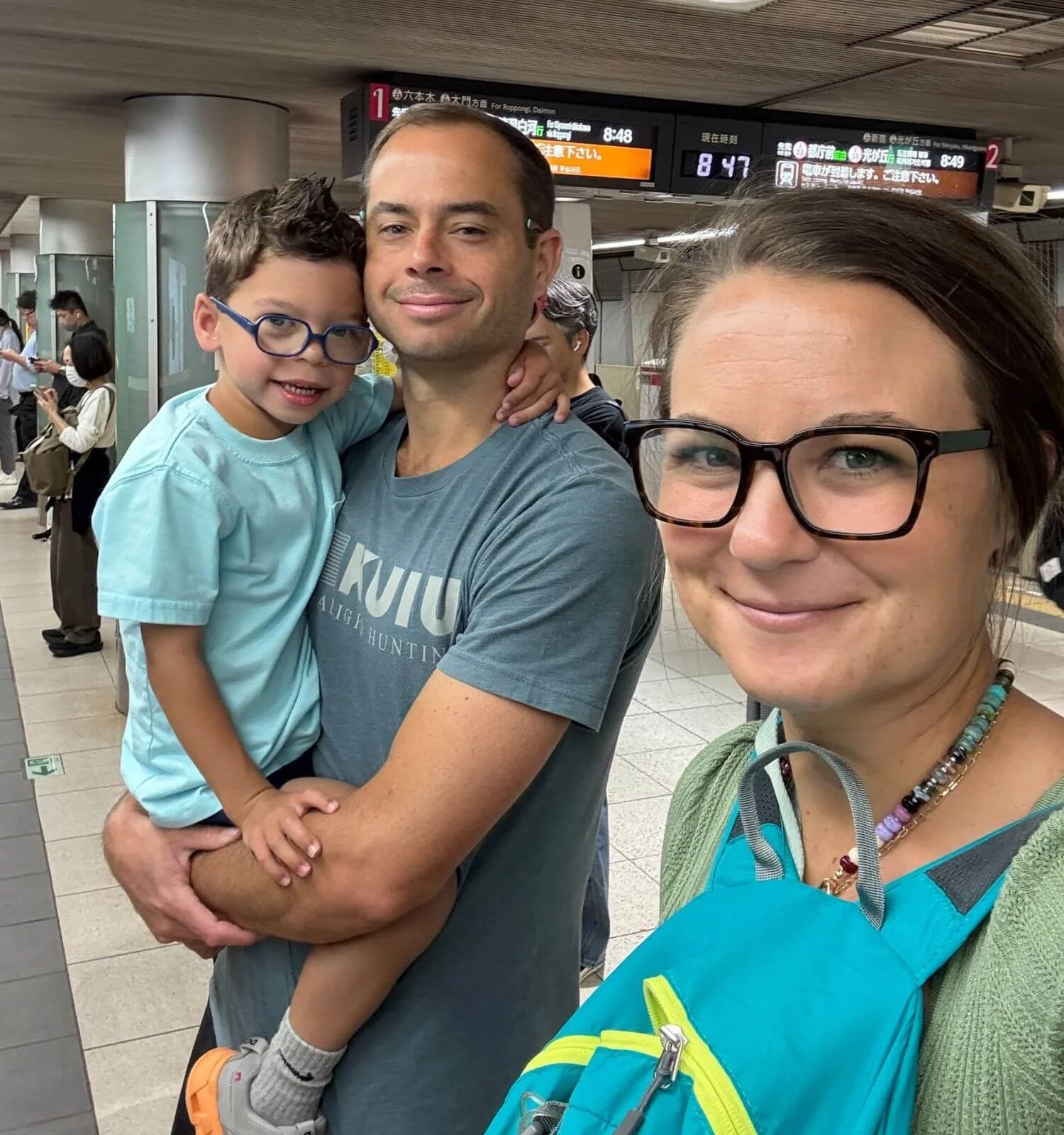
In Japan, it’s common etiquette to wear your backpack on the front of your body in crowded train stations and busy areas to avoid bumping into other people.
Public Spaces Are Generally Quiet
Beyond trains, this extends to most shared public spaces including restaurants, waiting areas, and streets in general tend to be quieter than what many American travelers are used to.
This is worth talking through with kids before your trip. We found ourselves gently reminding our son to lower his voice more than once, and having the expectation set ahead of time made it an easier conversation in the moment.
Read More: Japan With Kids: Everything I Wish I Knew Before Our Trip
Read More: Japan Activities for Kids: Scavenger Hunt + Journal & Free Printable
A Little Effort Goes a Long Way
You don’t need to memorize every custom before you land, and nobody expects visitors to get everything right. A general awareness of respect will carry you through almost any situation.

Planning Japan? Keep It All in One Place
Hotels in every city, train legs, timed tickets, and a packing list for the whole crew add up fast. Our free Trip Planning Command Center keeps it organized so you can focus on the fun part.
- Plan each day, city by city
- Track hotels, trains, and tickets you've booked
- Keep everyone's packing in one list
Get the Free Trip Planner →