Riding the Shinkansen (Japan’s Bullet Train)
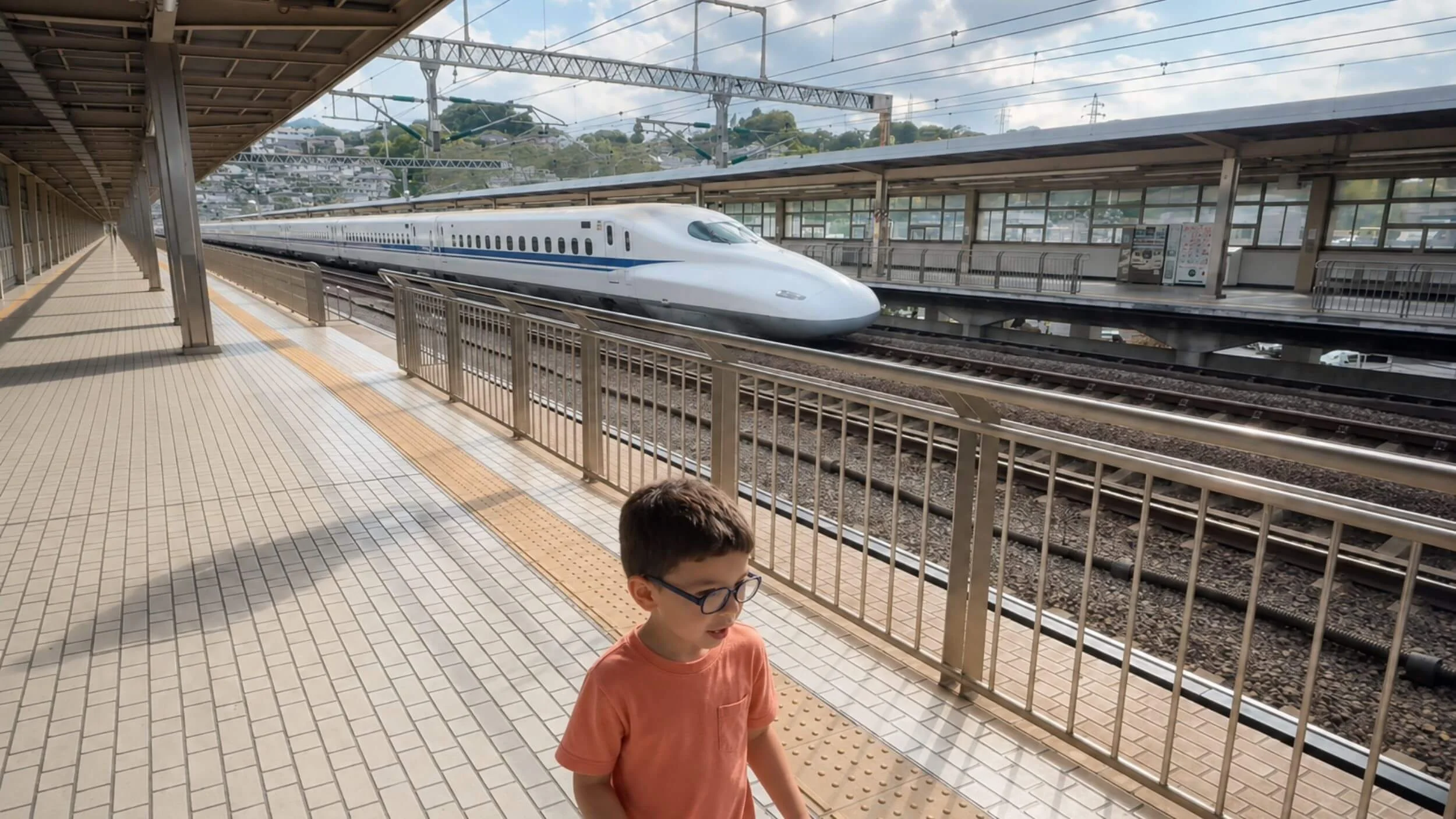
Watching the Shinkansen’s approach the station was a highlight of the trip!
This post contains affiliate links. If you book through them, we may earn a small commission at no extra cost to you.
For many travelers, the Shinkansen will be your first experience riding Japan’s famous bullet train. While Japan’s rail system is incredibly efficient, understanding how tickets, seats, and luggage work ahead of time can make the experience much less intimidating.
After taking the Shinkansen between cities during our 14-day Japan trip, we found it to be one of the easiest and most enjoyable parts of traveling through Japan.
Buying Shinkansen Tickets
The Shinkansen is not included with a Suica card. Your IC card works for local trains, subways, and buses, but long-distance bullet train tickets must be purchased separately.
We looked into the Japan Rail Pass before our trip, but based on our research, it was no longer the most cost-effective option for the route we were taking, so we skipped it. Instead, we used our Suica card for nearly every train ride in Japan, and paid separately only for the Shinkansen and for the Hakone Romance Car — purchasing those tickets individually, at the station, each time we rode.
If it makes more sense for your route, regional JR Pass options are worth comparing: JR West Japan Pass (Kyoto, Osaka, Hiroshima, Kobe, Okayama) and JR East Japan Pass (Tokyo, Yokohama, Chiba, Nikko, Sendai).
You can purchase Shinkansen tickets:
At a JR ticket office
From JR ticket machines
Through online reservation services such as SmartEX or Klook
For our first Shinkansen ride, we purchased tickets at the JR ticket counter. Since we were traveling as a family, we wanted reserved seats together and appreciated having someone confirm we had the correct train, departure time, and seats.
The staff spoke enough English to make the process simple, and this was the option that felt least stressful for our first trip.
Book it: Shinkansen (Bullet Train) Tickets
Is the Shinkansen Worth the Cost?
The Shinkansen is more expensive compared to regular trains.
Japan’s local trains and subway systems are incredibly affordable, but the bullet train is a premium long-distance service. For many travelers, the price difference can feel significant.
However, the time savings are a major part of what you are paying for.
For example:
Tokyo → Kyoto - Shinkansen: about 2 hours 15 minutes - Regular trains: roughly 8–9+ hours with multiple transfers
Tokyo → Osaka - Shinkansen: about 2 hours 30 minutes - Regular trains: roughly 8–10+ hours depending on route
The Shinkansen allows you to spend your limited vacation time exploring instead of losing an entire day to transportation.
If you are trying to estimate your overall Japan trip budget, we break down exactly what we spent on transportation, hotels, food, activities, and more in our What Our 14-Day Japan Trip Actually Cost: A Full Family Breakdown
For our itinerary, the cost was absolutely worth it. The comfort, reliability, and amount of time saved made traveling between major cities simple and stress-free. However, if you are traveling on a budget, I would look into the cost and factor this in when creating your itinerary.
Choosing a Shinkansen Train
Not all Shinkansen trains are the same. On popular routes, you may see different service types:
Nozomi – The fastest option, with the fewest stops
Hikari – Slightly slower, with more stops
Kodama – The slowest option, stopping at more stations
For most visitors traveling between major cities like Tokyo, Kyoto, and Osaka, Nozomi is usually the most convenient option.
Reserved vs. Non-Reserved Seats
Most Shinkansen trains offer several seating options:
Non-reserved seats - Least expensive option - First-come, first-served seating - Best for flexible travelers outside of busy travel periods
Reserved seats - Assigned seating - Recommended for families, groups, or anyone traveling during busy periods - Allows you to sit together without worrying about finding seats
Green Car - First-class seating - Larger seats and more space - Quieter atmosphere for an additional fee
For families with young kids, I strongly recommend reserved seats. It removes one more thing to worry about when traveling with kids and luggage.
Traveling With Children
One thing families often wonder about is whether children need their own Shinkansen ticket.
For younger children, a separate ticket may not be required if they are sitting with an adult and do not need their own seat. During our trip, our 5-year-old did not have his own Shinkansen ticket and sat on our laps during the ride.
This worked well for our family, but it may not be the best option for everyone. If your child is older, taller, needs their own space, or you are traveling during a longer journey, purchasing a reserved seat may make the experience much more comfortable.
Always check the current JR child fare rules before purchasing tickets, as requirements vary depending on age and whether a child will use their own seat.
Read More: Japan With Kids: Everything I Wish I Knew Before Our Trip
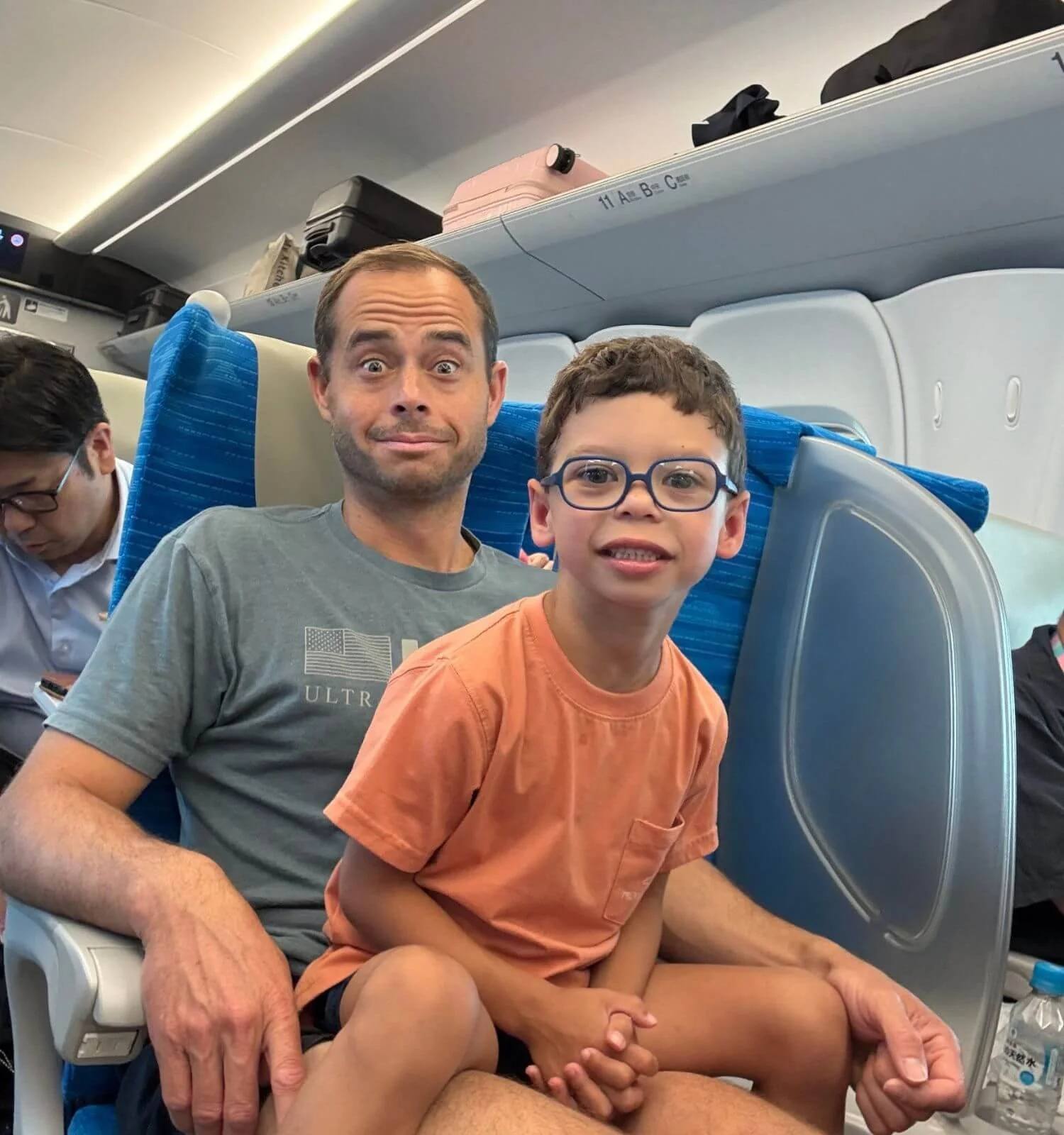
For younger children, a separate ticket often isn't required if they're sitting with an adult rather than in their own seat. Our five-year-old rode this way for every Shinkansen leg of the trip.
Luggage on the Shinkansen
Carry-on sized luggage fits comfortably in the overhead racks or in the space near your seat.
If you are traveling with oversized luggage, many Shinkansen services require you to reserve an oversized baggage seat in advance.
Our biggest recommendation: use luggage forwarding whenever possible.
We sent our larger luggage ahead and traveled through Hakone with only overnight bags. This made navigating stations, buses, ropeways, and trains dramatically easier.
Dragging large suitcases through major stations like Tokyo Station or Kyoto Station is possible, but it adds unnecessary stress.
Read More: What We Packed for Japan (Family of 3, 14 Days, Carry-On Only)
What the Shinkansen Is Like Onboard
The ride itself is comfortable and designed for longer-distance travel.
Amenities typically include:
Restrooms
Overhead luggage storage
Power outlets on many trains
Wi-Fi on many services (availability varies)
Unlike local trains, eating and drinking are completely normal on the Shinkansen.
Many travelers purchase a bento box, snacks, or drinks before boarding. In fact, buying a station bento is part of the experience for many visitors.
A Few Tips Before Boarding
Arrive Early
While Japan’s trains are incredibly punctual, give yourself extra time to find your platform, especially at large stations like Tokyo Station or Shin-Osaka.
Know Your Departure Time
Unlike commuter trains, where you can board whenever you reach the platform, a reserved Shinkansen ticket is valid only for the specific train you booked. If you miss it, that ticket isn't automatically good for the next departure — so treat your ticketed time as a real deadline, not a rough target.
Keep Your Ticket Accessible
If you are using paper tickets, do not throw them away after entering the station.
You will need them again when exiting at your destination and could be charged again if you do not have it.
Keeping them somewhere easy to access will save you time and stress.
Choose Your Seat Carefully
If you’re interested, Mount Fuji is visible from the Tokaido Shinkansen in both directions — on the right side of the train heading from Tokyo toward Kyoto or Osaka, and on the left side on the return trip. We caught a great view heading back from Osaka to Tokyo. Seat availability depends on the train type, so check the seating layout when booking if a view is a priority for you.
Overall
The Shinkansen ended up being one of our favorite parts of traveling through Japan. It is an experience in itself, and if you are traveling with kids, chances are they will be thrilled with the chance to ride on such a fast-moving train. It was comfortable, reliable, and allowed us to see multiple regions without spending entire days in transit.
If you are planning a similar route, our The Ultimate 14-Day Travel Guide:A Step-by-Step Itinerary for First-Time Visitors includes our complete day-by-day schedule, transportation routes, hotels, reservations, and the logistics decisions that helped our family travel smoothly.
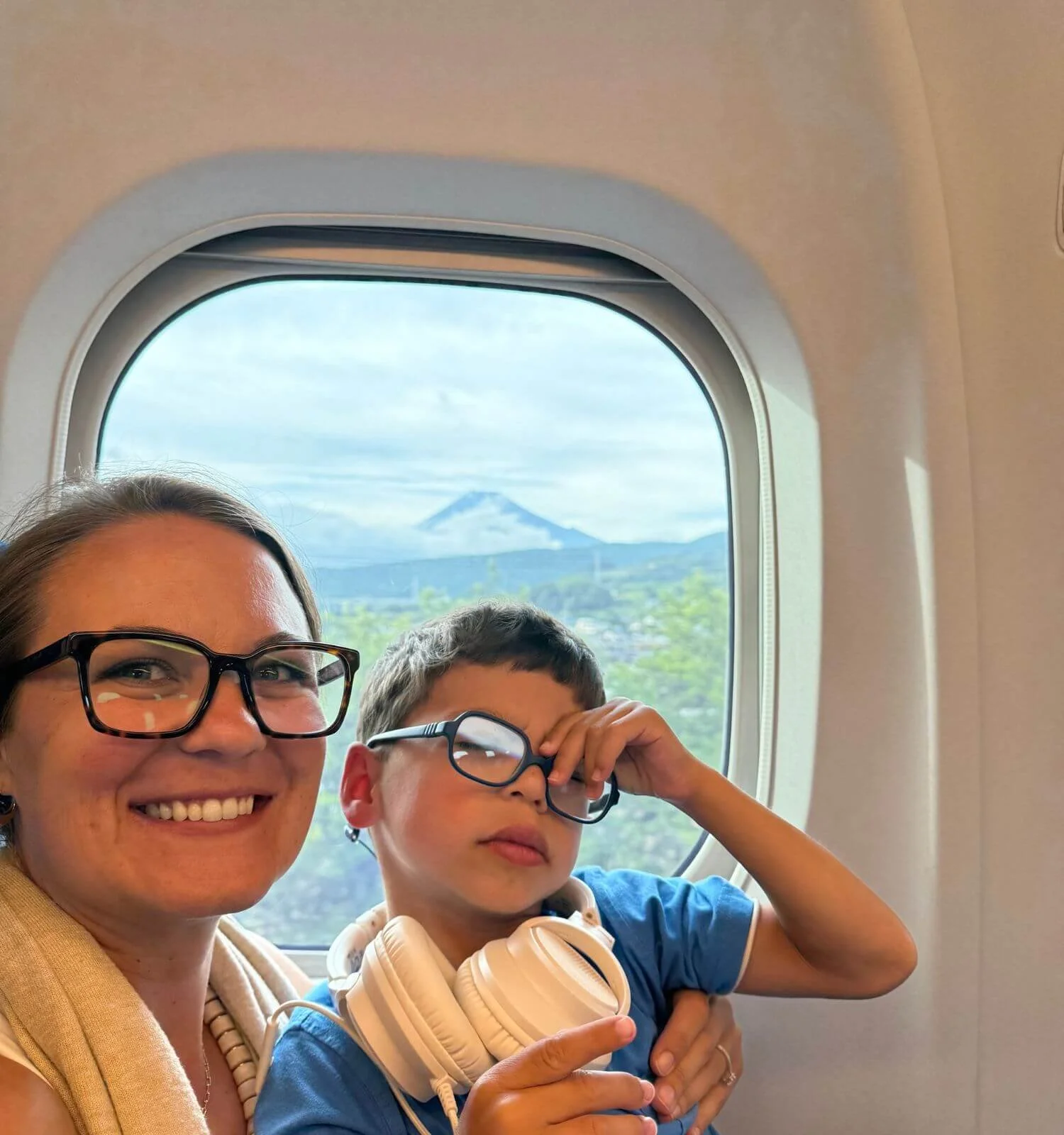
The Shinkansen ended up being a highlight of the trip and catching Mount Fuji through the window on the way back to Tokyo is exactly why! (Even if Jackson’s face doesn’t show it in the moment :)