What We Packed for Japan (Family of 3, 14 Days, Carry-On Only)
Packing for two weeks in Japan with only carry-on luggage sounded intimidating before our trip. We traveled as a family of three through Tokyo, Hakone, Kyoto, Hiroshima, Miyajima, Nara, and Osaka without checking a single bag in late May and early June of 2026.
Looking back, it was one of the best decisions we made.
Between hotel laundry, luggage forwarding, and packing intentionally, we never felt like we were missing anything. If anything, we realized we could have packed even less.
If you’re wondering whether it’s possible to spend two weeks in Japan with only carry-on luggage, the answer is absolutely yes.
We traveled during late May and early June.
This post contains affiliate links, which means we may earn a small commission if you book or buy through them, at no extra cost to you. As an Amazon Associate I earn from qualifying purchases. We only recommend things we've used ourselves or would genuinely use on our own family trips, and all opinions are our own.
At a Glance
✔ Family of 3
✔ 14 days in Japan
✔ Carry-on luggage only
✔ No checked bags
✔ Laundry once halfway through the trip
✔ Luggage forwarded between cities
✔ Would pack even less next time
Our Luggage Setup
We kept our packing system simple. Everyone had a designated bag, and everything had a place.
Main Bags
We used:
Cotopaxi Allpa 35L Travel Backpack
Quince Carry-On Roller
35L Expandable Travel Backpack (Amazon)
This combination worked extremely well for moving through airports, train stations, hotels, and multiple cities.
Personal Item Bags
We also carried a lightweight personal item:
Packable Backpack (Amazon)
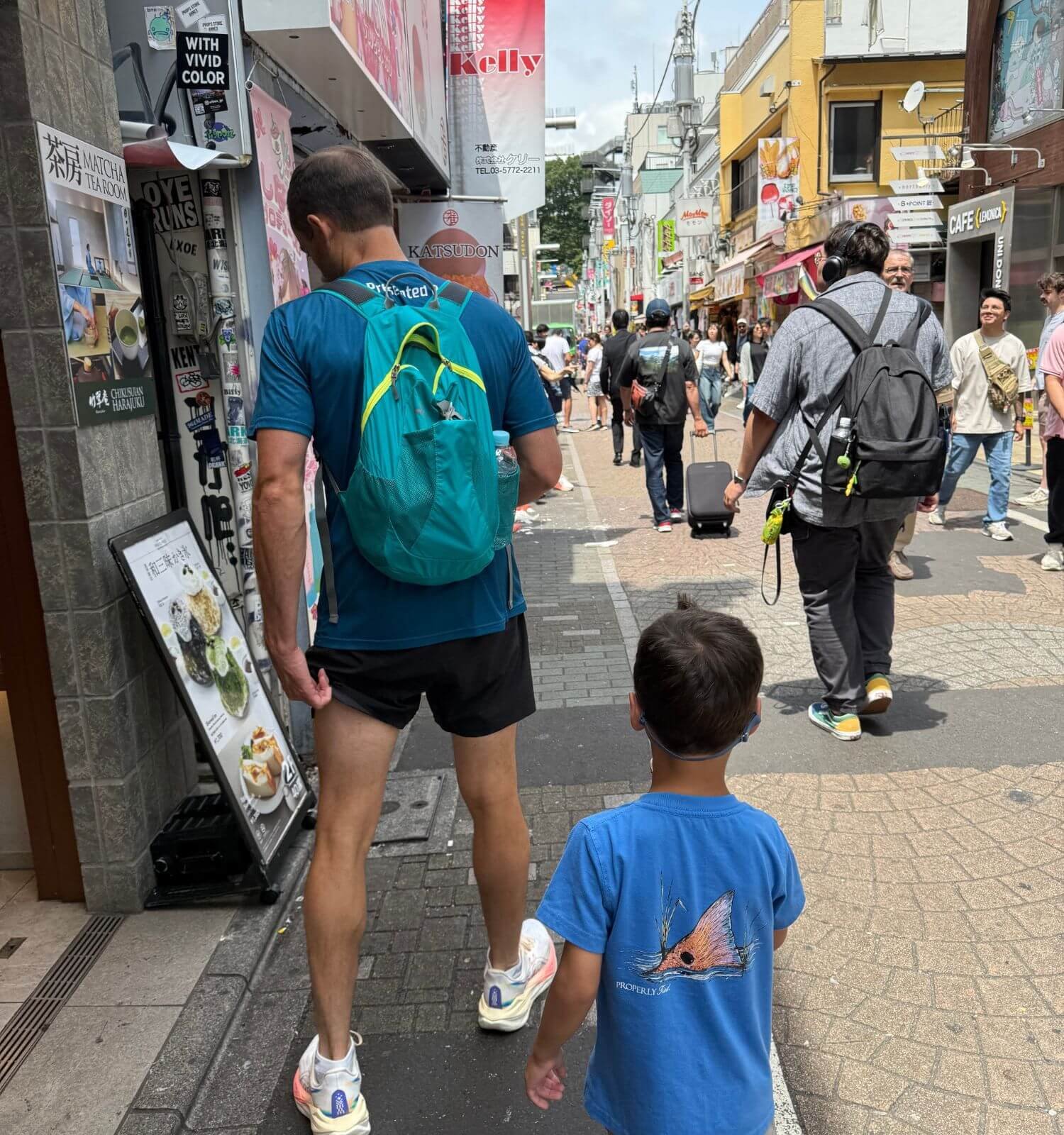
This daypack went everywhere with us: water bottles, snacks, an extra layer, and whatever we picked up along the way.
These became our everyday bags for:
water bottles
snacks
jackets
souvenirs
day trips
The best feature is that this bag was easily folded and packed when we weren’t using it.
Passport & Essentials Bag
We also carried a Béis Sport Sling.
This ended up being one of our favorite travel items.
We kept our passports, wallet, medications, lip balm, phone charger, and other essentials inside, so we never had to dig through a backpack while navigating airports or train stations.
If you’re traveling internationally, we highly recommend bringing a small crossbody or sling bag for your valuables.
Why We Chose Carry-On Only
Packing light completely changed how we experienced Japan.
Instead of worrying about luggage, we could focus on enjoying the trip.
Traveling with carry-ons made it much easier to:
navigate busy train stations
move between hotels
board trains quickly
avoid checked baggage fees
take advantage of Japan’s luggage forwarding service
It also forced us to pack intentionally instead of bringing a suitcase full of “just in case” items. Packing cubes and a few small organizers helped me keep my sanity while packing and repacking every time we moved locations.
Luggage Forwarding Made It Even Easier
One of the biggest reasons carry-on travel worked so well was Japan’s luggage forwarding service.
Instead of dragging our bags between every destination, we shipped our luggage ahead several times during the trip.
We forwarded our luggage:
Tokyo → Kyoto
Kyoto → Osaka
Osaka → Tokyo
For our overnight stays in Hakone and Miyajima, we packed one small overnight bag and sent our larger luggage ahead to our next hotel.
This meant we never had to haul suitcases onto crowded trains or through massive stations like Tokyo Station or Kyoto Station.
If you’re traveling between multiple cities in Japan, luggage forwarding was one of the biggest logistics decisions that made our trip easier. We explain exactly how we used it, what it cost, and when we sent our bags in our luggage forwarding guide below.
Read More: Luggage Forwarding in Japan With Kids
It honestly felt like a luxury service, yet it was surprisingly affordable.
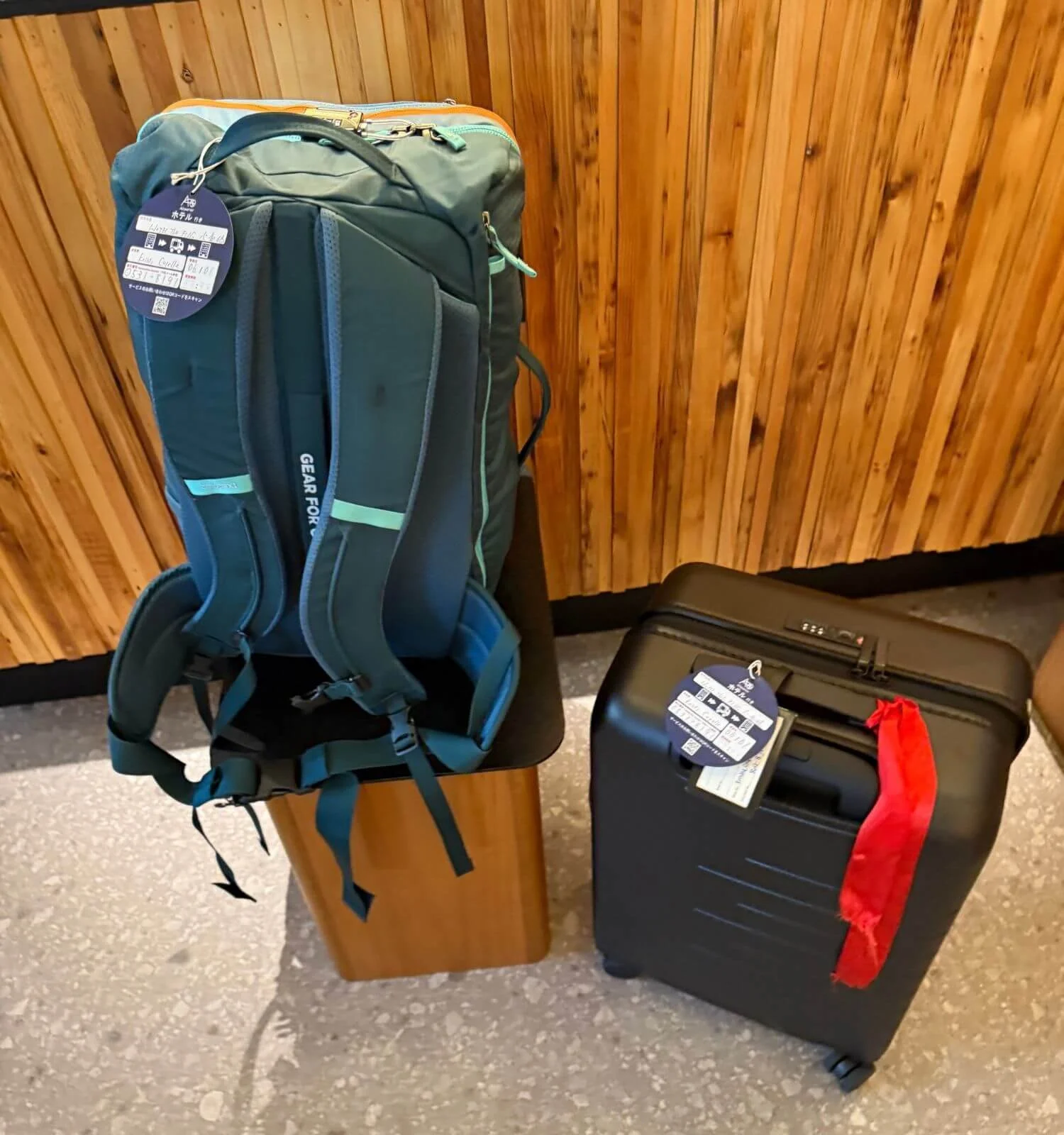
Luggage forwarding was one of the best decisions we made. Sending our bags ahead meant we never had to drag them through a crowded train station.
Exactly What We Packed for Japan
What I Packed
- 5 tank tops
- 2 casual tops
- 1 athletic T-shirt
- 2 pairs of casual shorts
- 1 pair of athletic shorts
- 1 short skirt
- 1 maxi skirt
- 1 casual dress
- 1 lightweight rain jacket Shop
- 1 lightweight shawl Shop
- 2 pairs of sneakers CasualAthletic
- One week’s worth of underwear
- One week’s worth of socks
- 2 pairs of earrings
- 4 necklaces Beaded heartChunky heartInitial scarf
- Hair clips Shop
What Jackson Packed
- About one week’s worth of T-shirts
- 4 pairs of shorts
- 1 lightweight rain jacket Shop
- 1 jacket Similar
- 2 pairs of sneakers Pair 1Pair 2
- One week’s worth of socks
- One week’s worth of underwear
- 1 pair of pajamas
What Matt Packed
- 4 to 5 T-shirts
- 2 polo shirts
- 2 pairs of casual shorts
- 1 pair of athletic shorts
- 1 lightweight rain jacket Shop
- 2 pairs of sneakers
- One week’s worth of socks
- One week’s worth of underwear
Bags & Organization
- Cotopaxi Allpa 35L backpack Shop
- 35L expandable backpack (Matt’s) Shop
- Quince carry-on roller Similar
- Jackson’s travel backpack Shop
- Packable daypack Shop
- Sling bag for passports and essentials
- Card and coin wallet Shop
- Packing cubes CompressionColorfulDaily
- Clear zip organizers Shop
- Electronics organizer Shop
- Luggage locks Shop
- Water bottles OursJackson’s
Toiletries & Small Items
Electronics & Comfort
Our Hotels Provided
- Shampoo
- Conditioner
- Body wash
- Toothbrushes
- Toothpaste
- Razors
- Cotton swabs
- Pajamas (at several hotels)
We packed about one week’s worth of clothing for everyone and did laundry once, halfway through the trip.
Because of the toiletries provided by hotels, we didn’t need to repurchase more as we expected to once our travel sized toothpaste, shampoo/conditioner etc. ran out.
I also packed a small hair straightener but honestly barely used it. Japan’s humidity had other plans for my hair, so it spent most of the trip clipped up.
One packing trick I loved was bringing a few lightweight necklaces. They took up almost no room in my bag but helped make repeated outfits feel completely different throughout the trip.
Jackson’s jacket ended up getting much more use than we expected. He gets cold easily, especially on airplanes and in heavily air-conditioned restaurants. Because it packed down so small, it was easy to keep in our day bag.
Hotel amenities can vary significantly in Japan, so choosing accommodations strategically made a big difference for us. You can read exactly where we stayed, why we chose each location, and what we thought in our Where We Stayed in Japan: Honest Reviews of Our 6 Hotels (13 Nights as a Family)
Laundry Made Packing Light Possible
Halfway through the trip, we used the laundry facilities at one of our hotels.
That one laundry day allowed us to:
wear fewer clothes overall
keep our luggage light
avoid overpacking
easily travel for two weeks with carry-ons
It worked perfectly.
Things We’re Really Glad We Packed
My Lightweight Shawl
This was, without question, the MVP of my suitcase.
It solved a problem we ran into constantly: many mornings started cool, especially when we left early for sightseeing, and within a few hours the temperature would climb and I no longer needed an extra layer. Instead of carrying a bulky jacket all day, I could just fold the shawl into my day bag.
I used it as:
a scarf
a light blanket
an extra layer during cool mornings
something to throw over my shoulders in air-conditioned restaurants
an extra layer on chilly trains and during flights
Even Jackson borrowed it a few times. It weighed almost nothing but added a surprising amount of comfort throughout the trip.
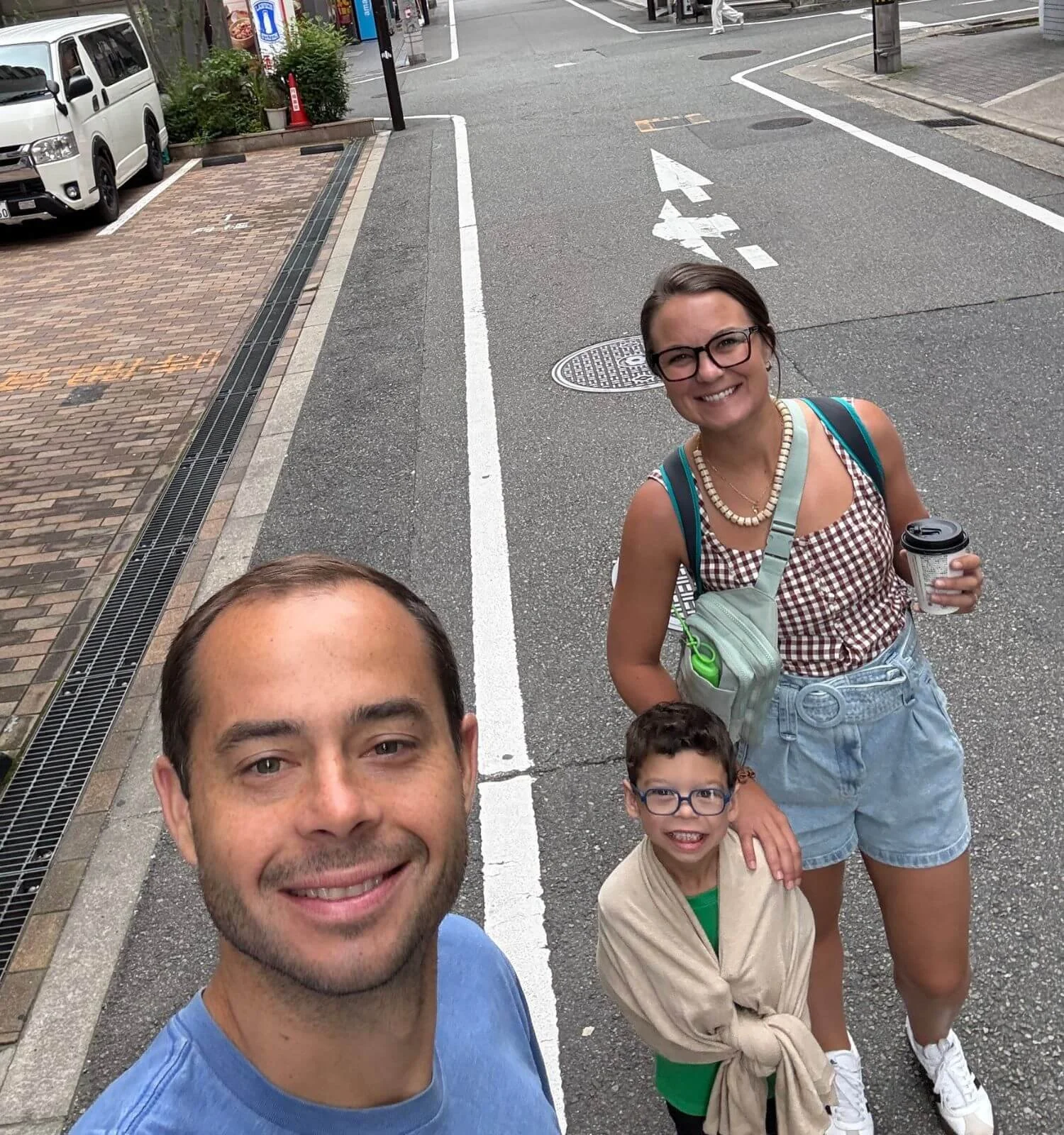
The shawl got so much use that even our son borrowed it more than once. It’s a small, lightweight item that pulled a lot of weight.
Two Pairs of Shoes
Walking 18,000+ steps on most days meant our shoes got a serious workout, and having a second pair earned its space many times over.
It meant:
our feet got a break from wearing the same shoes every day
rainy days didn’t derail our plans
wet shoes had time to dry before the next full day of walking
After two weeks of walking through Japan’s streets, train stations, and attractions, we would absolutely bring two pairs again.
Shop our shoes on Amazon
Rain Jackets
We were glad we packed lightweight rain jackets instead of umbrellas. They packed small and came in handy several times throughout the trip. If you find yourself needing an umbrella during your trip, they are easy to find and purchase throughout Japan.
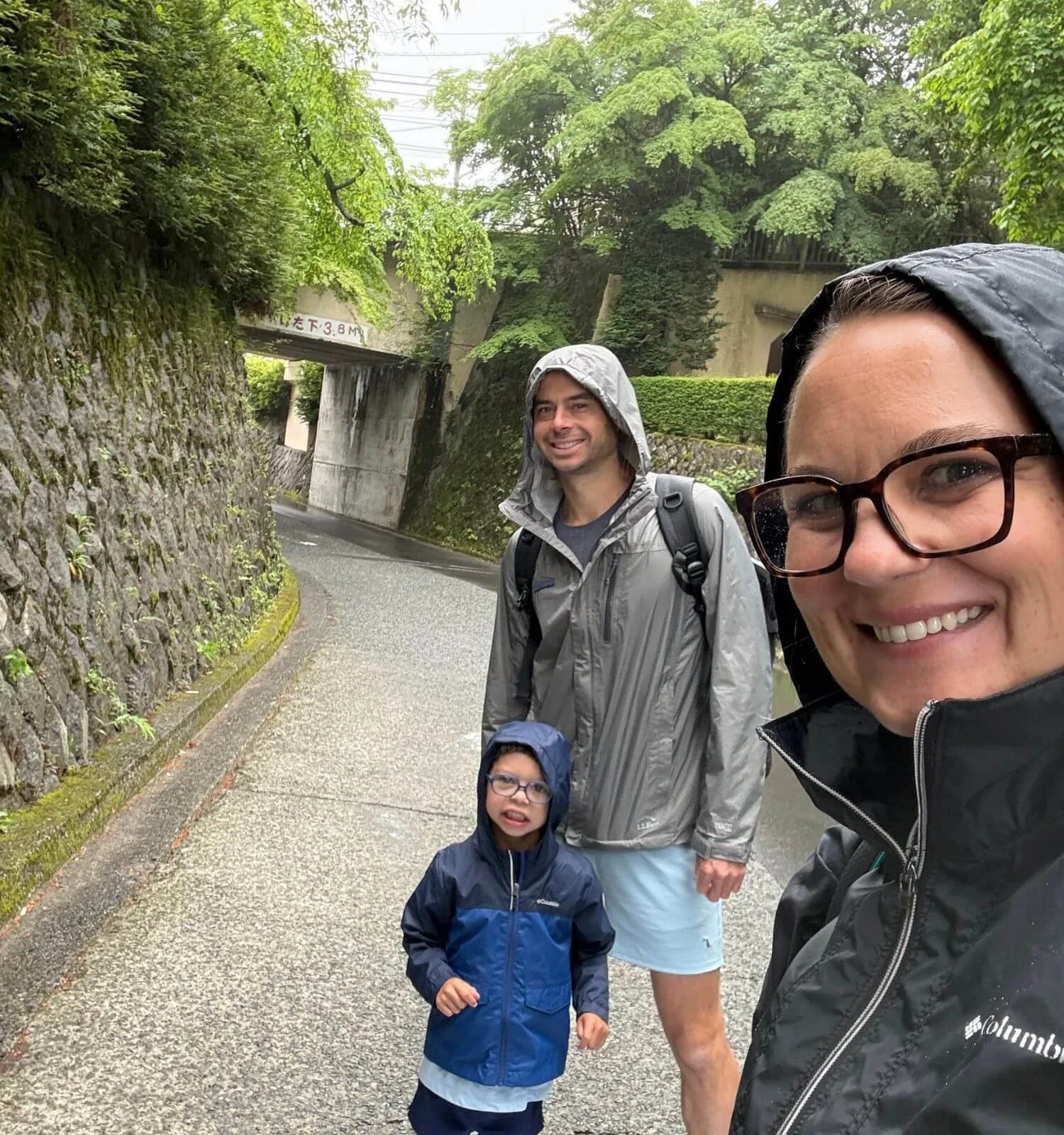
Lightweight rain jackets earned their spot in every bag: packable, reusable, and practical!
Portable Sound Machine
This isn’t something every family needs, but it helped our son sleep in unfamiliar hotel rooms and was well worth the tiny amount of luggage space it required.
A Stain Pen
If you’re traveling with a young child, you probably already understand why this made the list. Between meals, snacks, and a five-year-old exploring a new country, unexpected messes happen. It took up almost no space and came in handy more than once.
Hand Sanitizer
Japan is incredibly clean, but there were times we wanted to eat street food or grab something on the go without immediate access to a sink. Having a small bottle with us made those moments much easier.
What We’d Skip or Change Next Time
Not everything earned its spot in our bags, and a few things only became obvious once we were actually navigating trains, walking 18,000+ steps a day, and dealing with Japan’s humidity.
If we packed for Japan again, we would:
Skip heavy denim. I packed a pair of jean shorts thinking they’d be versatile, and they turned out to be one of the least practical things in my suitcase. Denim takes up more space than lightweight fabrics, takes longer to dry after washing, doesn’t always fully dry in hotel dryers, and feels far less comfortable after a long day of walking in humidity. Lightweight, breathable fabrics were a much better fit for Japan’s climate.
Leave most athletic clothes at home. We walked so much that we never found time to actually work out.
Leave the tablet at home. Jackson’s tablet barely got used. The international flights had plenty of movies, and he didn’t reach for it otherwise.
Pack fewer “nice” outfits. We naturally gravitated toward comfortable clothing after long sightseeing days, so dressier pieces mostly rode along unused.
Skip the hair straightener. Between the humidity and how little time we spent getting ready, it wasn’t worth the space.
Pack one or two fewer outfits each, in general laundry day meant we had more clothing than we actually needed.
We’d pack everything else again without hesitation: the shawl, the two pairs of shoes, the rain jackets, the sound machine, the stain pen, and the hand sanitizer. Every trip teaches you something, and this one reminded us that we need far less than we think.
Final Thoughts
Packing light gave us something no extra suitcase could have: freedom.
Between carry-on luggage, one laundry day, and Japan’s incredible luggage forwarding service, we moved easily between cities without ever feeling weighed down by our belongings.
If you’re debating whether you can pack for two weeks in Japan using only carry-ons, you absolutely can.
The key isn’t packing more.
It’s packing smarter.

Planning Japan? Keep It All in One Place
Hotels in every city, train legs, timed tickets, and a packing list for the whole crew add up fast. Our free Trip Planning Command Center keeps it organized so you can focus on the fun part.
- Plan each day, city by city
- Track hotels, trains, and tickets you've booked
- Keep everyone's packing in one list
Get the Free Trip Planner →