Is Japan Good for Families? What We Actually Thought of Our Trip
Short answer: yes, genuinely. We spent 14 days traveling Japan as a family of three, and it surprised us how well it worked — not because everything was effortless, but because the things that made it hard were manageable, and the things that made it great were better than we expected. Here's the honest version, not the highlight reel.
This post contains affiliate links. If you book through them, we may earn a small commission at no extra cost to you.
In a Rush? Here's Everywhere We Stayed
Everything We Booked Along the Way
What Actually Worked Well
The trains made everything easier than we expected. We relied on a Suica card for city trains and the Shinkansen for getting between cities, and never once needed a rental car. That alone removed a huge amount of the logistical stress we'd normally expect traveling with a kid.
Read more: How to Get Around Japan
Gluten-free food was genuinely more possible than we thought going in. We found real gluten-free versions of okonomiyaki and takoyaki in Osaka, managed convenience store meals without issue, and never felt like our dietary needs were limiting what we could experience.
Read more: How to Eat Gluten Free in Japan
The specific moments that stuck with us: the Arashiyama Monkey Park, feeding monkeys with Jackson genuinely engaged the whole time; the hike up through Fushimi Inari's endless torii gates; the sumo wrestling experience in Tokyo; a hotel in Osaka with a lobby library Jackson loved enough that we have a photo of Matt reading to him there. None of these were things we expected to be highlights walking in.

This is an example of one of those little gems you collect while traveling - not a plan on the itinerary but a nice addition and a chance to rest our feet for a minute!
Book it: Fushimi Inari Morning Tour
Book it: Sumo Wrestling Experience + Chanko Lunch
Read more: Where We Stayed in Osaka
Two more that deserve their own mention: the deer in Nara, wandering freely and bowing for crackers, was one of Jackson's favorite parts of the entire trip — the kind of thing that's genuinely hard to explain to a kid beforehand and just has to be experienced. And Miyajima, specifically staying overnight rather than just day-tripping it, ended up being one of our favorite stops on the whole itinerary. Seeing the floating torii gate at both high and low tide, with the crowds gone in the evening, is something we'd genuinely do again exactly the same way.
Read more: Where to Stay in Miyajima
Two activities are worth calling out specifically, because how well they worked really depended on Jackson's personality and state that day. The sushi-making class in Tokyo was great for us because Jackson is generally a kid who can sit through a longer, hands-on activity — this one ran about 3 hours, and being hands-on kept him engaged. He also happened to be pretty jet-lagged that day, so he had less of his usual energy, which honestly worked in our favor here. If your kid runs high-energy, a 3-hour seated class could be a real struggle. teamLab Borderless was the opposite kind of win: highly interactive, meant to be walked through and touched, and it was perfect for a curious, high-energy kid — fun for us as parents too, not just something we tolerated for Jackson's sake.
Book it: teamLab Borderless

teamLab Borderless in Tokyo is definitely a can’t miss with kids.
What Was Genuinely Hard
We won't pretend everything was easy. The flight itself is long, and there's no getting around that with a young kid. Jackson was just barely too small to ride the slide inside one of Osaka's towers, which was a real, in-the-moment disappointment for him. We also happened to be heading into Osaka right as a typhoon was moving through, which meant rain we hadn't fully planned around.
None of these were dealbreakers, but they're worth knowing about rather than pretending the whole trip was seamless.
Worth Deciding Ahead of Time: Hiroshima
We actually skipped the Peace Memorial and Atomic Bomb Museum ourselves, and just quickly walked through the area for two honest reasons: we weren't sure Jackson was old enough yet for subject matter that heavy, and an incoming typhoon forced us to rework our itinerary and cut time in Hiroshima shorter than planned. We don't regret the decision, but we also don't want to pretend we can speak to what it's actually like with kids, since we haven't done it ourselves. If it's on your list, we'd genuinely encourage deciding as a family ahead of time — both whether your kids are ready for it, and how much buffer time you build in, since travel plans in Japan (typhoon season especially) can shift fast.
Read more: Is Hiroshima Good with Kids?
The Walking Is Real — Plan for It
This is honestly the hardest part of Japan with a kid, more than anything else on this list. The train system is genuinely excellent and efficient, and we used it constantly — and we still walked 20,000 to 30,000 adult steps every single day. Efficient trains don't mean you're not walking; they mean you're walking between attractions and then back to the efficient trains.
There were moments, especially when it rained or toward the end of the trip as fatigue set in, where we called a taxi instead. That's a real option, but it adds up if you lean on it often, and if you're traveling with more kids than car seats allow for, that could become a genuine planning issue, not just a cost one.
Be realistic about your own kid's walking ability when you plan your itinerary. Jackson was small enough at the time that we simply took turns carrying him when he hit a wall — but he also walked a lot on his own, more than we expected. We tried a stroller once, at a hotel that offered free rentals, and returned it quickly; we found it more annoying to manage than just carrying him ourselves.
Read More: Our 14 Day Japan Itinerary
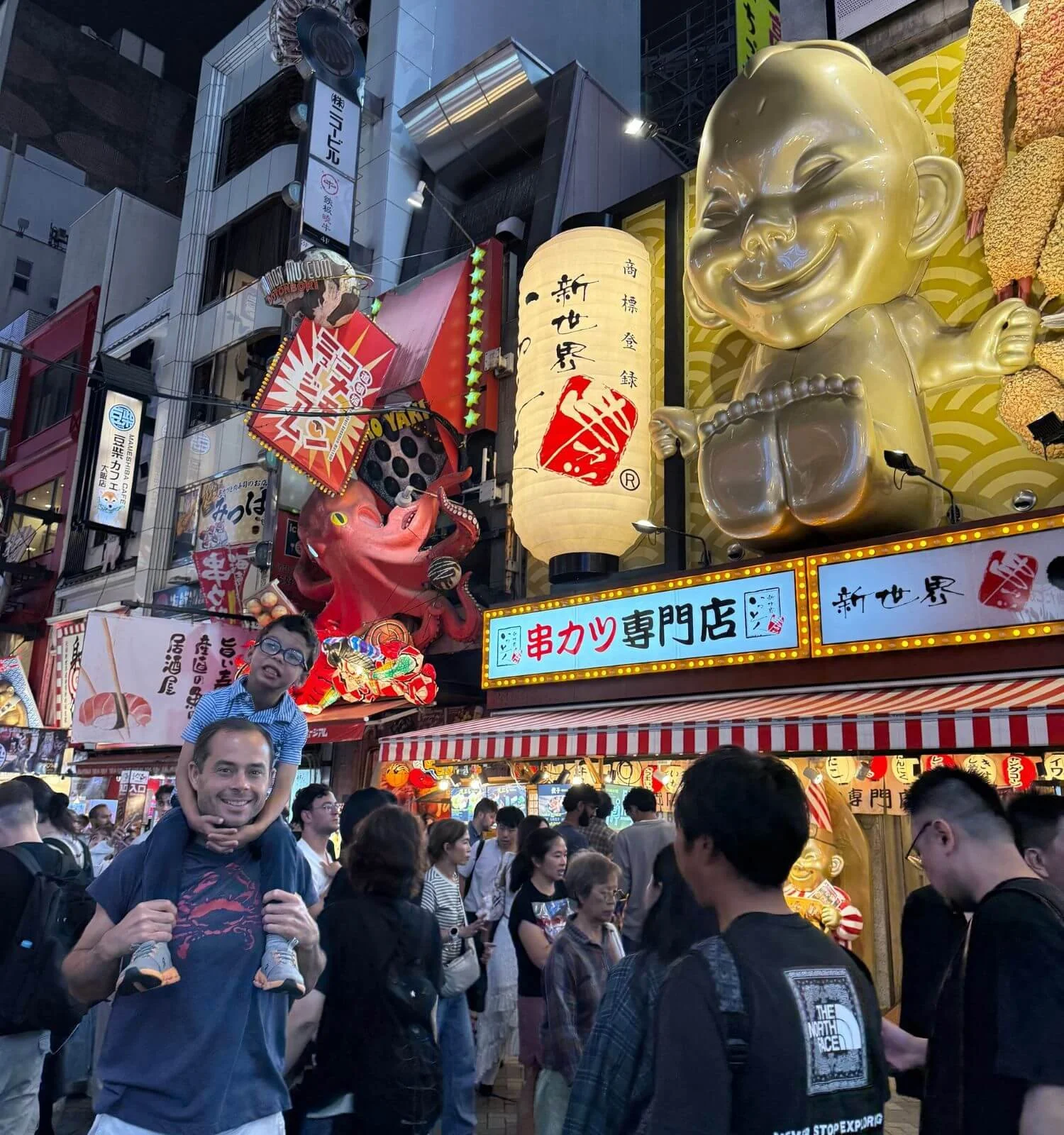
Jackson hitching a ride on Dotonbori street in Osaka - the after dinner fatigue was setting in at this point.
Best Age for This Trip
Jackson was 5 during our trip, and that age worked well — old enough to walk long stretches, remember the experience, and genuinely engage with things like feeding the monkeys or trying new foods, but young enough that we didn't have to negotiate around a teenager's own opinions on the itinerary.
There's also a real practical upside to traveling with a younger kid in Japan specifically: at the time of our trip, children under 6 were genuinely free or discounted for most things across the country, including train tickets and many attractions. It also helped on hotel costs, since Jackson slept with us most nights and we weren't charged for an extra person in the room.
Read More: Japan with Kids: Everything I Wish I Knew Before Our Trip
Our Honest Verdict
Yes. Japan is genuinely good for families, and not in a vague, brochure-copy kind of way — the trains work, the food scene accommodates real dietary restrictions better than we expected, and the specific moments that made the trip memorable for Jackson weren't the ones we would have predicted going in. It's not effortless — the walking alone is something to genuinely plan around — and be realistic about this when planning your itinerary. But if you're on the fence about whether Japan is realistic with kids, our answer is: it's more than realistic. It's one of the best trips we've taken as a family.
Want the Full Plan?
Everything we learned — the hotels, the costs, the day-by-day route — is in our complete 14-day Japan itinerary, gluten-free edition included.
Check out my complete: 14-Day Japan Guidebook
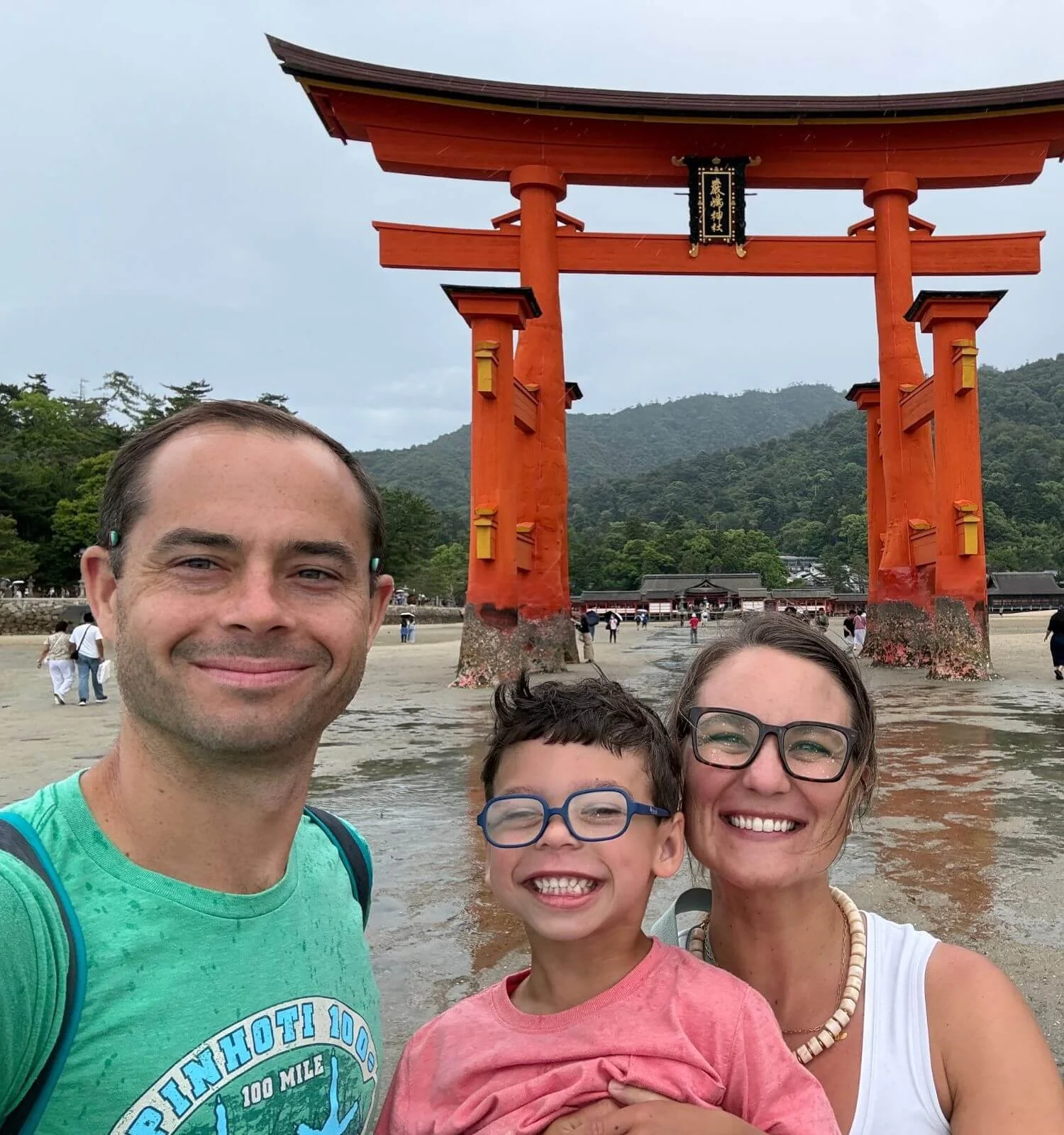
We LOVE Japan!