Is Japan Gluten-Free Friendly? Our Honest Experience Traveling With Dietary Restrictions

This soufflé pancake was completely gluten-free and one of many moments that proved Japan doesn't have to mean giving up the food you actually want to eat.
Yes! Japan Can Be an Incredible Gluten-Free Destination, But Planning Is Essential
This post contains affiliate links, which means we may earn a small commission if you book or buy through them, at no extra cost to you. As an Amazon Associate I earn from qualifying purchases. We only recommend things we've used ourselves or would genuinely use on our own family trips, and all opinions are our own.
A quick but important note: This reflects our own experience, not medical advice. I manage gluten-free eating for an autoimmune condition, and my husband has a gluten intolerance, neither of us has celiac disease or a high level of reactivity. If you have celiac disease, a severe allergy, or any condition where cross-contamination is a real risk, please don't rely on this alone, speak directly with restaurant staff about your specific needs every time, and use your own judgment.
When we first started planning our 14-day trip to Japan we weren’t worried about navigating the train system or figuring out where to stay.
We were worried about food.
Japan had been on our travel list for years, but as people who eat gluten-free, everything we read made it sound like finding safe meals would be one of the biggest challenges of the trip. We came across countless stories of travelers surviving on convenience store snacks, struggling to communicate dietary restrictions, and feeling like they were missing out on one of the best parts of visiting Japan.
For a while, we honestly questioned whether we should go at all. Thankfully, we kept searching.
We spent hours researching restaurants, reading menus, mapping locations, and learning as much as we could before we left. The more we researched, the more we realized something important: Japan wasn’t lacking gluten-free food. We simply needed to know where to find it.
Instead of worrying about every meal, we were able to enjoy some of the best food we’ve ever eaten while traveling. Looking back, many of our favorite memories from Japan revolve around restaurants, cafés, bakeries, and foods we never expected we’d be able to enjoy gluten-free.
If you’re wondering whether Japan is gluten-free friendly, our answer is yes! But only if you’re willing to plan ahead.
Read More: How to Eat Gluten-Free in Japan: What We Learned After 14 Days
A Note About Our Gluten-Free Experience
Before we share what worked for us, we want to mention that we do not have celiac disease or a severe wheat allergy.
Kristy eats gluten-free to help manage an autoimmune condition that flares when she consumes gluten and Matt has a diagnosed gluten-intolerance (hasn’t yet been tested for celiac). Because of that, we take avoiding gluten seriously, but we recognize that someone with celiac disease or a severe allergy may need to take additional precautions, particularly when it comes to cross-contact.
Throughout our trip, we focused on restaurants that were familiar with gluten-free dining, researched ingredients ahead of time, and asked questions whenever we weren’t sure about a dish. Our goal here is simply to share what worked for us. If you have celiac disease or a severe allergy, we would always recommend confirming ingredients and preparation methods directly with each restaurant.
Want Help Talking to Restaurants?
A local guide can help you communicate with restaurants, but always confirm ingredients yourself. GoWithGuide offers private tours with local guides you can message before booking, so you can explain your dietary needs ahead of time and plan meals around them.
Choose Your Stop
Our Biggest Advice: Don’t Leave Food to Chance
If there’s one thing we learned while planning this trip, it’s that gluten-free travel in Japan is absolutely possible but it isn’t something we would leave to chance.
Before we left home, we researched restaurants in every city we planned to visit. Once our itinerary was finalized, we looked for gluten-free restaurants, cafés, and bakeries near the attractions we would already be exploring each day. We also saved backup options in case our first choice didn’t work out.
That meant we rarely found ourselves standing in the middle of a busy neighborhood wondering where we could safely eat.
We think that’s what made our experience feel so different from many of the stories we read before our trip. We weren’t searching for food while hungry or trying to translate menus under pressure. We simply followed the plan we had already put together.
Could you travel gluten-free in Japan without this much preparation? Probably.
Would we recommend it? Personally, no.
Japan has far more gluten-free options than we expected, but finding those options still takes some work. Spending time researching before your trip allows you to enjoy your vacation instead of spending it searching for your next meal.
Read More: Gluten-Free Kyoto: What We Actually Ate (Honest Reviews)
Read More: Gluten-Free Tokyo: What We Actually Ate (Honest Reviews)
A Few Tips
Learn How to Use Google Translate Before You Go
We recommend anyone traveling to Japan (especially with dietary restrictions) become familiar with the Google Translate app. The camera translation feature allowed us to point our phone at menus, ingredient lists, and food packaging to get a quick translation before deciding whether something might be safe to eat. It wasn’t perfect, but it was incredibly helpful for narrowing down options and understanding unfamiliar ingredients. Just remember that automatic translations aren’t always completely accurate, so if you have celiac disease or a severe allergy, it’s still important to confirm ingredients and preparation methods with the restaurant whenever possible. Google Translate can also be a handy app when communicating with restaurant staff that may not speak English.
One thing that made ordering so much less stressful for us: We built a free Gluten-Free Dietary Card you can customize with your exact severity level and any other allergies, then show to servers or chefs so, no more trying to explain dietary restrictions from scratch at every meal.
Soy Sauce Is Everywhere
Traditional soy sauce contains wheat and is used in far more dishes than many first-time visitors expect. One place we found it especially important to ask questions was at markets and food stalls. If you’re ordering grilled seafood, don’t assume it’s simply cooked on the grill. Many vendors season it with soy sauce before or during cooking. We found that most stalls were happy to prepare it with just butter and salt when we asked, allowing us to enjoy fresh seafood without the gluten.
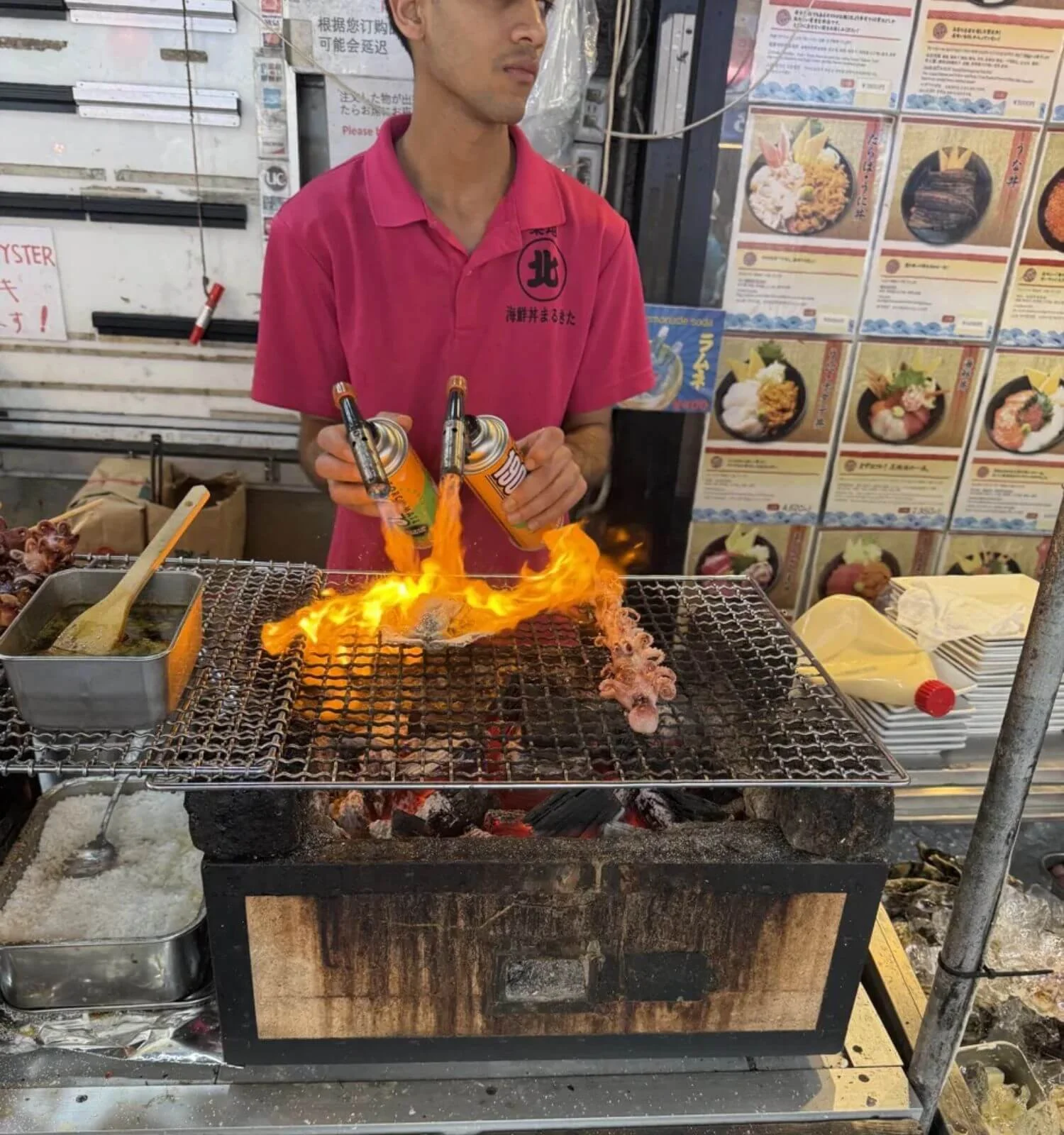
Grilled seafood at markets and food stalls often gets brushed with soy sauce during cooking. It's always worth asking before assuming it's safe.
Don’t Assume Rice Is Gluten-Free
Plain rice is naturally gluten-free, but sushi rice is often seasoned with vinegar, and some vinegar blends may contain gluten. It can be good practice to ask if any rice you order is gluten-free.
Even Mayonnaise Deserves a Second Look
The most common mayonnaise brand in Japan isn’t necessarily gluten-free, so we always checked before assuming something was safe.
Because of this, we learned not to judge food by appearance. Just because something looked gluten-free didn’t mean it actually was.
What We Were Actually Able to Eat
Before we did our research, we genuinely expected convenience store snacks to make up most of our meals.
Instead, we were able to enjoy:
Sushi
Egg salad sandwiches
Crepes
Takoyaki
Okonomiyaki
Wagyu
Ramen
Fried chicken
Tempura
Dumplings
Curry
Pizza
Burgers
Chicken sandwiches
Soufflé pancakes
French toast
Ice cream cones
Mochi
Matcha desserts
Chocolate cake
Cream puffs
Muffins
Scones
Prawns
Calamari
Spring rolls
Fries
…and plenty more.
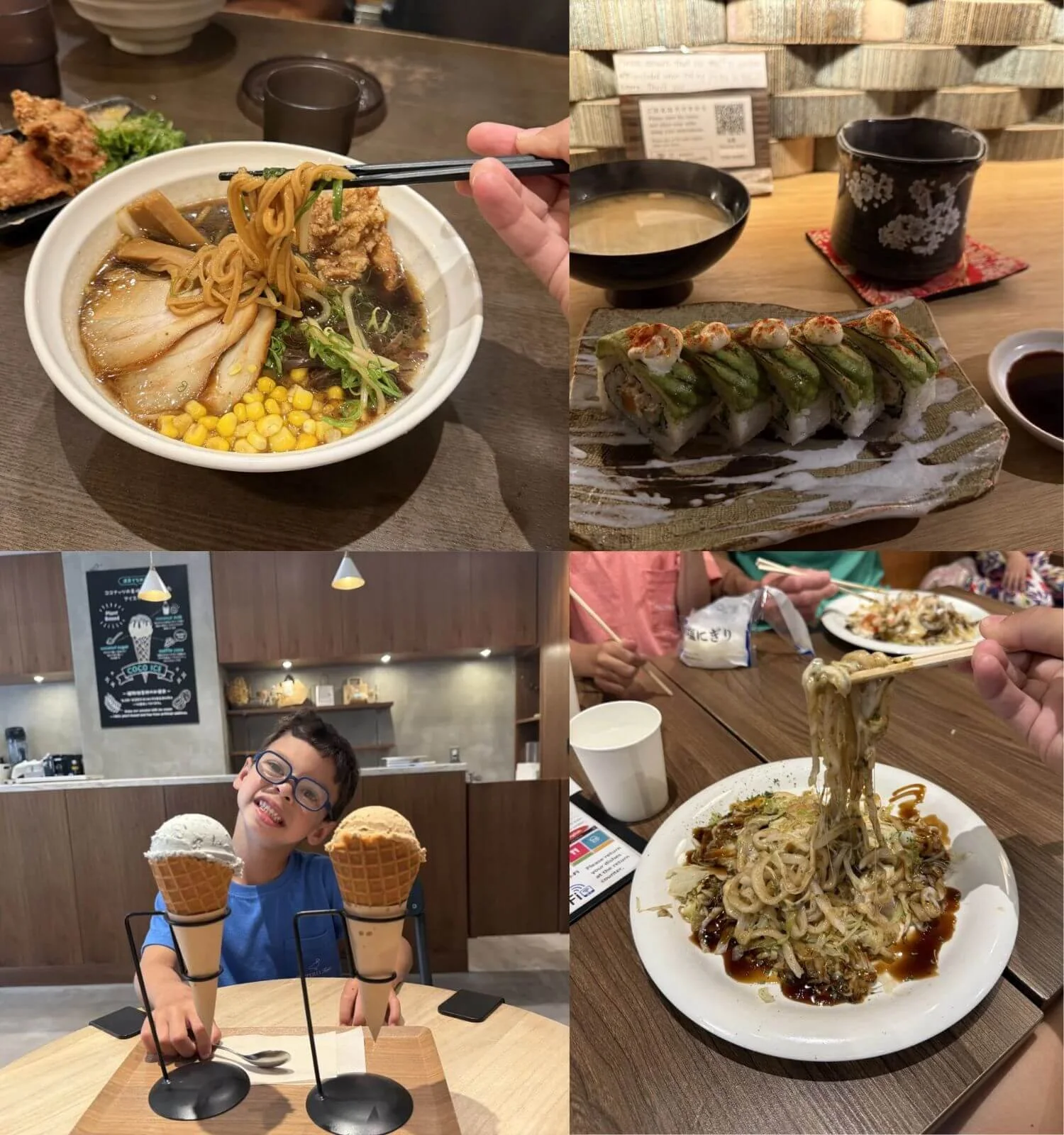
Can you believe all of this and so much more is gluten-free in Japan?! From sushi and ramen to okonomiyaki and even ice cream cones, we were surprised by how many delicious options we found.
The challenge wasn’t that gluten-free food didn’t exist. The challenge was knowing where to find it.
Once we did the research, we never felt like we were missing out on Japan’s incredible food culture.
Convenience Stores Were Helpful, But Not the Way We Expected
Before we left, we assumed convenience stores would potentially become a primary source of food, as we didn’t have total faith that our plan would work.
In reality, we used them mostly for breakfast, coffee, snacks, drinks, and the occasional quick bite between activities because the restaurants we researched actually worked out so well. We regularly picked up a few onigiri before boarding the Shinkansen since we weren’t able to find any gluten-free bento boxes. (If you know of one, please let us know. We would love to update this guide!) Many restaurants in Japan do not open until mid-morning or later, so if you want an early start like we did most days, convenience store breakfasts will become the norm.
Some of the things we regularly bought included salmon onigiri, salted plum onigiri, plain yogurt, smoothies, coffee, and plain potato chips. As always, ingredients can change, so we recommend checking labels each time you buy something.
Read More: Gluten-Free at Japanese Convenience Stores: Why We Stuck to Just a Few Things
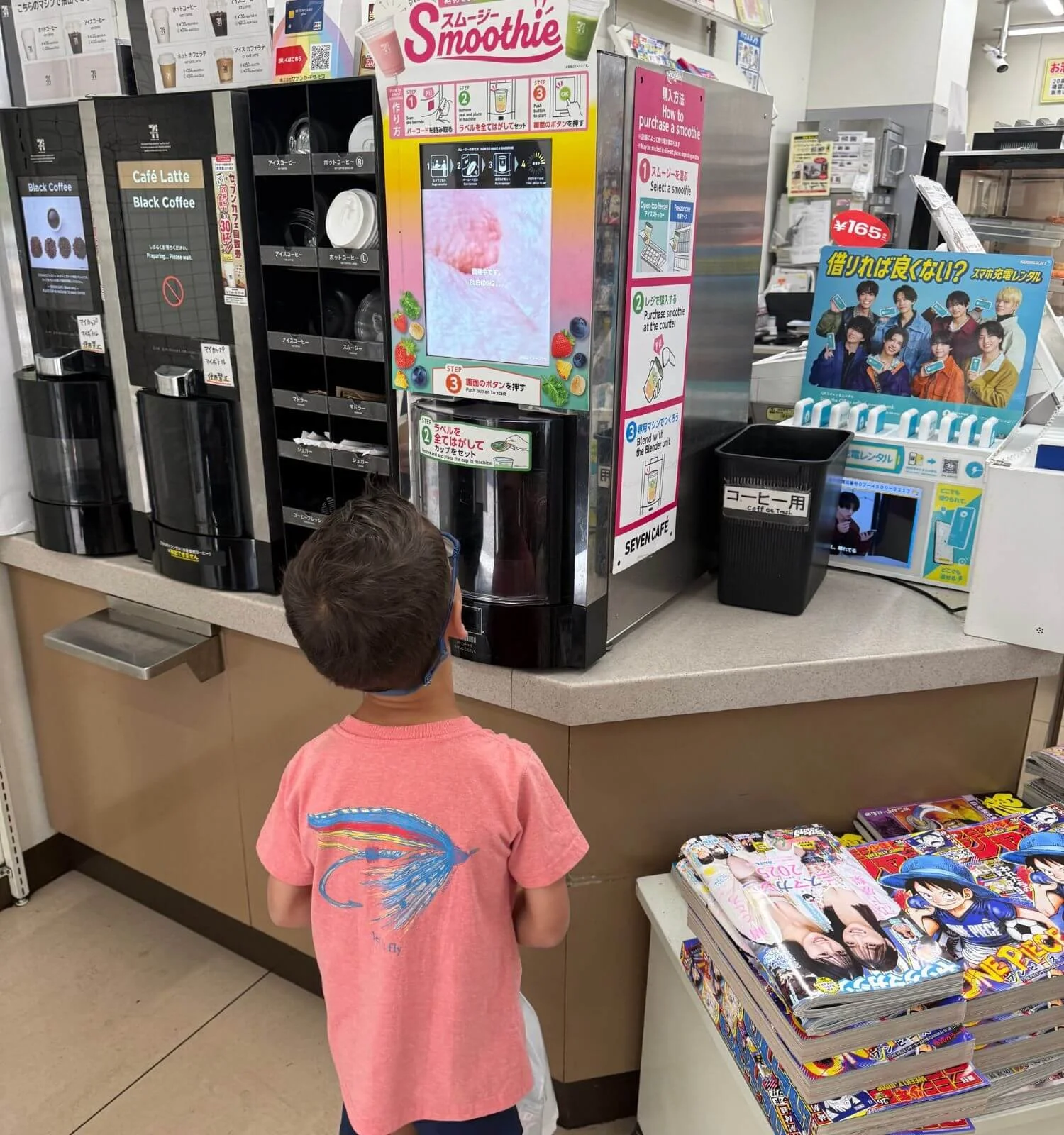
Convenience store breakfasts consisting of items like smoothies became the norm for us. It’s always worth double-checking the label, since ingredients can vary.
Would We Travel to Japan Gluten-Free Again?
Absolutely.
In fact, Japan ended up being one of the most delicious international destinations we’ve visited while eating gluten-free.
That’s not because gluten-free food is everywhere or because every restaurant understands dietary restrictions. It’s because we spent the time researching before we arrived. That preparation allowed us to enjoy Japan’s food instead of worrying about it.

Would we do it again? Absolutely, and photos like this one are exactly why. We never felt like we missed out on any family meals because of the planning we did before our trip.
Planning Your Own Japan Trip?
Choosing where to stay, what order to go in, and what to book is a lot. We’ve already done the planning, so you can spend your time enjoying Japan instead of organizing it. Our Ultimate 14-Day Japan Travel Guide is a ready-to-follow itinerary from arrival to departure.
The full 14-day plan with everything above, for families without dietary restrictions.
See the Standard EditionEverything in the Standard Edition, plus:
- Gluten-free restaurants, cafés, and bakeries for every day
- Backup options in every area
“So happy to have that issue handled ahead of time.”
See the Gluten-Free Edition →Grab a Free Trip-Planning Tool

Our Trip Planning Command Center keeps your days, bookings, and packing organized.
Get the planner
A personalized gluten and allergy card to show any server or chef.
Build your card →
Answer 10 quick questions to find your travel personality and matching destinations.
Take the quizFree. Sent straight to your inbox.