Gluten-Free Tokyo: What We Actually Ate (Honest Reviews)
Eating gluten-free in Tokyo wasn't nearly as hard as we feared. But only because we planned.
Before our trip, we spent hours researching gluten-free restaurants and cross-referencing them with every stop on our Tokyo itinerary. It was a lot of work. But it meant that wherever we were in the city, we always knew a place nearby where we could safely eat. Our research worked out so well that we barely needed a backup plan.
This post covers what we learned: how easy (or hard) gluten-free Tokyo really is, the foods with hidden gluten to watch for, how we ordered, an honest review of every gluten-free place we ate, and what we did when there was no restaurant around.
Who's Gluten-Free in Our Family (and Why It Matters)
Matt and I both eat gluten-free. Matt has been gluten intolerant for more than 15 years, and I went gluten-free about 10 years ago for health reasons. Matt also avoids eggs, which comes up a few times below.
Neither of us has celiac disease, and our reactions aren’t severe. Matt’s come on faster, and mine can show up days later.
Important: We're not celiac, and we're not doctors. Everything in this post reflects what worked for a gluten-intolerant family, not celiac-level or severe-allergy safety. If you have celiac disease or a serious wheat allergy, use celiac-specific resources and always confirm ingredients and cross-contact practices directly with each restaurant.
The Quick Verdict: Is Gluten-Free Tokyo Easy?
There are options, with planning. Tokyo has plenty of dedicated gluten-free restaurants and places with gluten-free menus. They're just spread across a huge city. If you wait until you're hungry to look for one, you could easily end up across town from the nearest option, with a tired kid in tow.
What made the difference for us was matching restaurants to each day's sights before we left. That way, gluten-free food was always close to wherever we already were.
Tokyo Foods With Hidden Gluten
A lot of Japanese food looks naturally gluten-free, but wheat shows up in places you might not expect. These are the big ones to watch for:
Soy sauce: regular soy sauce is brewed with wheat, and it's in marinades, dipping sauces, and glazes everywhere.
Tempura: the batter is made with wheat flour.
Ramen: the noodles are wheat, and many broths are seasoned with soy sauce.
Gyoza and dumplings: the wrappers are wheat unless a place specifically makes gluten-free ones.
Tonkatsu and other fried cutlets: breaded with wheat-based panko.
Monjayaki: a Tokyo specialty made with a wheat-flour batter.
Teriyaki and other sweet glazes: usually made with regular soy sauce.
Some miso: certain types are made with barley.
Sushi rice: rice seems like it would be naturally gluten-free, but sushi rice is seasoned with vinegar. Some Japanese vinegars are made from a grain blend that can include wheat, and many restaurants use premade seasoning mixes, so sushi rice isn't automatically safe.
Rice balls (onigiri): the same goes here. Even plain-looking ones can include vinegar or seasoning blends that contain gluten (more on this below).
Mayonnaise: some Japanese mayo contains wheat. Watch for it in sushi rolls, salads, sandwiches, and toppings on dishes like okonomiyaki and takoyaki.
What to Look For Instead
Dedicated gluten-free restaurants, where the whole menu is gluten-free and there's no guesswork.
Restaurants with a gluten-free menu, including gluten-free ramen, dumplings, and soy sauce. Always confirm how dishes are prepared.
Simple dishes seasoned with salt, rather than sauces or glazes.
Plain steamed rice and sashimi, skipping the regular soy sauce unless the restaurant has a gluten-free version. Plain steamed rice isn't the same as seasoned sushi rice.
How We Ordered
A dietary card makes ordering so much easier. Instead of trying to explain your needs on the spot, you hand over a card that spells out exactly what you can and can't eat, and how careful the kitchen needs to be.
You can make your own for free with our gluten-free dietary card builder. It lets you add a card for each person in your family, which was perfect for us since Matt also avoids eggs. The card is in English, so if a server doesn't read English, a translation app can help them read it. It's a communication tool, not a guarantee, so always confirm with the restaurant.
Google Translate was the other tool we used constantly. Its camera feature lets you point your phone at a menu or an ingredient label and see it in English right on the screen. We used it to read menus before ordering and to check labels on everything we bought at convenience stores. Download Japanese for offline use before you go, so it works even without a signal. Translation apps aren't perfect, so if something seems unclear, ask staff to confirm.
Every Place We Ate Gluten-Free in Tokyo
Here's every restaurant and food experience from our Tokyo days, in alphabetical order, with our honest take on each. Some were favorites, some were just okay, and one we picked for the fun more than the food.
Labels: "Dedicated GF" means the whole menu is gluten-free. "GF options" means the kitchen also cooks with gluten, so ask about cross-contact. “Limited GF options” means only a few items work, so plan ahead.
Want these planned for you? In the Gluten-Free Edition of our 14-day Japan guide, every one of these restaurants is matched to the attractions around it, day by day. For each stop, we tell you what the attraction is, how far the restaurant is and how long it takes to get there, whether you need a reservation, and the tips we wish we'd known. And if a restaurant is closed or full, there's a gluten-free backup nearby.
Gluten Free T's Kitchen · Dedicated GF
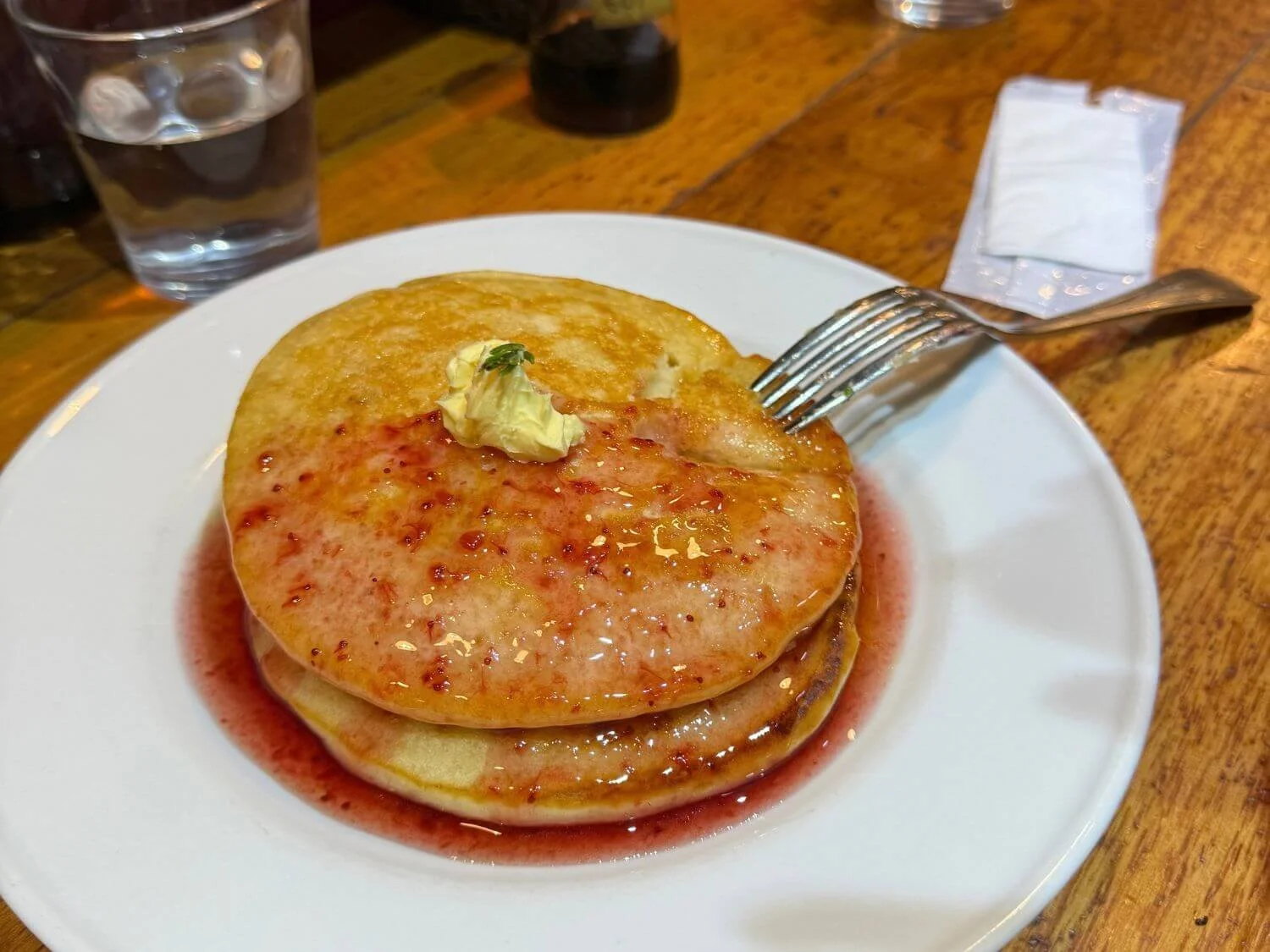
A dedicated gluten-free restaurant serving Japanese comfort food alongside Western-style dishes. It was so nice to try so many Japanese favorites without worrying about gluten or cross-contact.
What we ordered: takoyaki, fried chicken, dumplings, spring rolls, French fries, and pancakes.


Rizlabo · Dedicated GF
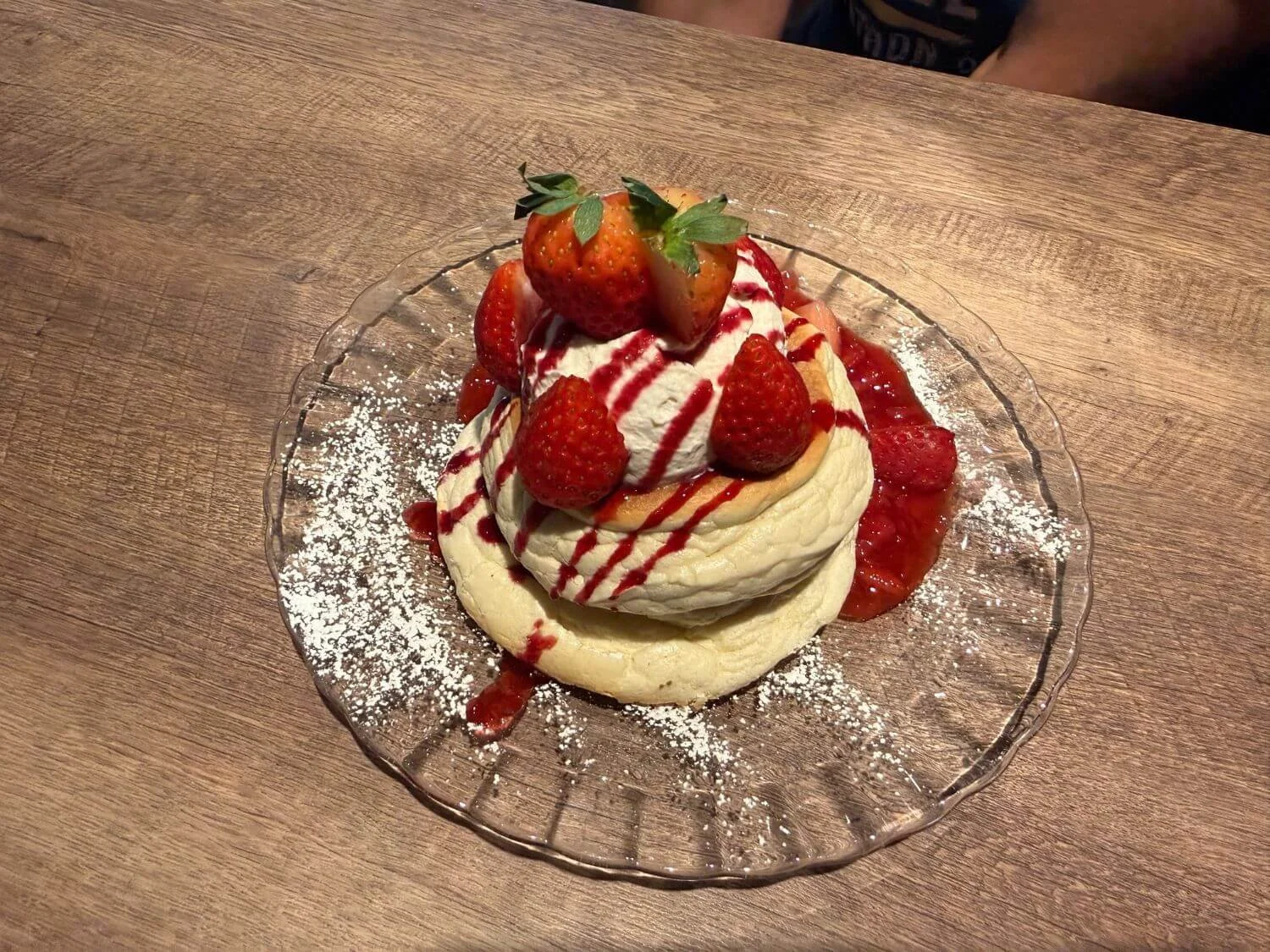
A dedicated gluten-free café known for its Japanese soufflé pancakes, cakes, and specialty drinks. Gluten-free soufflé pancakes are hard to find anywhere, so it was a treat just to try them, and they were absolutely beautiful. Flavor-wise, they didn’t wow me, but that may just come down to personal taste. One tip if you avoid more than gluten: the pancakes contain egg, so Matt sat this one out. Always check every ingredient, not just the gluten-free label.
What we ordered: strawberry soufflé pancakes.
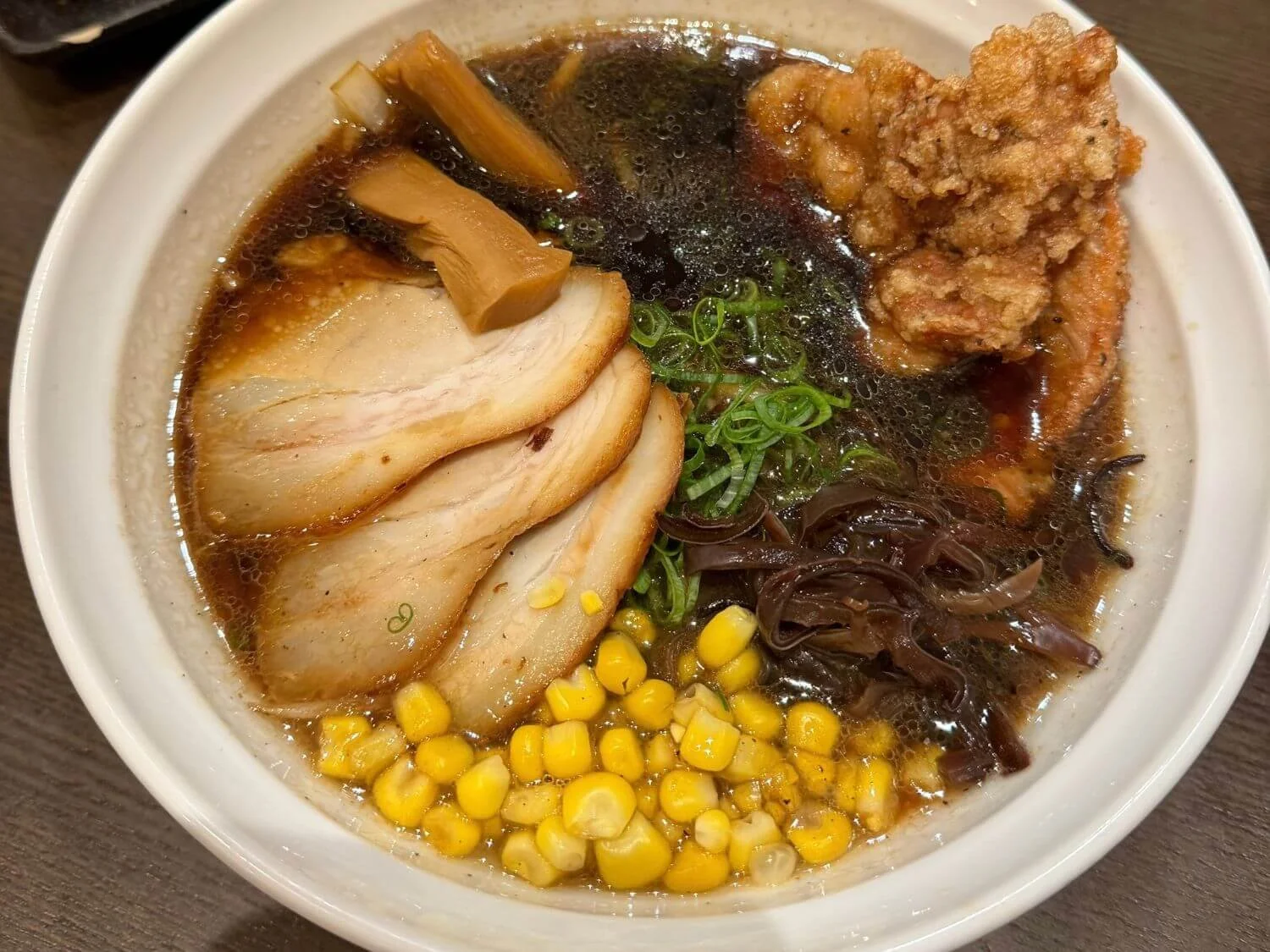
Shimbu Sakiya Ramen · GF options · Our favorite meal of the whole trip
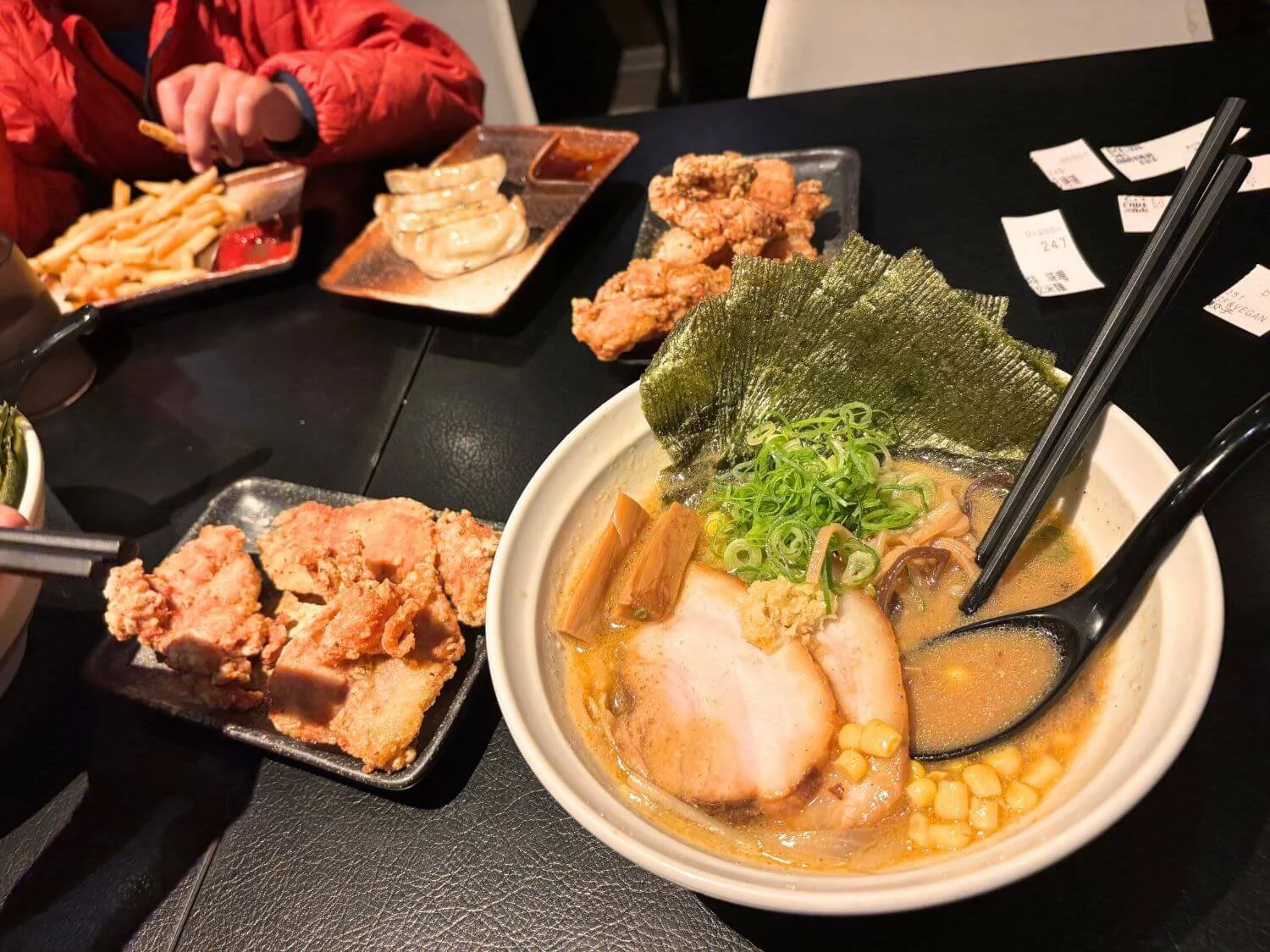
Out of everything we ate in two weeks in Japan, this ramen was the best. They make gluten-free ramen with brown rice noodles, plus gluten-free fried chicken (karaage) and gluten-free gyoza, so we finally got to eat the kind of meal we usually have to skip.
What we ordered: gluten-free ramen, fried chicken, dumplings, and French fries.
You order from a ticket machine outside, and it has a gluten-free section, so there's no language barrier at the counter.
The ticket machine doesn't take credit cards. Bring cash, or pay with an IC card like Suica or PASMO.
One honest note: this is not a dedicated gluten-free kitchen. Shared equipment means there's a risk of cross-contact, and the restaurant says so itself. It was fine for us, but if you have celiac disease or a high sensitivity, this one may not be for you.
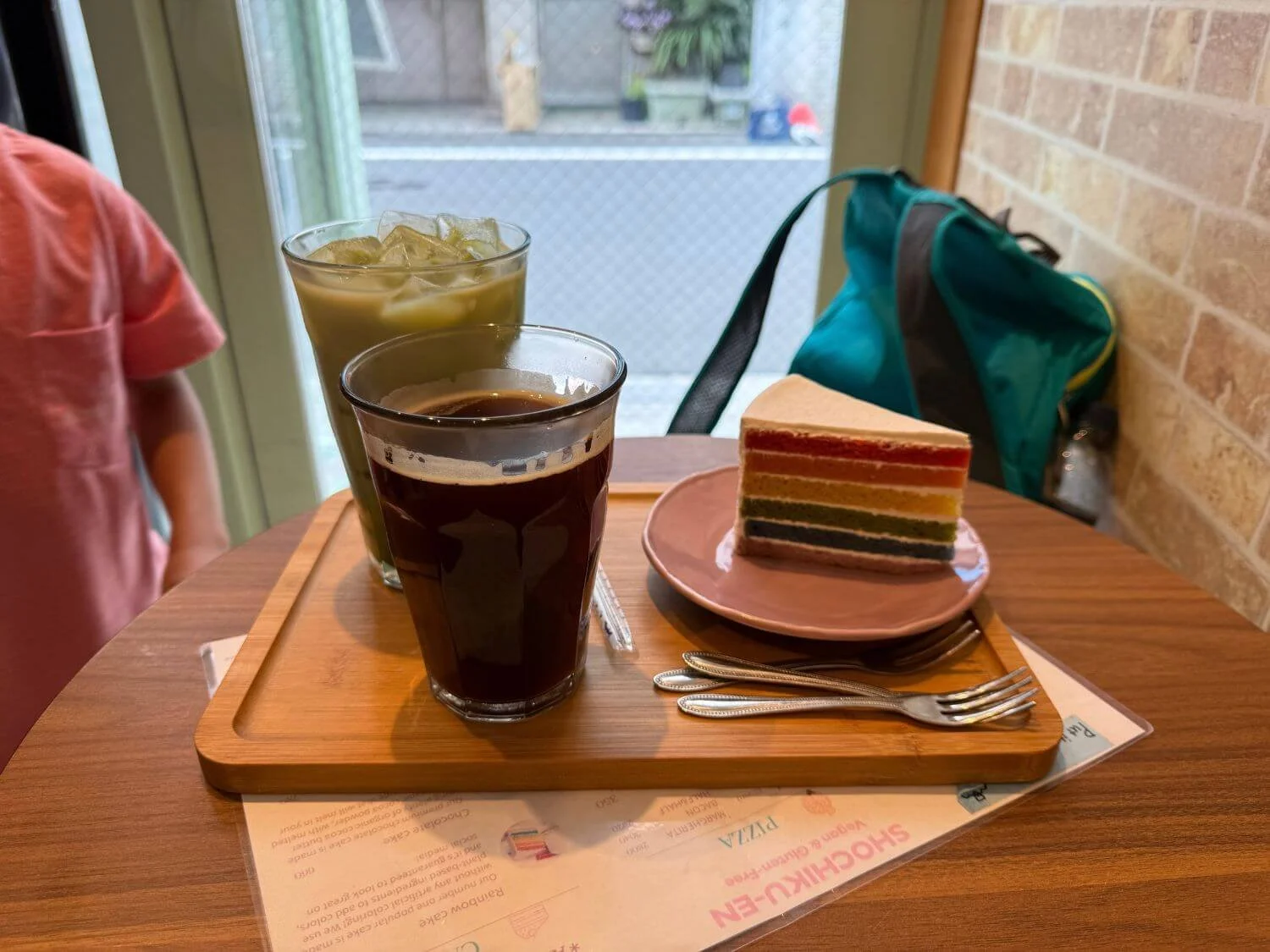
Shochikuen Cafe · Dedicated GF
A fully gluten-free, dairy-free, and egg-free menu, which made it one of the few places in Tokyo where Matt could order anything he wanted, and that alone made it worth the stop for us. The rainbow cake was more beautiful than tasty but very fun to try. If you’re managing several food restrictions at once, this is a great place to know about. No reservation needed, but it gets busy, so going earlier helps.
What we ordered: gluten-free rainbow cake, matcha, vegan pizza, and iced coffee.
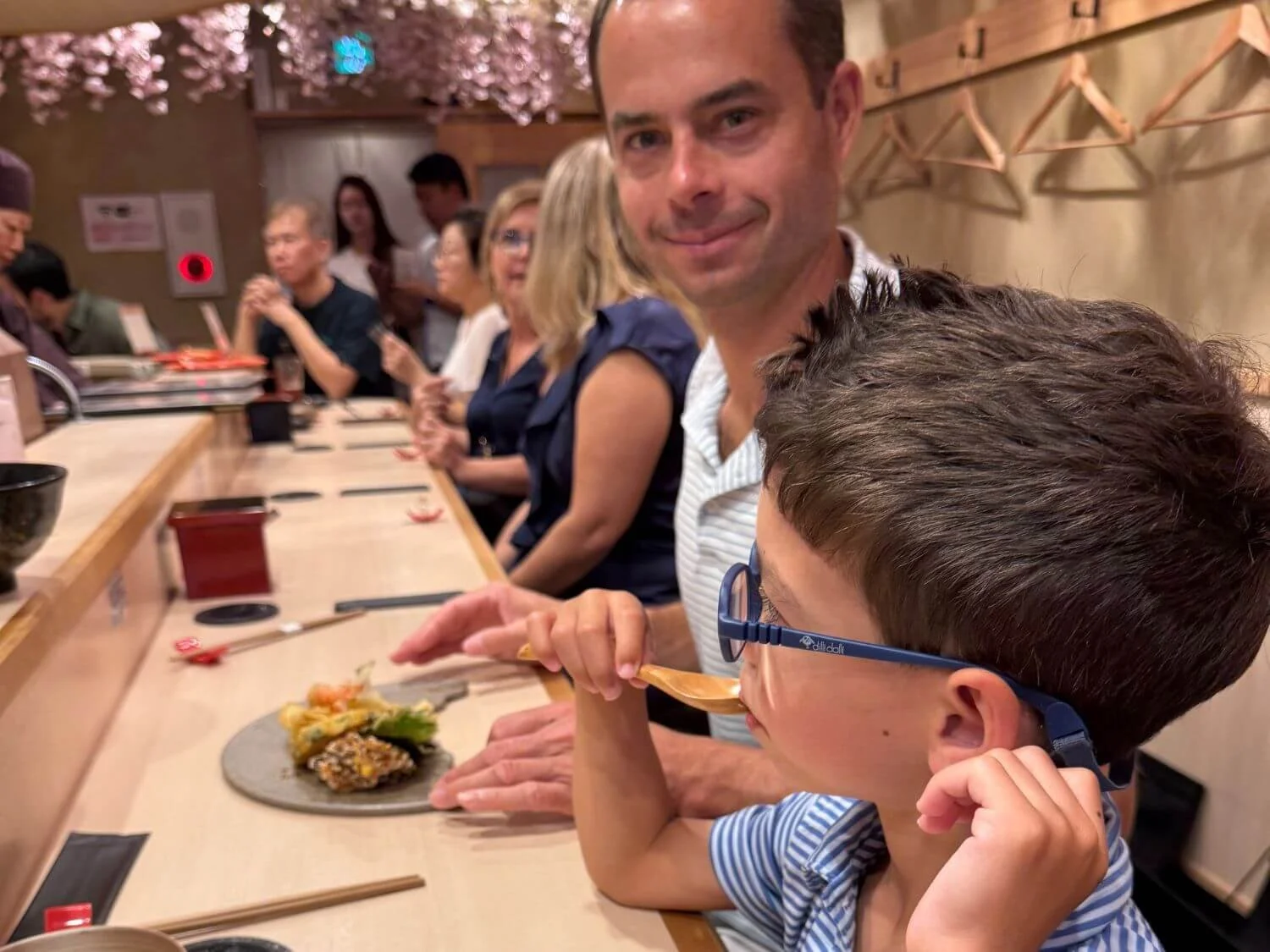
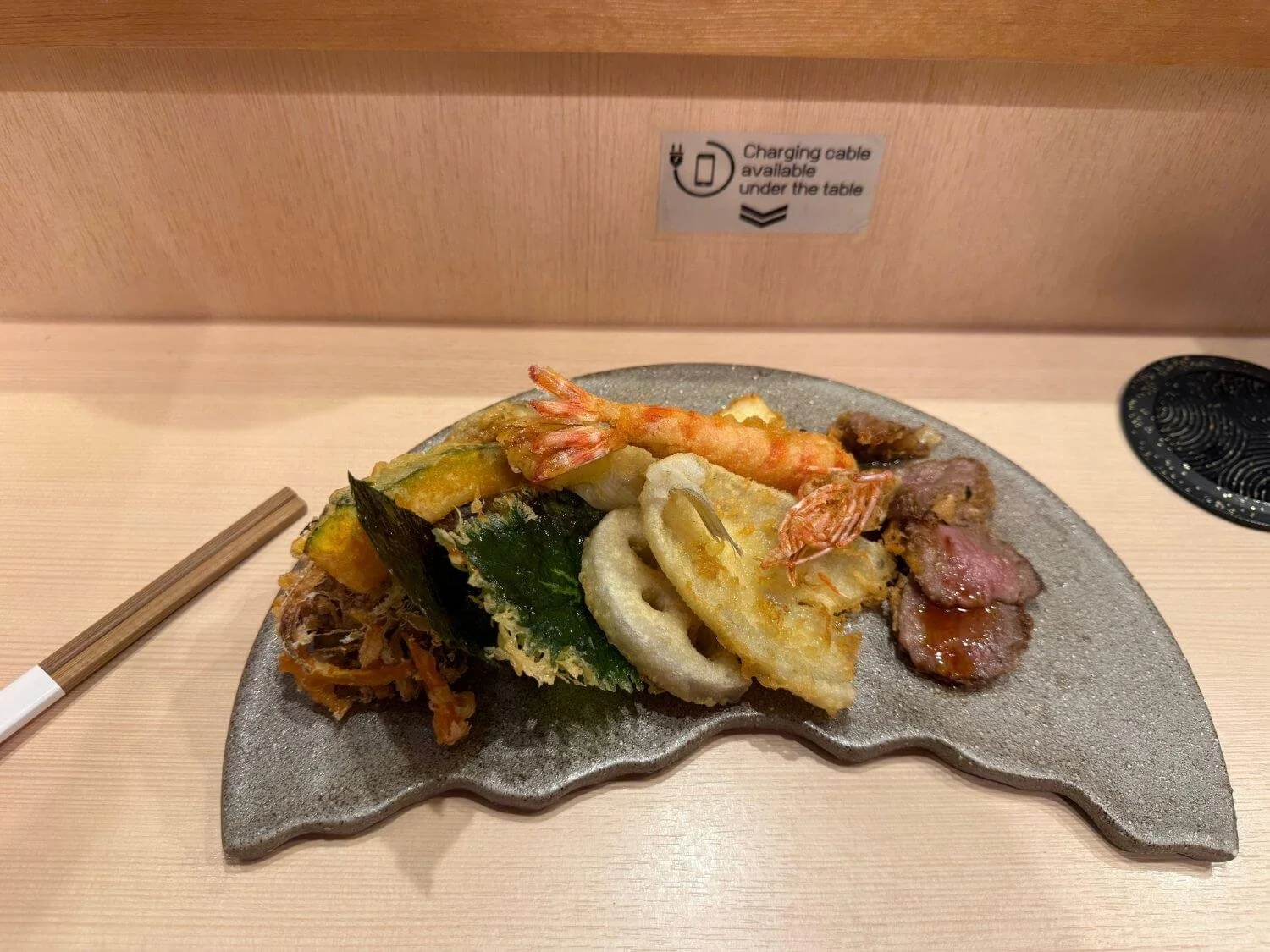
Tempura Asakusa Sakura · Dedicated GF
A fully gluten-free tempura restaurant, which is rare, since tempura batter is normally made with wheat. Tempura was at the top of my must-eat list for Japan, and this was so worth it. It's a bit out of the way, but we'd go back in a heartbeat. Reservations are recommended.
What we ordered: vegetable tempura, seafood tempura, and Wagyu beef.
Zauo Fishing Restaurant · Limited GF options
At Zauo, you catch your own fish, and the kitchen cooks it for you. We’ll be upfront: we chose it for the experience, not the food, and the experience is what made it worth it. They told us they had gluten-free battered options, but we were worried about cross-contact, so we didn't risk it and stuck with grilled fish. If you go, plan what you can eat ahead of time, and reserve in advance.
What we ordered: grilled fish.

Food Experiences: Request Gluten-Free Before You Book
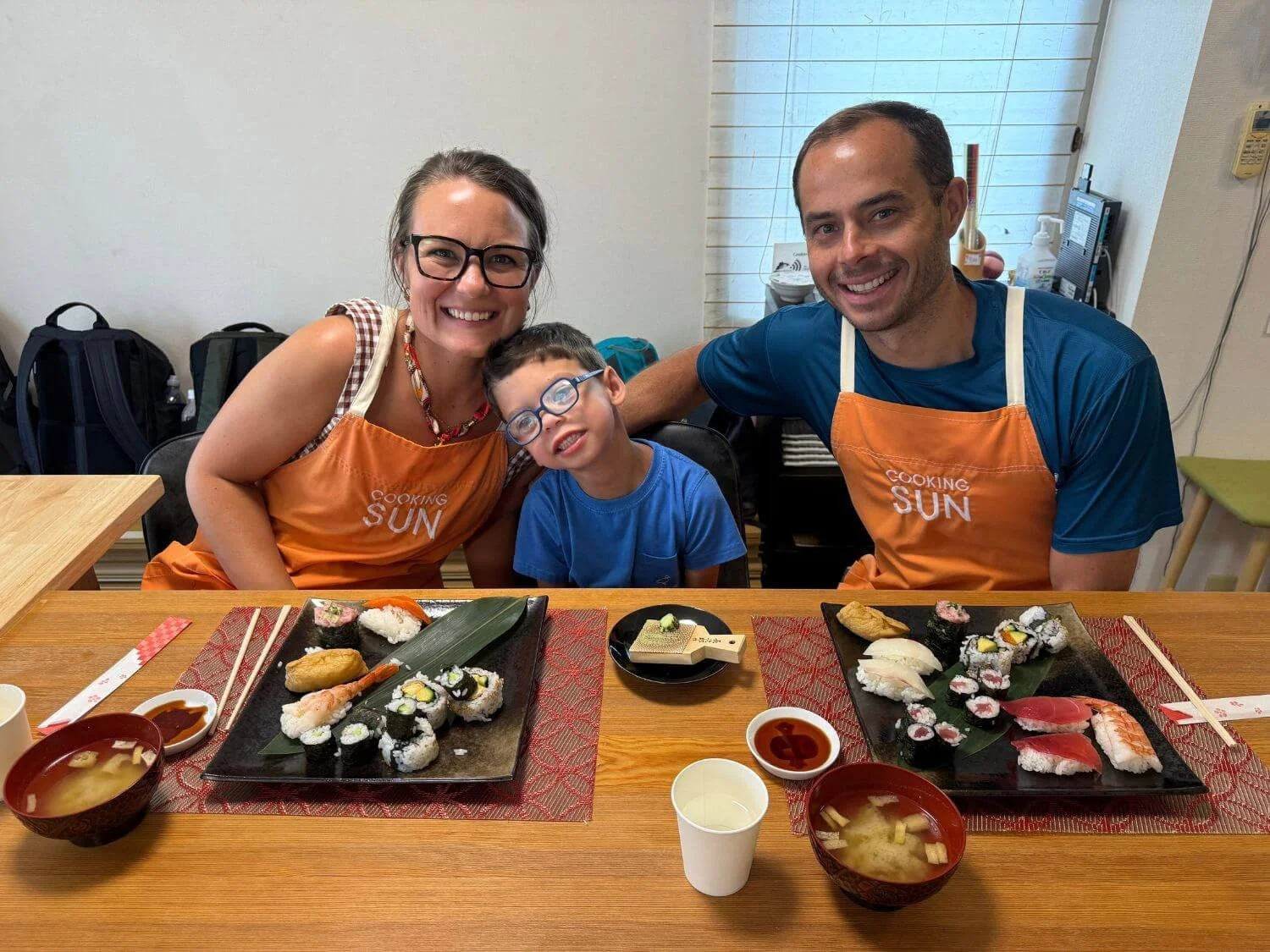
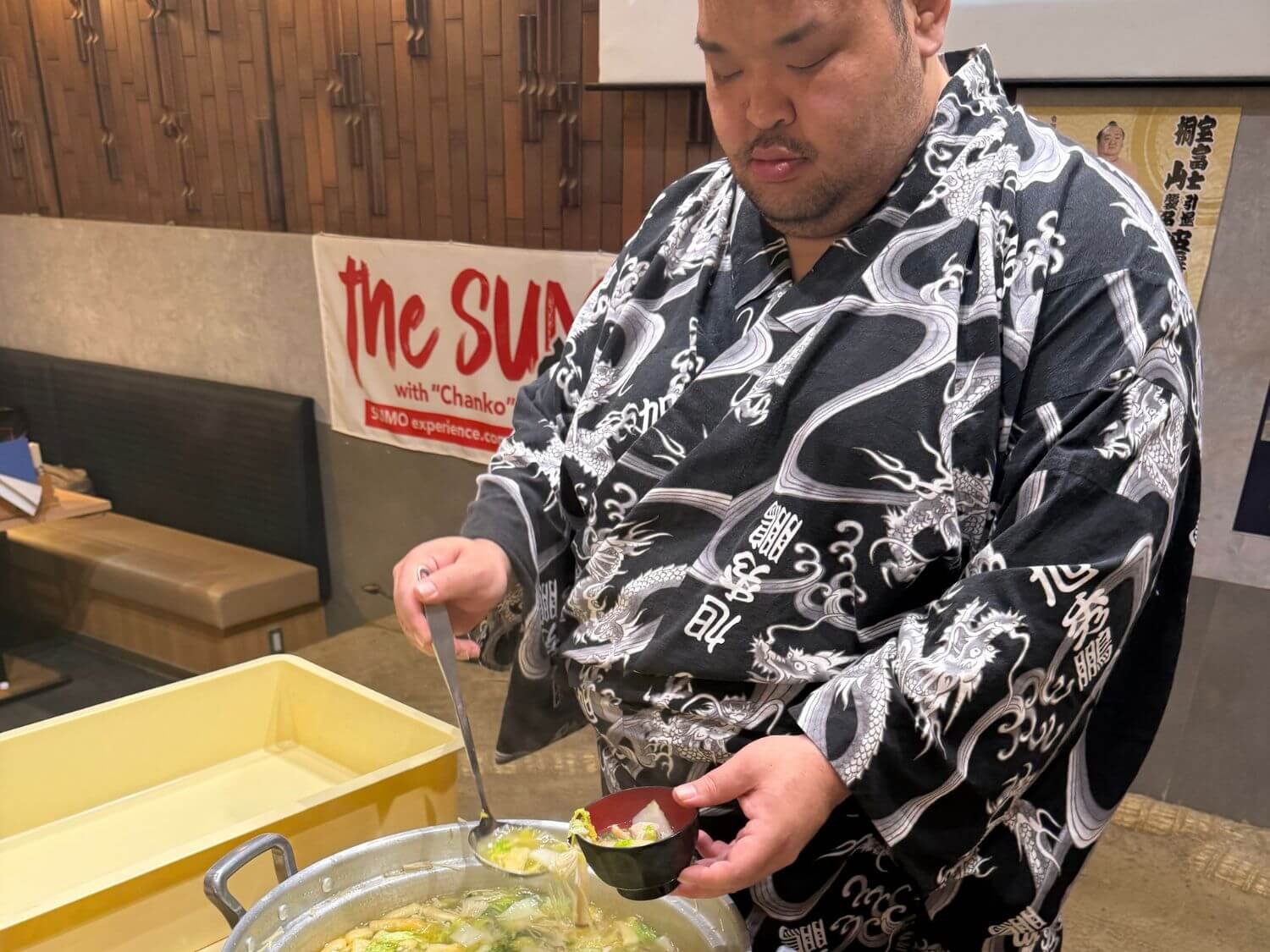
Two of our Tokyo meals were part of experiences. Lunch is included with the SUMO Show, so we requested a gluten-free lunch when we booked, and they were able to accommodate us. We also did a sushi-making class with Cooking Sun and contacted them ahead of time too, and they accommodated us as well. That's the key with any food experience in Japan: ask first, in writing, before you book.
A note on Tsukiji Outer Market
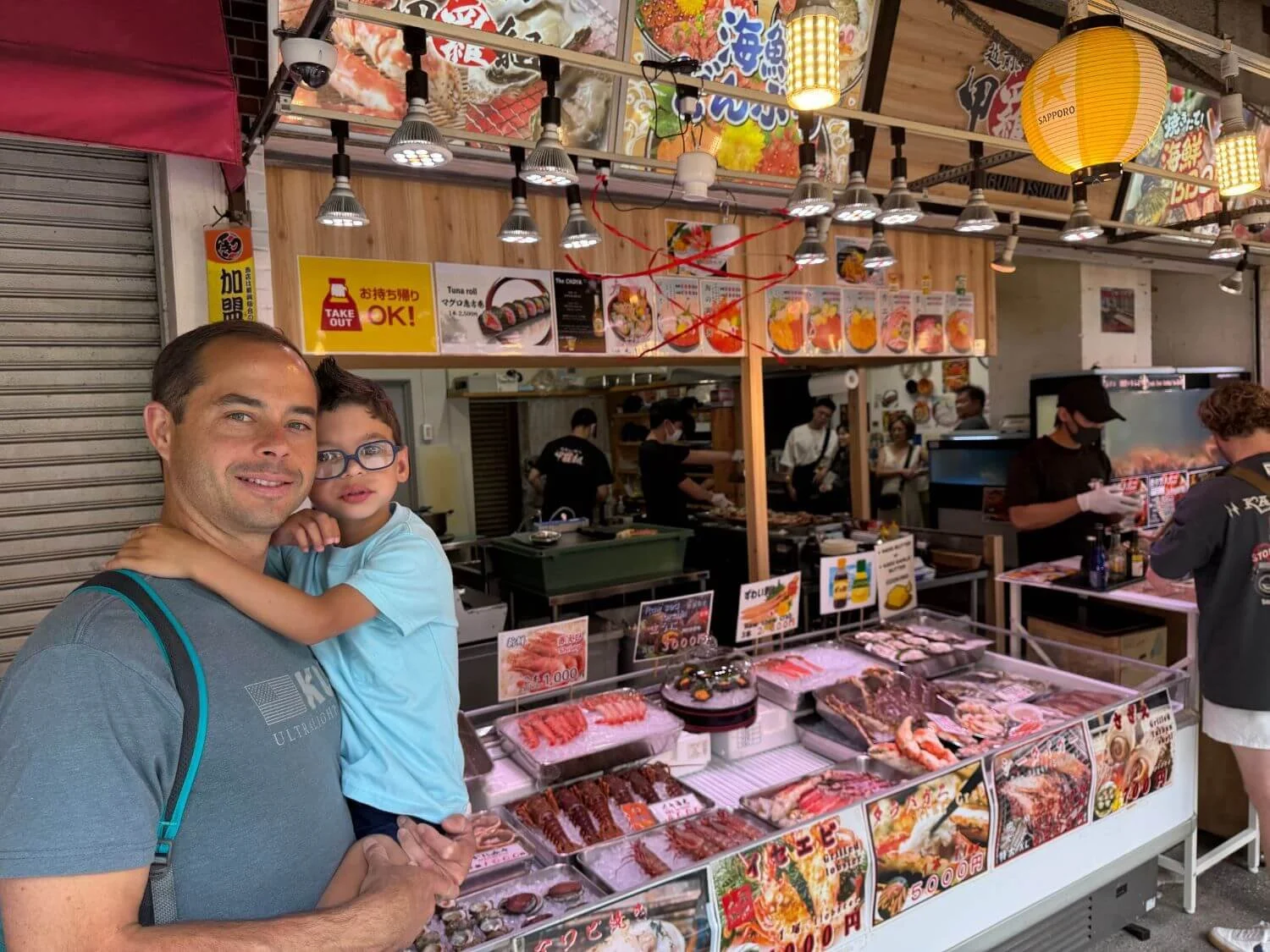
Tsukiji is fun to walk through, but it isn't a gluten-free food destination. Many stalls use soy sauce and other sauces you can't easily check. Ask each vendor about ingredients and how things are cooked before you buy.


Our Backup Plan: Convenience Stores
Most of our breakfasts, and our snacks on every bullet train ride, came from convenience stores (konbini). Our go-to picks:
Salmon rice balls (onigiri)
Plain salted potato chips
Smoothies (check the labels)
Coffee and water
A note on rice balls
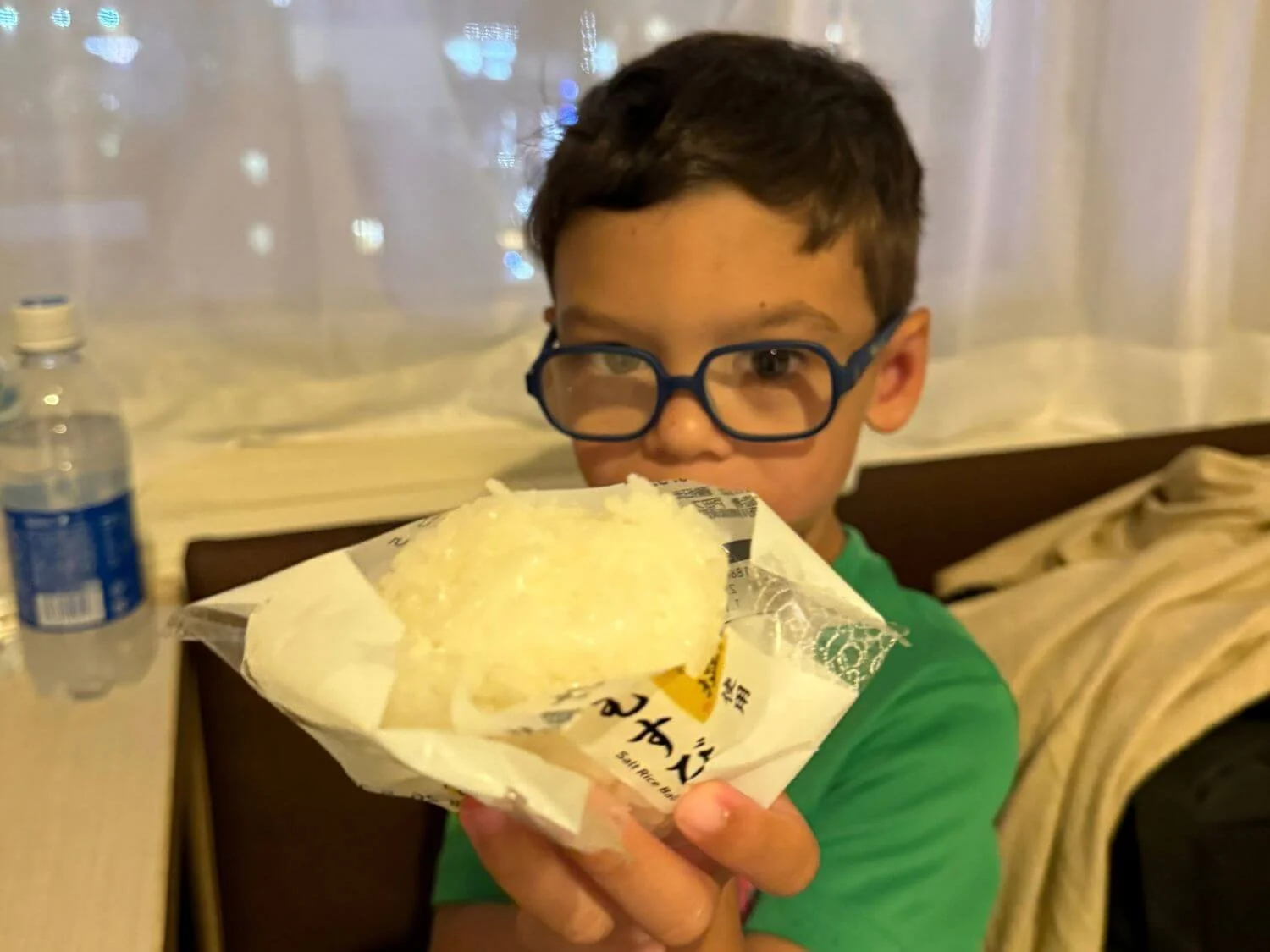
Even plain salt rice balls aren't guaranteed to be gluten-free. Some are made with vinegar or seasoning blends that can include wheat- or barley-based ingredients, and the factories that make them often process wheat on the same equipment. Barley also isn't one of the allergens Japanese labels are required to call out, so a label won't always flag it.
Rice balls with sauces or glazes are the easiest to rule out. Grilled rice balls (yaki-onigiri) are brushed with soy sauce or miso, and fillings like teriyaki are usually made with regular soy sauce.
How we shopped:
Check the allergen box on the back for the kanji for wheat, 小麦 (komugi). If it's listed, skip it.
Use your phone's camera translation (like Google Translate) to read the full ingredient list in the store.
Stick to simple options, like salmon rice balls, and still check every label, since recipes change.
Jackson happily ate the plain ones. We stuck to the salmon.
Read More: Gluten-Free at Japanese Convenience Stores: Why We Stuck to Just a Few Things
Gluten-Free Tokyo With a Kid Who Isn't
Jackson isn't gluten-free, so we didn't have to plan his meals separately. He's a very selective eater, and convenience store rice balls became one of his staples. They were easy, familiar, and everywhere.
Read More: What to Do in Tokyo, Japan With Kids
Want the Research Already Done?
Finding these restaurants was the easy part. The hours went into figuring out which one to eat at when, so we were never hungry and far from a safe meal. That's exactly what the Gluten-Free Edition of our 14-day Japan guide does for you: every restaurant matched to the sights around it, with travel times, reservation notes, tips, and backups, for all 14 days.
More From Our Japan Trip
Japan Travel Activities for Kids (Free Printable Scavenger Hunt + Journal)
Is Japan Good for Families? What We Actually Thought of Our Trip
Is Japan Gluten-Free Friendly? Our Honest Experience Traveling With Dietary Restrictions
Our 14-Day Japan Itinerary: Tokyo, Hakone, Kyoto, Hiroshima, Miyajima, Nara & Osaka
What We Packed for Japan (Family of 3, 14 Days, Carry-On Only)
What Our 14-Day Japan Trip Actually Cost: A Full Family Breakdown
Where to Stay in Tokyo with Kids: Our Hotel + 5 More Family-Friendly Picks
Join the Crew
Grab a Free Trip-Planning Tool

Build Your GF Dietary Card
A personalized gluten and allergy card to show any server or chef.
Build your card
Plan Your Trip in One Place
Our Trip Planning Command Center keeps your days, bookings, and packing organized.
Get the planner
Not Sure Where To Go?
Answer 10 quick questions to find your travel personality and matching destinations.
Take the quiz