Gluten-Free at Japanese Convenience Stores: Why We Stuck to Just a Few Things
Before our trip, we read every "gluten-free convenience store guide to Japan" we could find, long lists of onigiri fillings, snacks, and packaged meals to look for at 7-Eleven, Lawson, and FamilyMart. So it might surprise you to hear that once we were actually there, we barely used them. This isn't a comprehensive konbini guide, and we're not going to pretend to be experts on Japanese convenience store shopping. We just weren't there enough to earn that. What we can tell you is why: our restaurant research worked out so well that we were usually too full to need a convenience store, and the few times we did stop in, we stuck to a short, trusted rotation instead of experimenting. Here's what that actually looked like, and why.
A quick but important note: This reflects our own experience, not medical advice. I manage gluten-free eating for an autoimmune condition, and my husband has a gluten intolerance, neither of us has celiac disease or a high level of reactivity. If you have celiac disease, a severe allergy, or any condition where cross-contamination is a real risk, please don't rely on this alone, speak directly with restaurant staff about your specific needs every time, and use your own judgment.
Traveled: Late May / Early June 2026. This post contains affiliate links. If you book through them, we may earn a small commission at no extra cost to you.
Why We Didn’t Eat Much Convenience Store Food
Going in, we expected convenience stores, or konbini, to be a bigger part of our gluten-free strategy than they ended up being. What actually happened: our restaurant research paid off. We’d spent time before the trip finding places that could genuinely accommodate a gluten-free diet, and once we were there, we were consistently full from real meals. On top of that, we were honestly a little intimidated by the risk of getting glutened from a packaged product we couldn’t fully read the label on. Between those two things, convenience stores became a backup, not a strategy.
Read more: Is Japan Gluten-Free Friendly? Our Honest Experience Traveling With Dietary Restrictions
What We Actually Bought
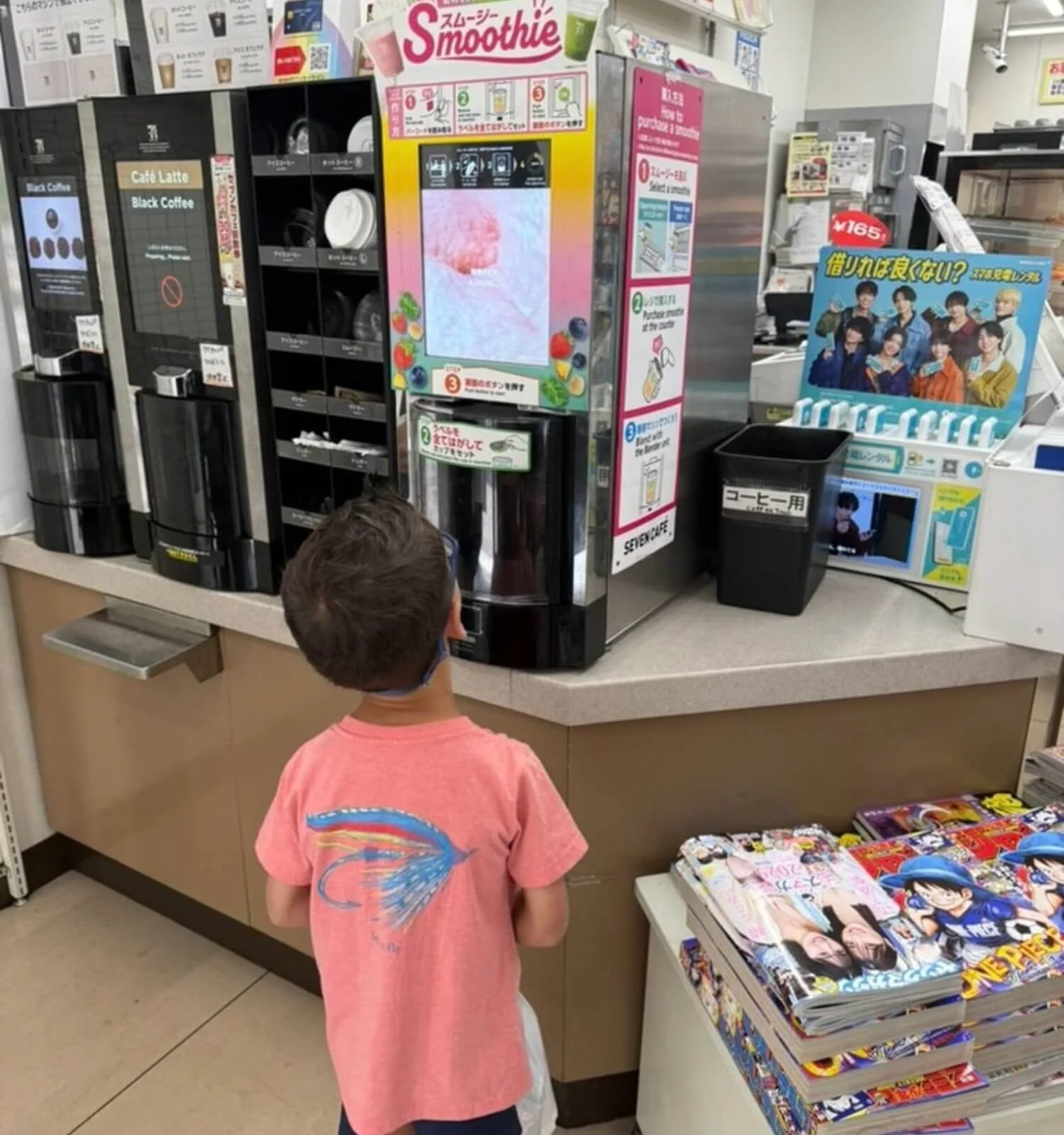
Our convenience store trips came down to two situations: breakfast, and snacks for the Shinkansen.
Read more: Riding the Shinkansen (Japan's Bullet Train)
Breakfast
Onigiri and smoothies, most mornings. Coffee for me, and a chocolate drink for our son.
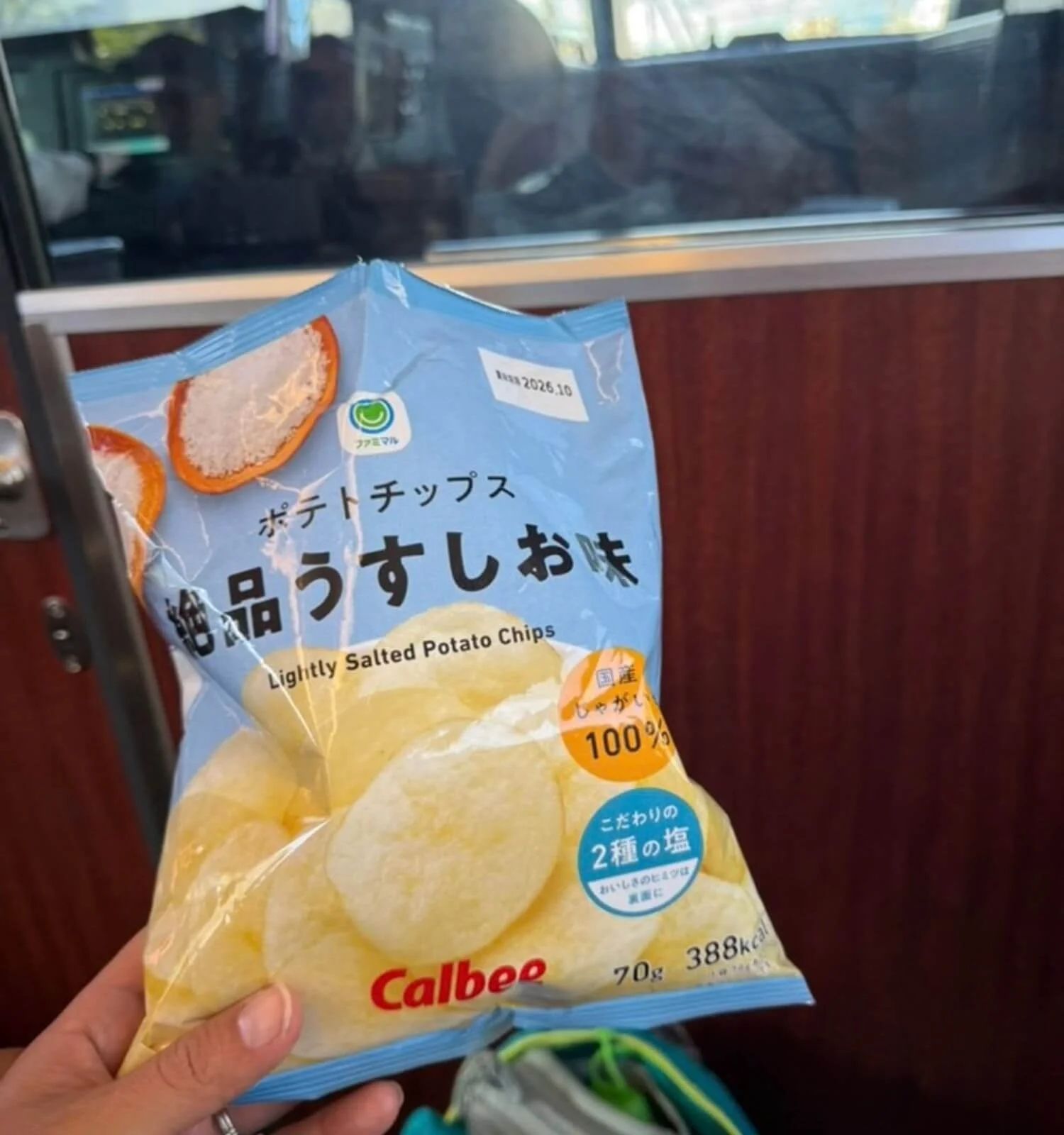
On the Shinkansen
Plain potato chips and onigiri. Simple, easy to eat one-handed, and something we felt confident about.
There are more gluten-free options at Japanese convenience stores than what's on this short list, we just didn't need to find them. If you're planning to rely on konbini more than we did, here's what we'd tell you about reading labels and staying safe, based on what we learned along the way.
How to Actually Read a Label (Even If You Don’t Read Japanese)
The word to look for is 小麦 (komugi), which means wheat. Packaged food in Japan is required to list wheat as an allergen when present, so this is the single most useful character sequence to recognize, even if you can't read anything else on the package.
Here's the catch: wheat is the only gluten grain Japan's labeling law actually requires. Barley, rye, oats, and malt all contain gluten too, but none of them have to be disclosed the same way, so a product can be completely wheat-free and still not be gluten-free. Barley in particular shows up in things like mugicha (barley tea) and some malt-based seasonings. One shortcut that helped us: the character 麦 (mugi) appears inside all three gluten grains, 小麦 (wheat), 大麦 (barley), and ライ麦 (rye), so we got in the habit of scanning for that one character rather than just the wheat-specific term.
A translation app with a camera function (Google Translate's camera mode is the common one) lets you scan a label on the spot rather than trying to sound out characters. It's not perfect, ingredient translations can be imprecise, and it won't flag barley or rye as an "allergen" the way it flags wheat, so you still have to know what you're looking for. But it's a real tool, not just a nice idea.
Read more: How to Eat Gluten-Free in Japan: What We Learned After 14 Days
The One Ingredient to Watch For: Soy Sauce
Traditional Japanese soy sauce is brewed with wheat, and it shows up in far more products than you’d expect, not just obvious things like noodles, but marinades, fillings, and seasoned rice. This is the biggest reason a product can look completely safe (rice, fish, vegetables) and still not be. When in doubt, this is the ingredient we’d tell you to specifically check for.
Onigiri: What We Actually Trusted
Onigiri was our go-to, but we only ever ate two fillings: salmon and umeboshi (salted plum), both confirmed safe with Google Translate before we trusted them.
We skipped the plain salted rice balls, even though “just rice” sounds like the safest option on the shelf. It isn’t automatically. Many are seasoned with vinegar, and that vinegar can contain gluten. We also stayed away from tuna mayo, since one of the more popular mayonnaise brands used in Japan isn’t gluten-free. Neither of these is obvious just by looking at the ingredient list in English, or even by guessing, which is exactly why we checked every single one rather than assuming a “plain” option was automatically the safe one.

Our usual breakfast spread (smoothie not pictured!).
One Thing Worth Knowing: Formulations Change
A product that’s gluten-free today isn’t guaranteed to stay that way. Japanese convenience store chains update their recipes and suppliers regularly, so we didn’t treat any single trip report, ours included, as a permanent green light. We checked the label every single time, even on something we’d already bought earlier in the trip.
Our Honest Take
If you're nervous about eating gluten-free in Japan, you don't have to figure out every convenience store item before you go. We didn't. We built a short list of things we trusted, checked the label every time anyway, and let our restaurant research do the heavier lifting. That combination worked well enough that convenience stores never had to become more than a breakfast and train-snack stop for us.
What you've read here is genuinely everything we ate from convenience stores on this trip. We didn't hold anything back for the guidebook, we just didn't experiment much once we found what worked. For the restaurants and bakeries we actually ate at, check out our Ultimate 14-Day Japan Travel Guide: Gluten-Free Edition.
Grab a Free Trip-Planning Tool

Turn your days, stays, and stops into a clean, printable itinerary.
Build yours
A personalized gluten and allergy card to show any server or chef.
Build your card
Answer 10 quick questions to find your travel personality and matching destinations.
Take the quiz