How the Hakone Loop Actually Works (Explained Simply)
If you've searched “Hakone Loop” and come away more confused than when you started, you're in the right place. It took me way longer than I'd like to admit to research this and feel like I actually understood what I was doing, and honestly, spoiler alert, I still got confused. So here it is, written the way I wish someone had explained it to me, so you can feel prepared on the day you visit.
Traveled Late May/ Early June 2026. This post contains affiliate links. If you book through them, we may earn a small commission at no extra cost to you.
What the Hakone Loop Actually Is
The Hakone Loop is a circular route through the Hakone region southwest of Tokyo, built around Mount Fuji views, hot springs, and Lake Ashi. It’s called a “loop” because you ride it in a full circle, switching between five kinds of transport along the way: a mountain railway, a cable car, a ropeway, a sightseeing boat, and a bus.
Getting to Hakone From Tokyo
Most people start their Hakone day from Tokyo, and the easiest way there is the Odakyu Romancecar, a direct limited-express train from Shinjuku Station straight to Hakone-Yumoto, no transfers required. It's comfortable, has reserved seating, and some cars even have forward-facing panoramic windows at the front.
Book it: Tokyo to Hakone: Romancecar Tickets
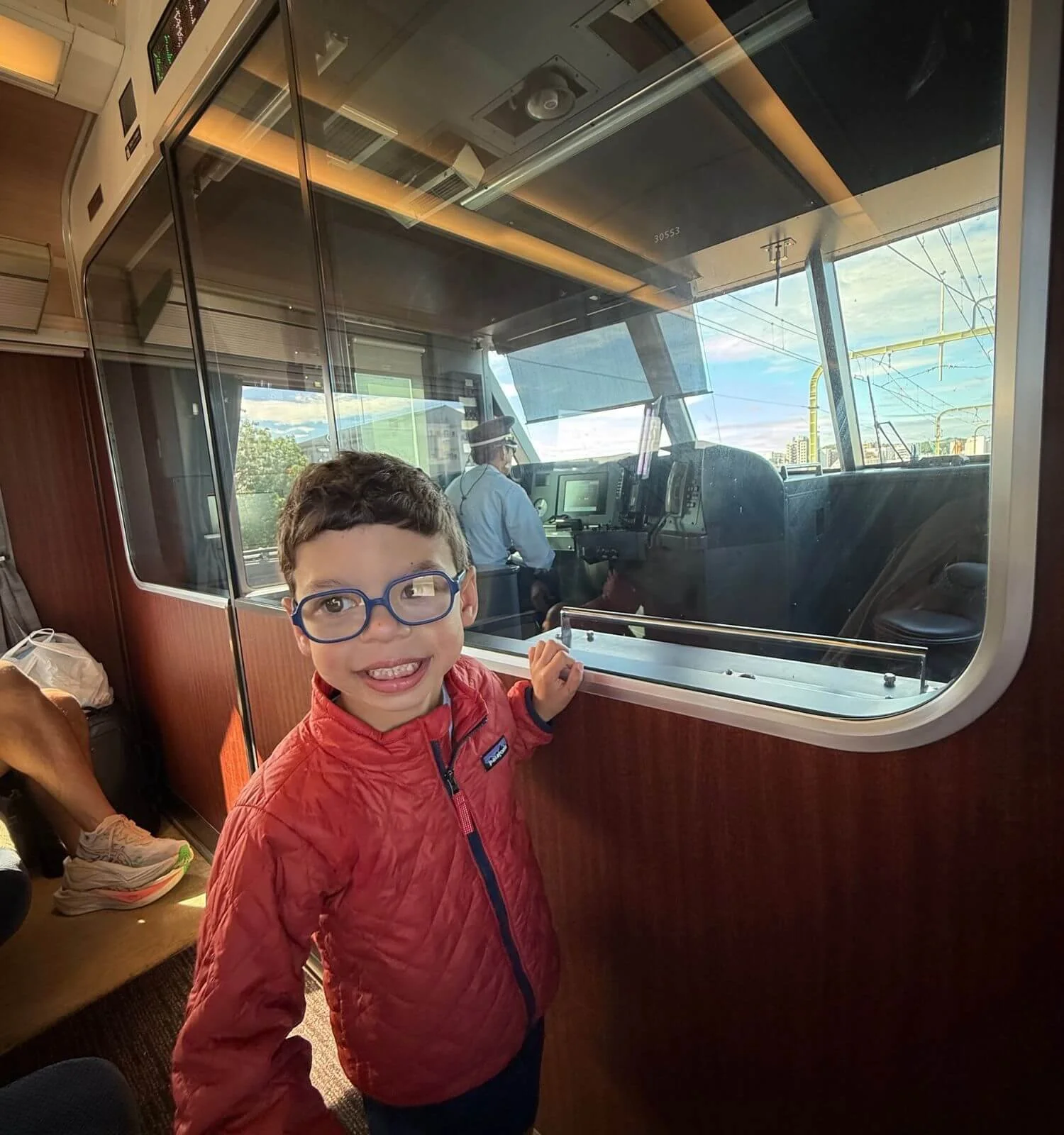
We were lucky and were able to reserve seats in the first row. Jackson LOVED this view!
The Five Steps, in the Usual Order
Most guides walk you through it starting from Hakone-Yumoto:
Hakone-Yumoto → Gora, by mountain railway (about 40 minutes)
Gora → Sounzan, by cable car (about 10 minutes)
Sounzan → Togendai, by ropeway over the Owakudani volcanic valley (about 30 minutes end to end)
Togendai → Hakone-machi or Motohakone, by pirate-ship sightseeing boat across Lake Ashi (about 30–40 minutes)
Back to Hakone-Yumoto, by bus
We actually did ours backwards from what most guides suggest, since we thought it would help avoid crowds, and because our ryokan was on the Lake Ashi side. Here’s our route, in the order we actually did it:
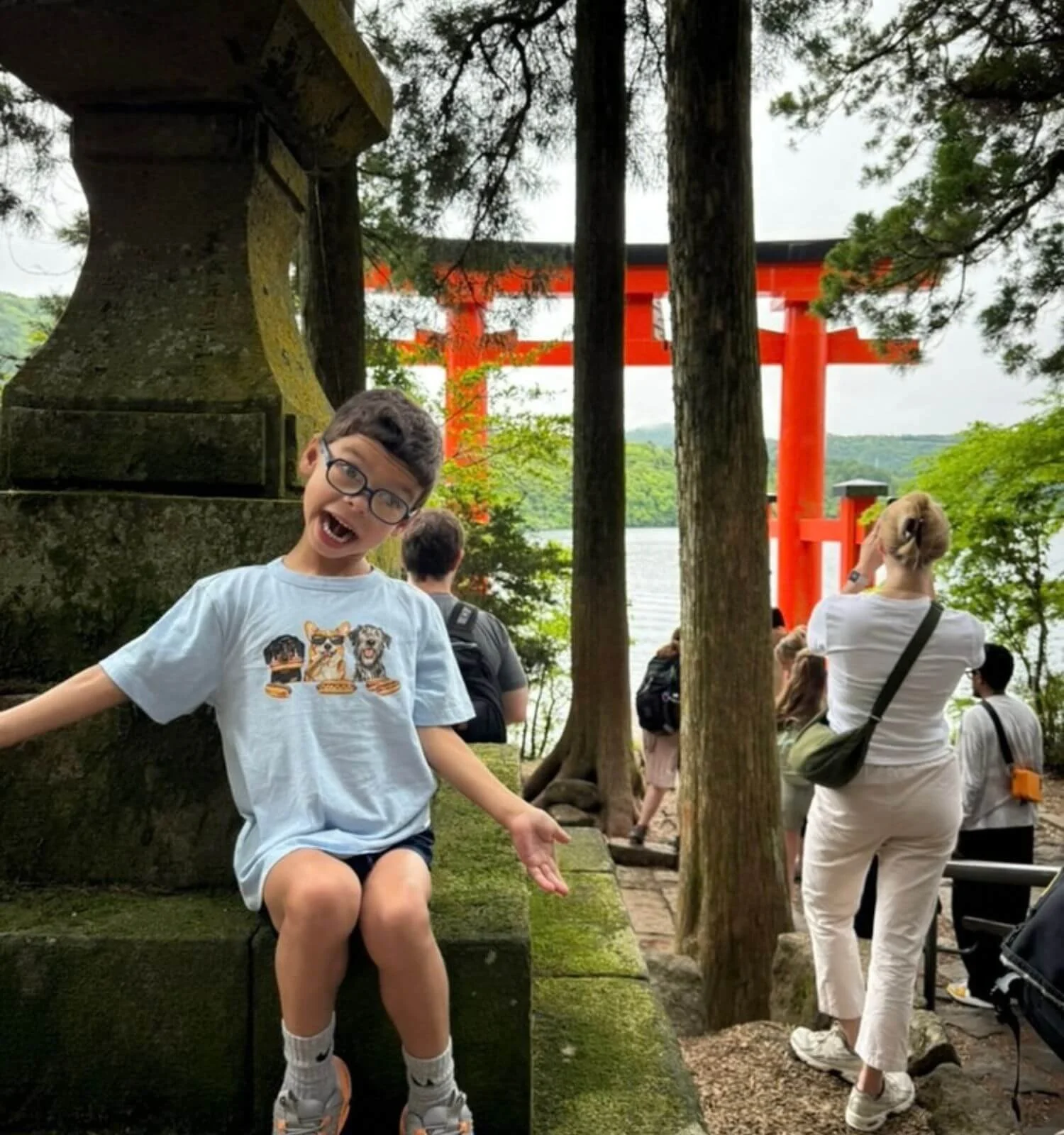
The line for a solo photo under the torii gate can be VERY long. It was long even in the bad weather when we visited, so expect a potentially longer wait on a clear day. If getting a solo shot is important to you, plan some extra time for the line.
Hakone-Yumoto → Lake Ashi, by bus.
At Lake Ashi, we saw the floating torii gate, but skipped the walk to the shrine itself because of the weather, then walked back to the pier. A quick note on the photo line: there's usually a long line of people waiting for the classic "solo shot" with the torii gate, we skipped it. If you want that exact photo and don't mind the wait, plan for it, but you can still get a great view and plenty of other angles without standing in it.
Lake Ashi → Togendai, by pirate-ship boat (we paid a little extra for first class, more on that below).
Togendai → Sounzan, by ropeway, passing over Owakudani.
Sounzan → partway toward Gora, by cable car. We got off early at one of its middle stops, since it was close to our ryokan in Sengokuhara, and took a bus the rest of the way. We never rode the final leg, the mountain railway train between Gora and Hakone-Yumoto, on this trip.
The weather was horrible on the day we visited, so it genuinely wasn’t crowded either way, so we honestly can’t tell you how much the backwards strategy actually helped. But if you’re staying somewhere on the Lake Ashi side the way we were, starting from that end and working back toward Hakone-Yumoto might make more sense for your own route too.
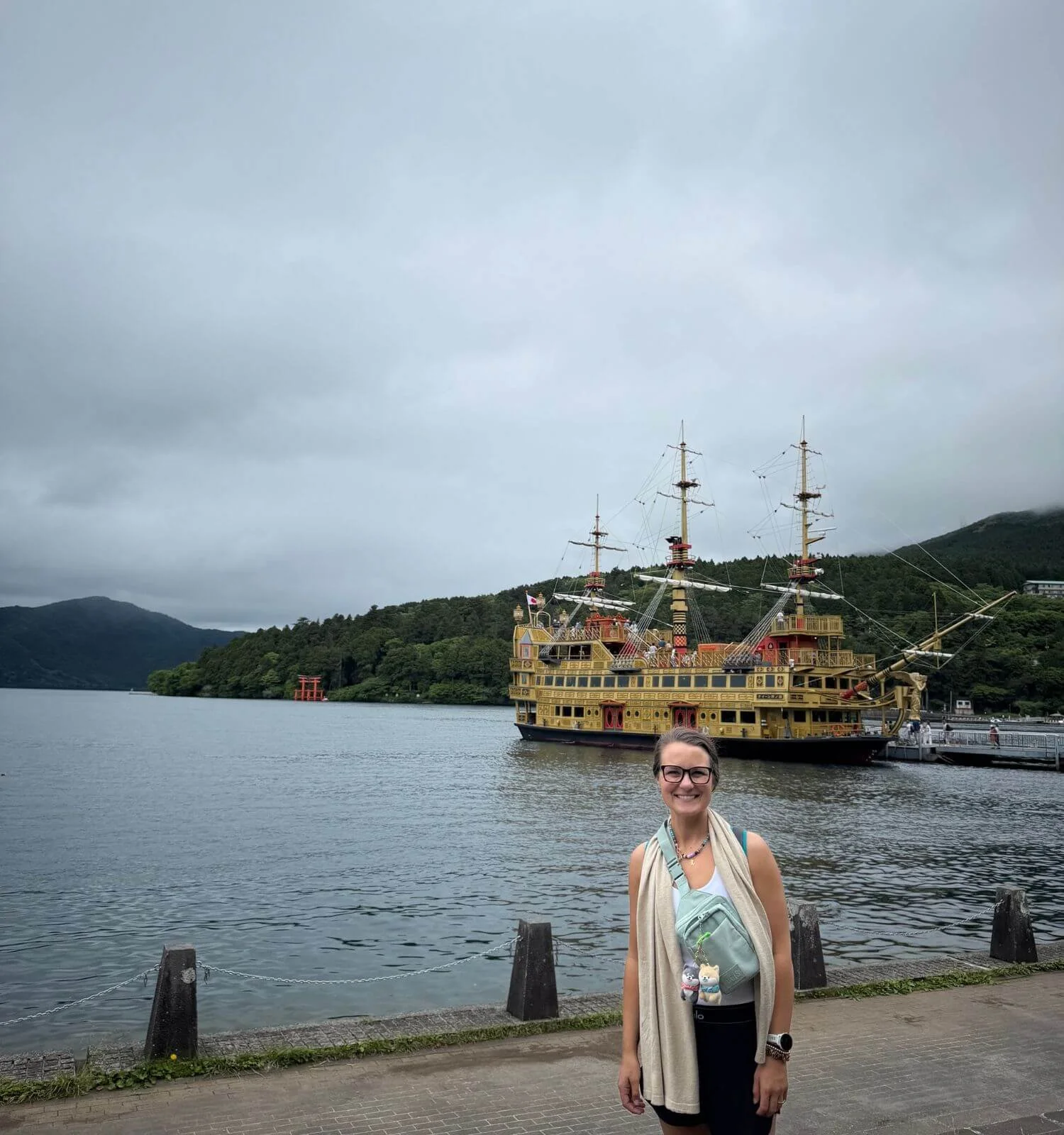
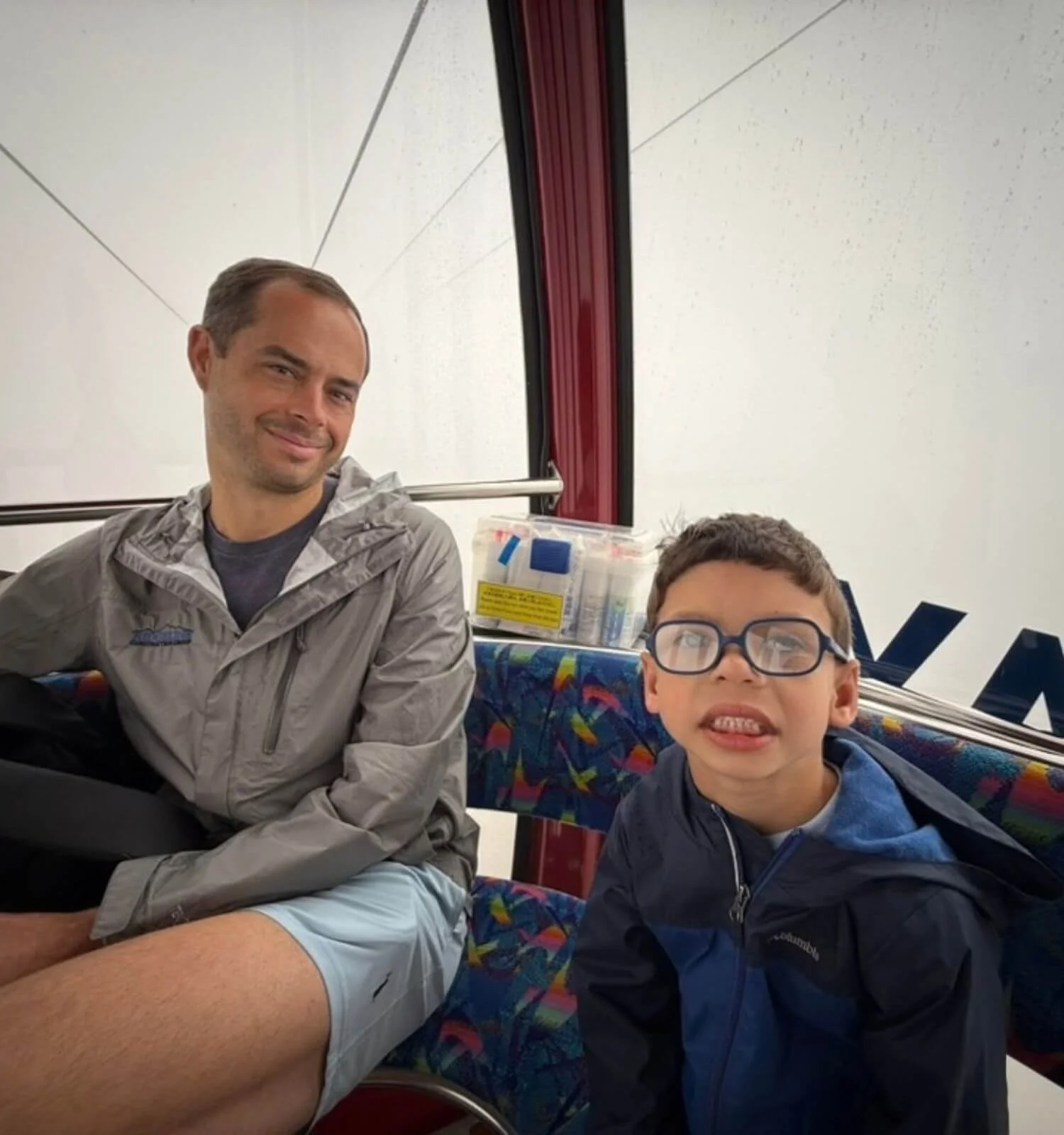
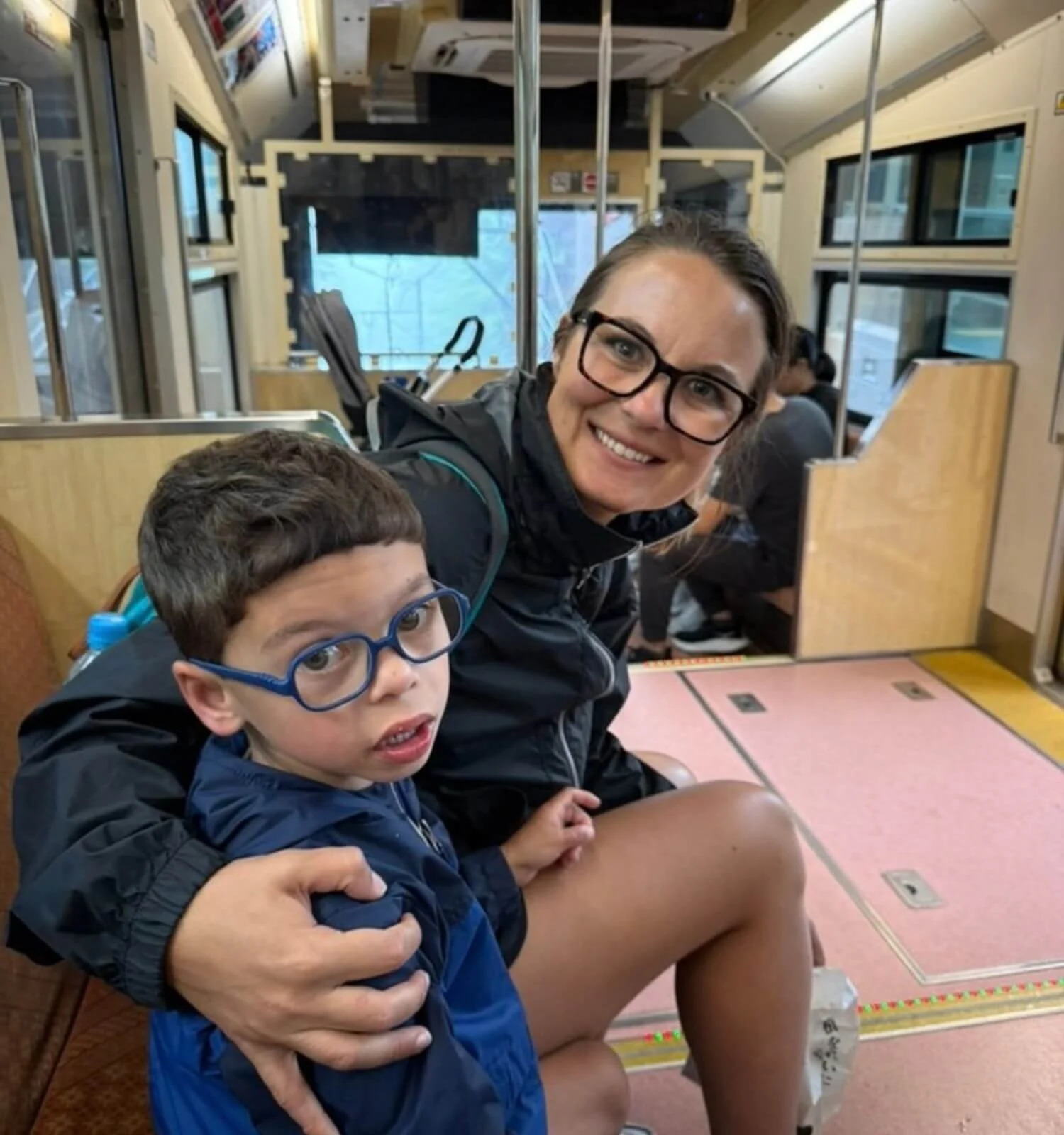
One Small Upgrade Worth It: First Class on the Pirate Ship
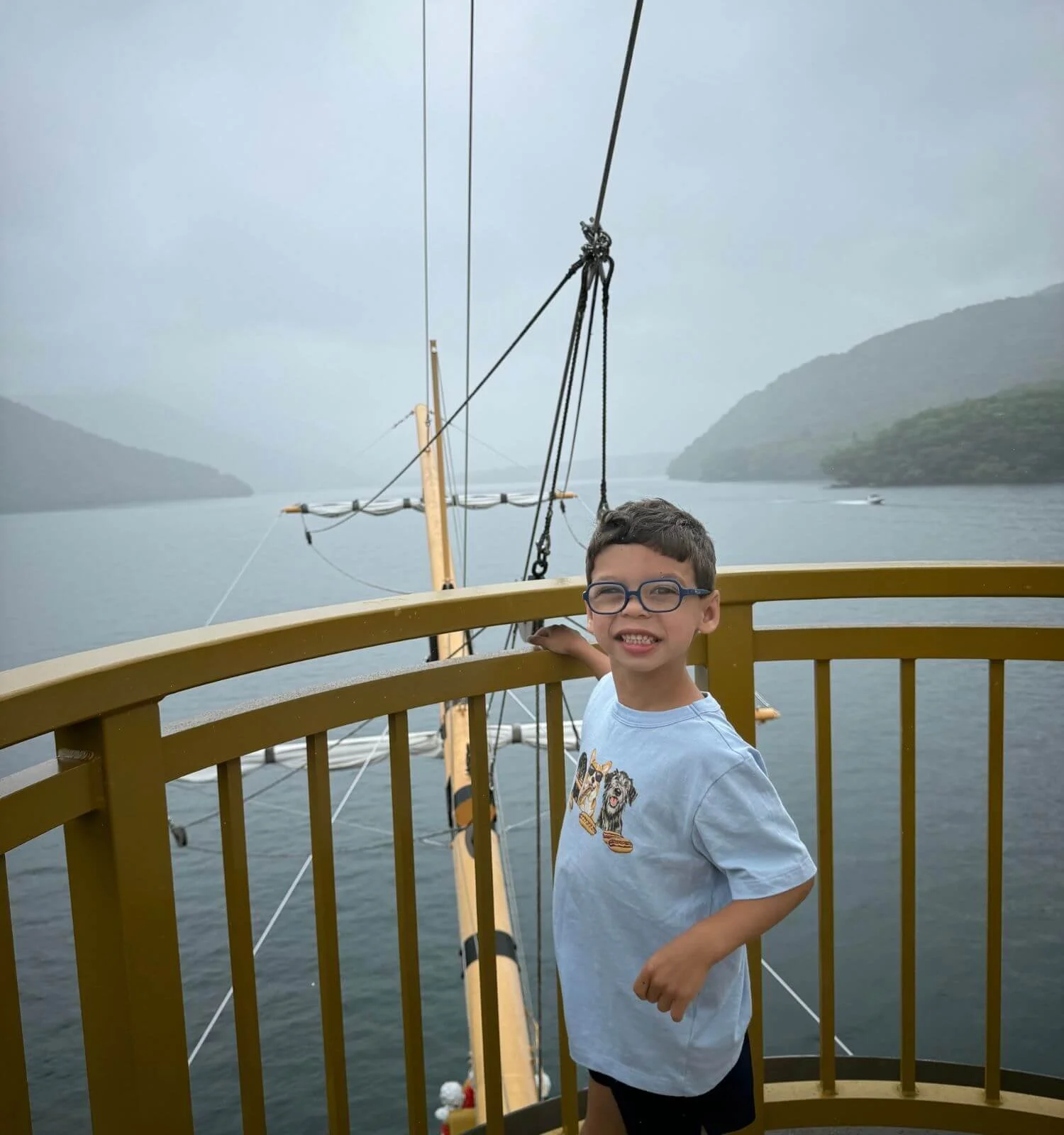
We paid a bit extra, not much, for first-class seats on the boat, and it was worth every penny. The seats themselves were nicer, but the real win was access to the crow’s nest. Jackson climbed up there and “battled pirates” with the boat’s fake cannon in the pouring rain, completely thrilled, while we stood there soaked but laughing.
Owakudani, the Ropeway Stop Almost Everyone Makes
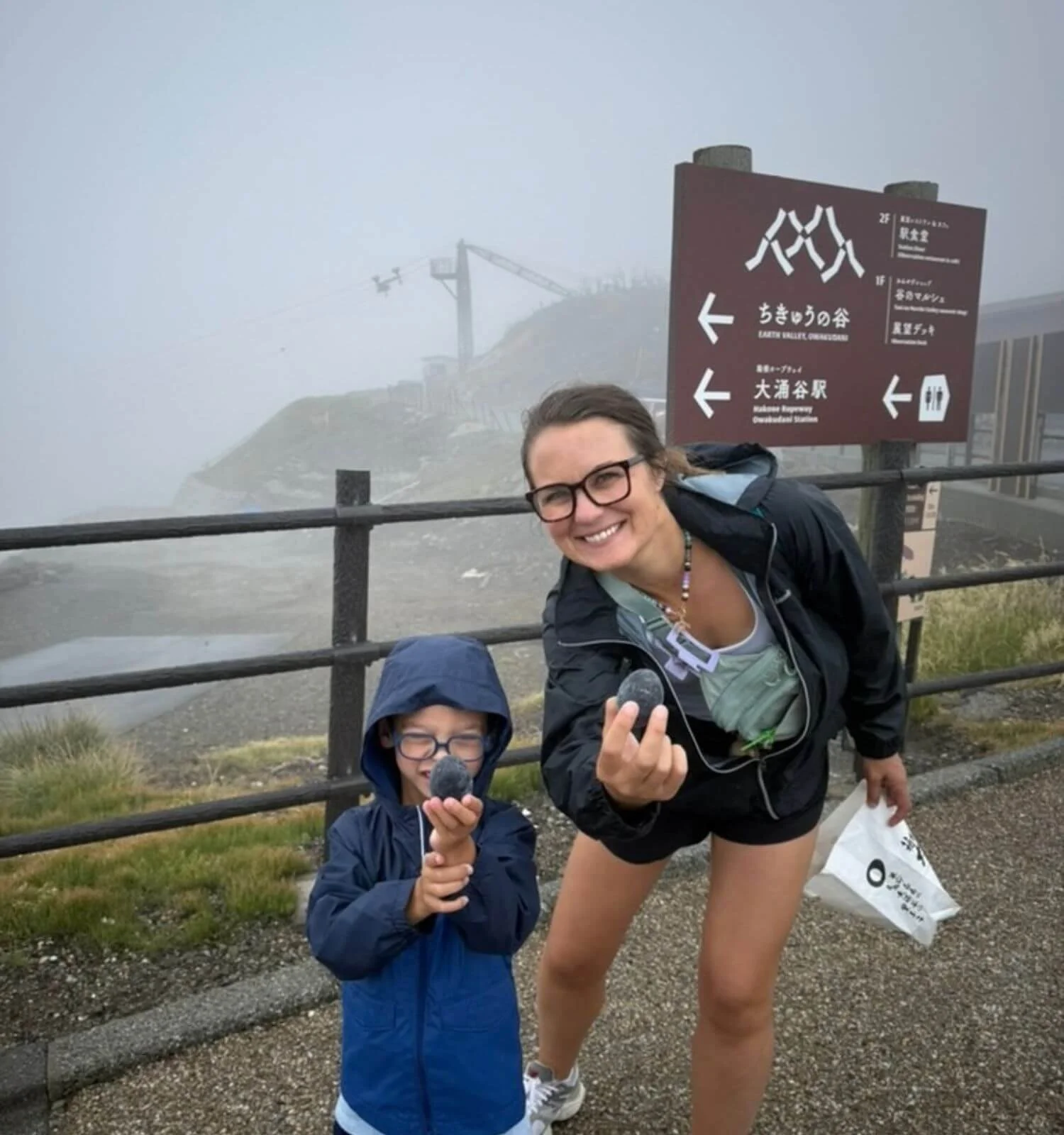
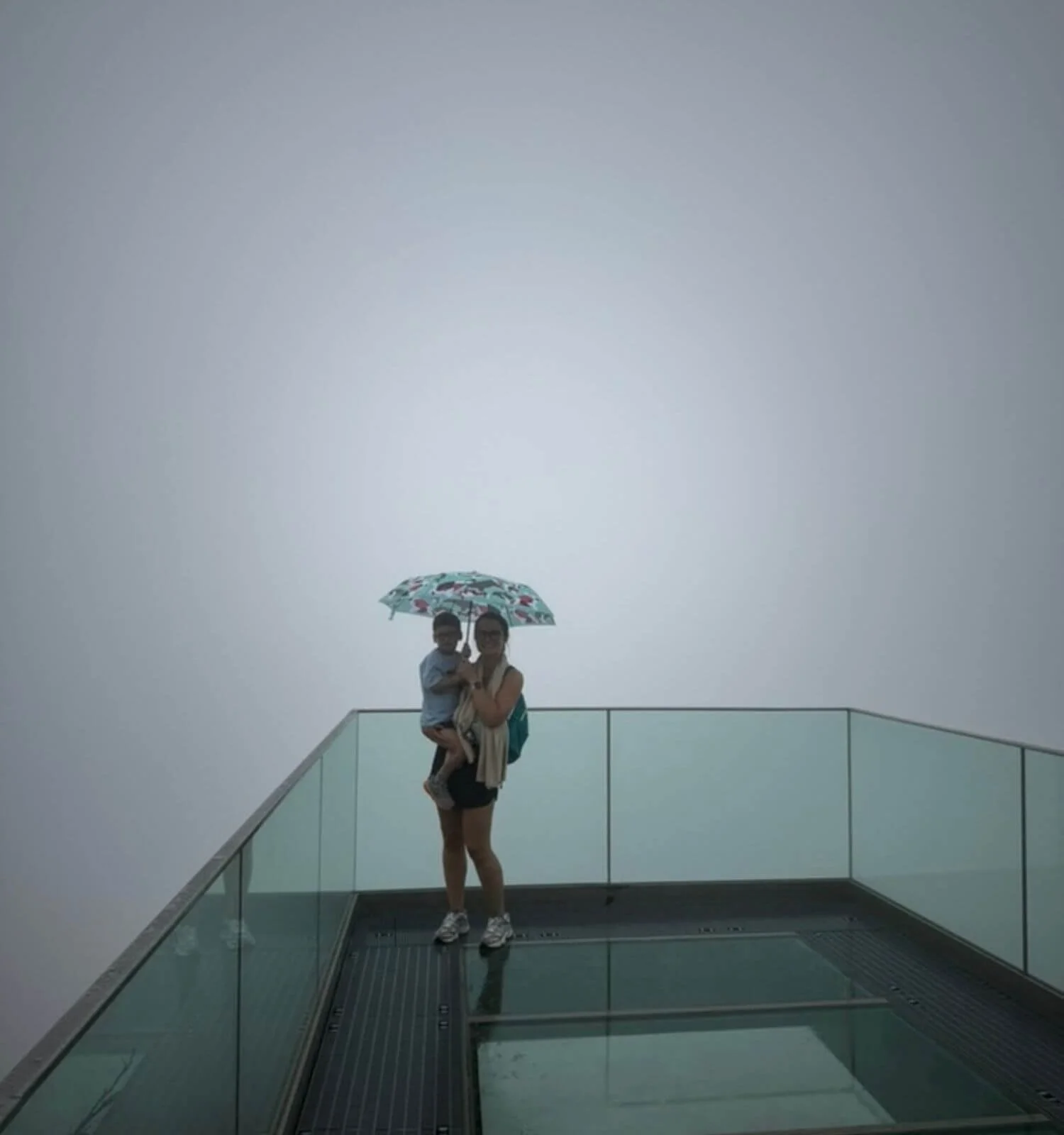
Owakudani sits partway along the Sounzan → Togendai ropeway, step 3 above (step 4 in our own backwards order). Most people get off here, look around, then catch the next gondola to continue on. It’s an active volcanic valley with sulfur vents and hot springs, and it’s famous for kuro-tamago, “black eggs,” boiled in the naturally hot, sulfuric water until the shells turn black. Local tradition says eating one adds seven years to your life. It’s also one of only two spots in Hakone where Mount Fuji is actually visible, Owakudani or Lake Ashi, so if a Fuji view matters to you, plan to get off here rather than riding straight through.
The One Thing That Matters More Than the Route: Time
A quick note before this: a ryokan is a traditional Japanese inn, common in hot-spring towns like Hakone. Everything below about check-in times and dinner windows only applies if you're spending the night in Hakone. If you're doing this as a day trip, skip ahead to "How to Pay for All of This." If you want to see the ryokan we stayed at and other family-friendly picks, we rounded them up in Where to Stay in Hakone: Our Honest Take.
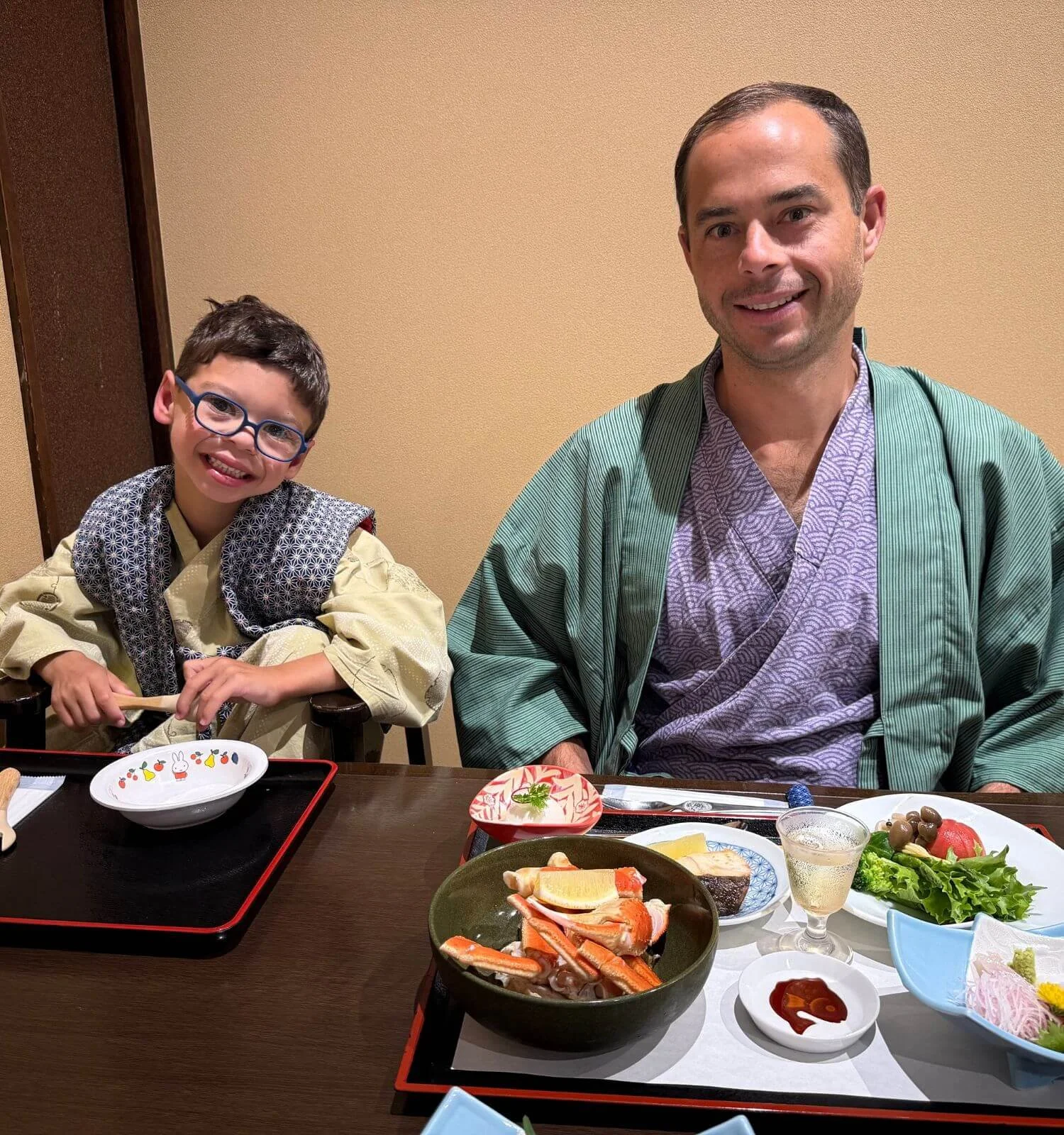
Matt and Jackson in their yukatas at our ryokan, where a traditional kaiseki dinner was included with our stay.
If you’re coming from Tokyo or another city for the day, make sure your morning train leaves early enough to complete the entire loop and still make it to your hotel or ryokan on time. Many ryokans have strict check-in windows, since they build the evening around a set dinner time, and you don’t want to be racing the clock through Owakudani because you’re worried about missing dinner.
If you’re doing the loop as a straight day trip with no hotel involved, just be sure you’re budgeting enough time to actually finish it, not just start it.
And if you’re splitting it across more than one day, have an actual plan for that, and make sure you’ve purchased the right pass for the number of days you need. Most people complete the whole loop in a single day, and a second isn’t necessary unless you’d just like to take things much slower and stay in Hakone longer.
How to Pay for All of This: the Hakone Free Pass
The easiest way to do the loop is the Hakone Free Pass, which covers the train, cable car, ropeway, and pirate-ship boat, plus buses, in one ticket. It’s sold as a multi-day pass, so if you do want to split the loop across more than one day, this is the pass to check.
Book it: Hakone Free Pass
A note on the digital pass: each traveler needs their own. If you're buying the Hakone Free Pass as a digital ticket, it has to be a live ticket displayed on that person's own phone, you can't put multiple people's tickets on one device. It also requires an active internet connection every time you display it at the gate. We didn't have to think about this ourselves, Jackson was 5 at the time, so he didn't need a pass of his own, and Matt and I each had our own phones.
If you'd rather not deal with a digital ticket at all, the pass is also available as a paper ticket, and it works like a normal ticket, no app, no phone, no signal to worry about. You can buy it at ticket machines and ticket offices at Odakyu stations, including Shinjuku Station before you even leave Tokyo, or at Odawara, Hakone-Yumoto, and Gora once you're already in the Hakone area.
Getting Back to the Shinkansen (Or Back to Tokyo)
However you end your day in Hakone, everything funnels back through one station: Odawara. Hakone-Yumoto connects to Odawara by local train in about 15 minutes, and Odawara is a stop on the Tokaido Shinkansen line.
If you’re continuing on to your next city, like we did heading to Kyoto, ride the local train from Hakone-Yumoto to Odawara, then board the Shinkansen from there.
Book it: Hakone (Odawara) → Kyoto: Shinkansen (Bullet Train) Tickets
If you’re doing this as a day trip back to Tokyo, you don’t actually need the Shinkansen at all. The Odakyu Romancecar runs directly between Hakone-Yumoto and Shinjuku, no transfer at Odawara required.
Book it: Hakone to Tokyo: Romancecar Tickets
For more on how the trains fit together across the rest of the country, we broke it all down in Riding the Shinkansen (Japan's Bullet Train) and How to Get Around Japan: A First-Time Visitor's Guide to Trains, Suica Cards, Google Maps & More.
What We Skipped, and Why
We didn’t make it to the Hakone Open-Air Museum, so we honestly can’t speak to it either way. If it’s on your list, that’s one more thing to factor into your time budget.
Set Your Expectations on Mount Fuji
If you're going to Hakone specifically to see Mount Fuji, we'd keep your expectations in check. It's genuinely possible you won't see it on the day you visit. We didn't. Rain and dense fog meant we had zero visibility the entire day. Fuji is only visible from a couple of specific spots in Hakone anyway, Owakudani and Lake Ashi, not from Hakone-Yumoto or Gora, so even on a clear day, where you are matters. You can check current visibility odds before you go at isfujivisible.com, which has a live camera and forecast specifically for the Lake Ashi view.
Our Honest Take
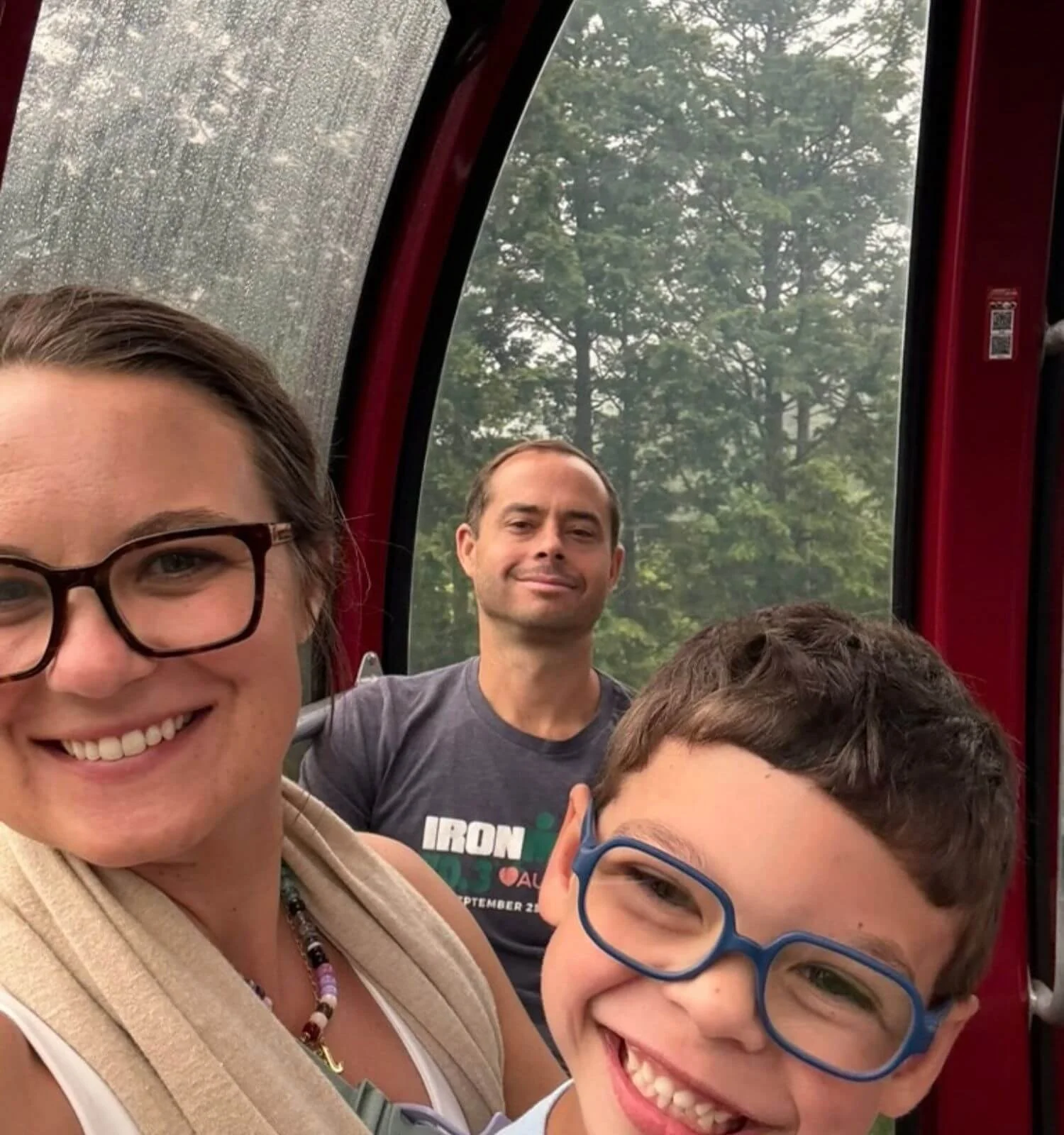
Even with no views and a fully rained-out day, our son loved every single form of transportation on this loop. The train, the cable car, the ropeway, the boat, he was fully in it the whole way, fog or not. We still recommend the loop, not for the views (which you might not get anyway) but for the slower pace and the change of scenery from the big cities. And the ryokan experience itself, separate from the loop, was one of our favorite parts of the entire trip. We go into more detail on how it went with a kid in Is the Hakone Loop Good for Kids? Our Honest Take.
Where to Next
Curious what we actually thought of the Hakone Loop with a kid? Read: Is the Hakone Loop Good for Kids? Our Honest Take
Curious what it cost us? Read: What We Spent in Hakone: A Real Cost Breakdown
Want to see where we stayed? Read: Where to Stay in Hakone: Our Honest Take
Wondering what else we did while in Japan? Read: Our 14-Day Japan Itinerary: Tokyo, Hakone, Kyoto, Hiroshima, Miyajima, Nara & Osaka