Updated November 2026.
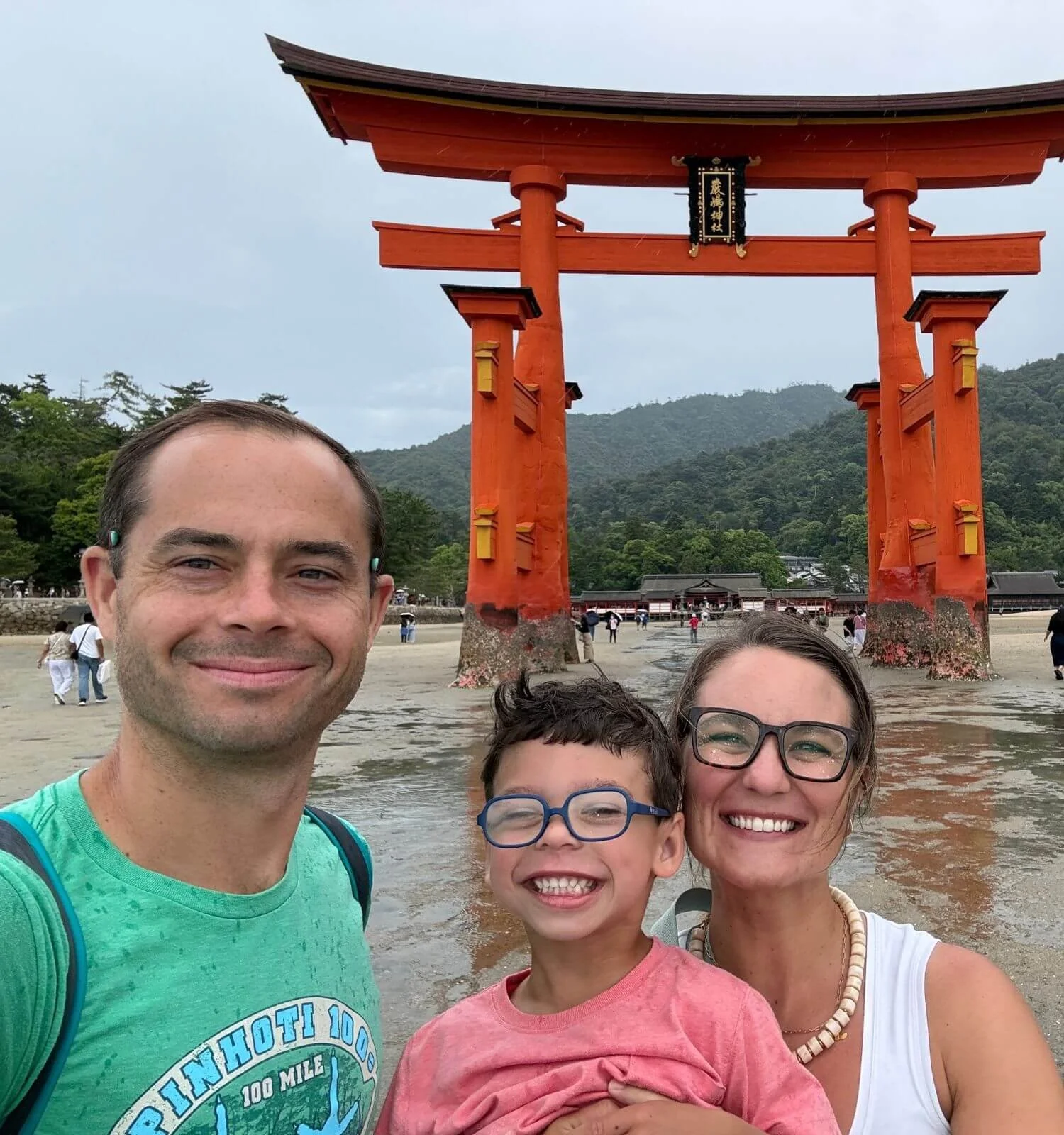
Two weeks, five cities and one well-traveled 5-year-old.
Japan was one of the best trips we have ever taken as a family, and also one of the most planning-heavy. Trains, ticket gates, tiny hotel rooms, bags, food and a new language can feel like a lot before you go, especially with a little one along.
We spent two weeks in Japan with our son Jackson when he was 5, traveling from Tokyo to Hakone, Kyoto, Hiroshima and Miyajima, Osaka and back to Tokyo, with a stop in Nara. This guide pulls together everything we think a family needs to know in one place. Each section gives you the short version, then links to the post where we go deep on that topic.
This post contains affiliate links. If you book or buy through them, we may earn a small commission at no extra cost to you. As an Amazon Associate, we earn from qualifying purchases.
- Is Japan Good for Kids?
- Best Time to Visit Japan With Kids
- Before You Go: The Need-to-Know List
- How Long to Stay and Our Route
- What a Family Trip to Japan Costs
- Where to Stay in Japan With Kids
- Getting Around Japan With Kids
- What to Pack
- Eating in Japan With Kids
- Japan City by City
- Japan Etiquette Tips for Families
- Keeping Kids Busy in Japan
- Our Biggest Tips
- FAQ
OUR TOP PICKS
Everything We Used on Our Japan Trip
Our Trip at a Glance
Who: the three of us, with Jackson at 5 years old
When: the last week of May and first week of June
How long: 14 days
Route: Tokyo, Hakone, Kyoto, Hiroshima and Miyajima, Osaka (with Nara), back to Tokyo
Luggage: carry-on only, with luggage forwarding between cities
Stroller: none (more on that below)
Getting around: Suica in Apple Wallet for local trains and buses, individual Shinkansen tickets between cities
Is Japan Good for Kids?
Yes, and it might be one of the easiest big international trips you can take with kids. Japan is clean, very safe, and set up for families in small ways that add up: convenience stores on nearly every corner, spotless public restrooms, and trains that run on time. Kids under 6 even ride most trains and buses free.
The harder parts are the pace and the walking. Japan is a walking country, the big stations are busy, and hotel rooms are small. Plan for that and it is a wonderful place to travel with kids.
Best Time to Visit Japan With Kids
We went the last week of May into the first week of June and would happily go then again. It was warm and humid, but honestly no worse than a summer day in the Southeast, and most mornings and evenings were cool. We had some overcast and drizzly days, and a typhoon approaching while we were in Miyajima changed our hiking plans.
Crowds were big but manageable, and early starts made the biggest difference. Getting to the popular sights right when they opened gave us calmer, cooler mornings and a happier kid.
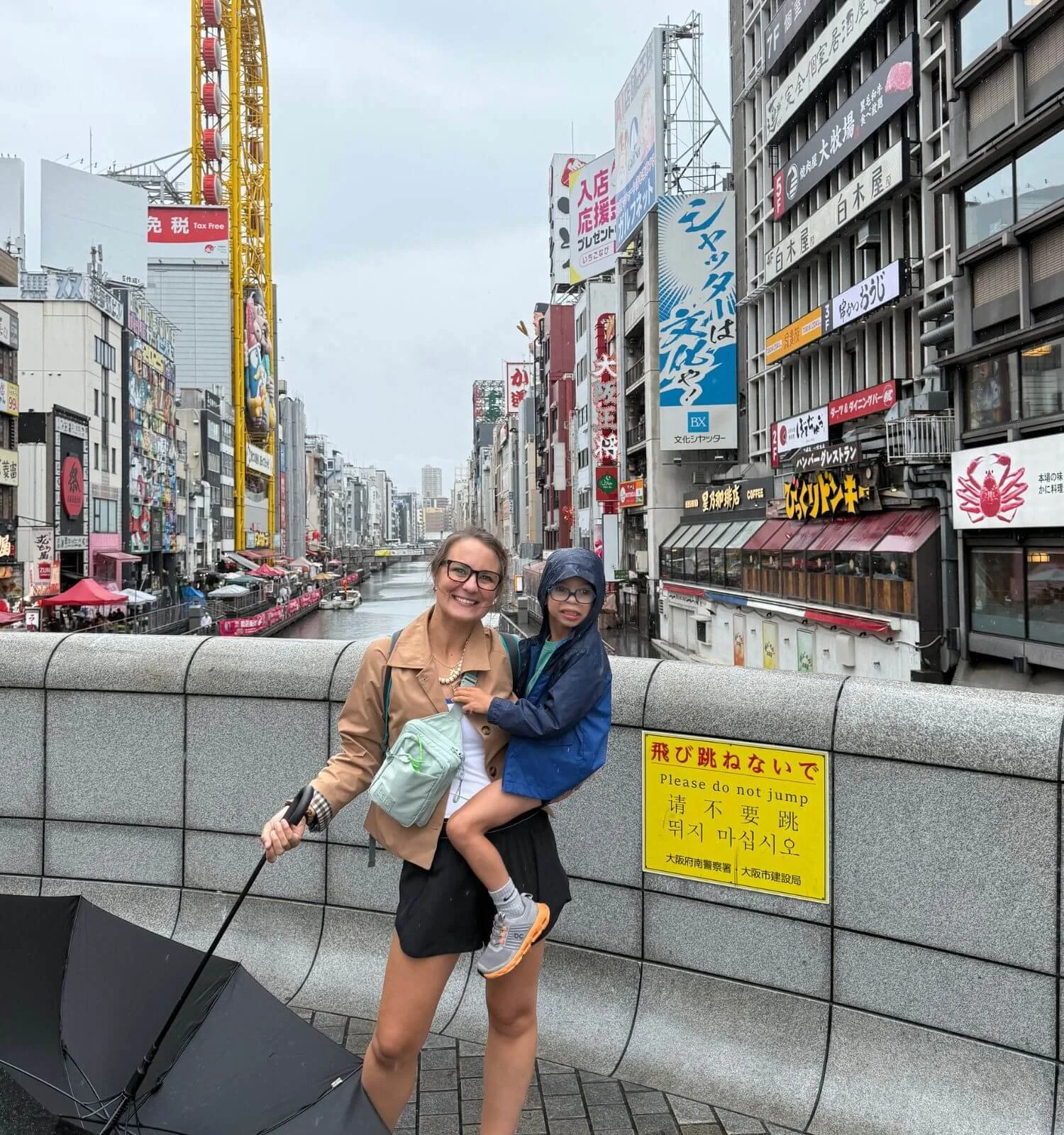
A few drizzly days didn’t stop the fun.
Before You Go: The Need-to-Know List
Passports and entry
U.S. citizens can currently visit Japan for up to 90 days as tourists without a visa. Every family member, including babies, needs their own passport.
Visit Japan Web lets you fill out your immigration and customs details online before you fly, so you scan a QR code on arrival instead of filling out paper forms on the plane. You can add your kids under your account, and each traveler gets their own code. Finish it before you land.
Carry your passport. Japanese law requires visitors to carry their physical passport at all times, not just on arrival day. We used a passport bag so ours stayed close.
Coming up: Japan plans to start an online pre-travel authorization called JESTA for visa-free visitors, including Americans. It’s expected by early 2029, and the exact start date hasn’t been announced. Nothing is required yet, but check before you book.
Japan's departure tax is built into your plane ticket, so there is nothing to pay at the airport.
Staying connected
Get an eSIM before you leave. Between Google Maps, train times, translation apps and topping up Suica, we used data constantly, and having it working the moment we landed made the airport a lot less stressful.
Money
Cards are widely accepted in cities, but still carry some yen for small shops, shrines, food stalls and some buses. 7-Eleven ATMs are an easy place to take out cash with a U.S. card.
There is no tipping in Japan. It can even cause confusion, so just say thank you.
Tax-free shopping works differently now. As of November 1, 2026, you pay the full price, tax included, at tax-free shops, then claim the tax back at customs at the airport before you fly home. Keep your passport handy when you shop, and give yourself extra time at the airport if you plan to claim a refund.
Plugs and power
Japan uses the same flat two-prong plugs as the U.S., so most phone chargers work without an adapter. Many outlets don’t have the third round hole, though, so bring a small adapter for anything with a three-prong plug.
Book ahead
Hotels and timed-entry attractions like teamLab Borderless are worth booking before you go, since popular ones can sell out, especially in peak seasons. For the Shinkansen, reserve seats so your family can sit together.
How Long to Stay and Our Route
Two weeks felt right for a first trip with a young child. It gave us time to see five cities without packing up every other day, and we built in hotel downtime most afternoons so Jackson (and we) could rest before dinner.
Our route ran in a loop: Tokyo, Hakone, Kyoto, Hiroshima and Miyajima, Osaka with Nara, then back to Tokyo near Haneda for our flight home. Moving in one direction kept train days short and meant we never backtracked.
Handling Jet Lag with Kids
Instead of fighting the jet lag, we used it to our advantage. We were all up early those first few days, so we got out the door early and saw the popular sights before the crowds showed up. Then we went to bed once it got dark. After a day or two, we were all adjusted to the new time zone.
Planning Your Own Japan Trip?
We’ve already done the planning. Our Ultimate 14-Day Japan Travel Guide is a ready-to-follow itinerary from arrival to departure.
What an incredibly useful tour book!
Guidebook reader reviewTraveling gluten-free? The Gluten-Free Edition adds restaurants, cafés, and bakeries to every day.
What a Family Trip to Japan Costs
Japan is easier on the budget than many families expect, especially if you lean on convenience store breakfasts and transit instead of taxis. Where your money really goes is hotels and the Shinkansen. We tracked every yen we spent, city by city, so you can see the real numbers for a family of three.
What We Spent in Each City
Where to Stay in Japan With Kids
Japanese hotel rooms are small, so it is worth paying attention to room size and bed setup when you book for three or more. We looked for clean, safe, well-reviewed places close to a train station, since being able to walk back for an afternoon break mattered more to us than fancy amenities.
Stay near a station. It makes rest breaks, luggage and early starts so much easier.
Try a ryokan for a night. We stayed in a traditional ryokan in Hakone, onsen and all.
Look for laundry. We did laundry once, at the end of our Kyoto stay, running a load while we used the hotel onsen.
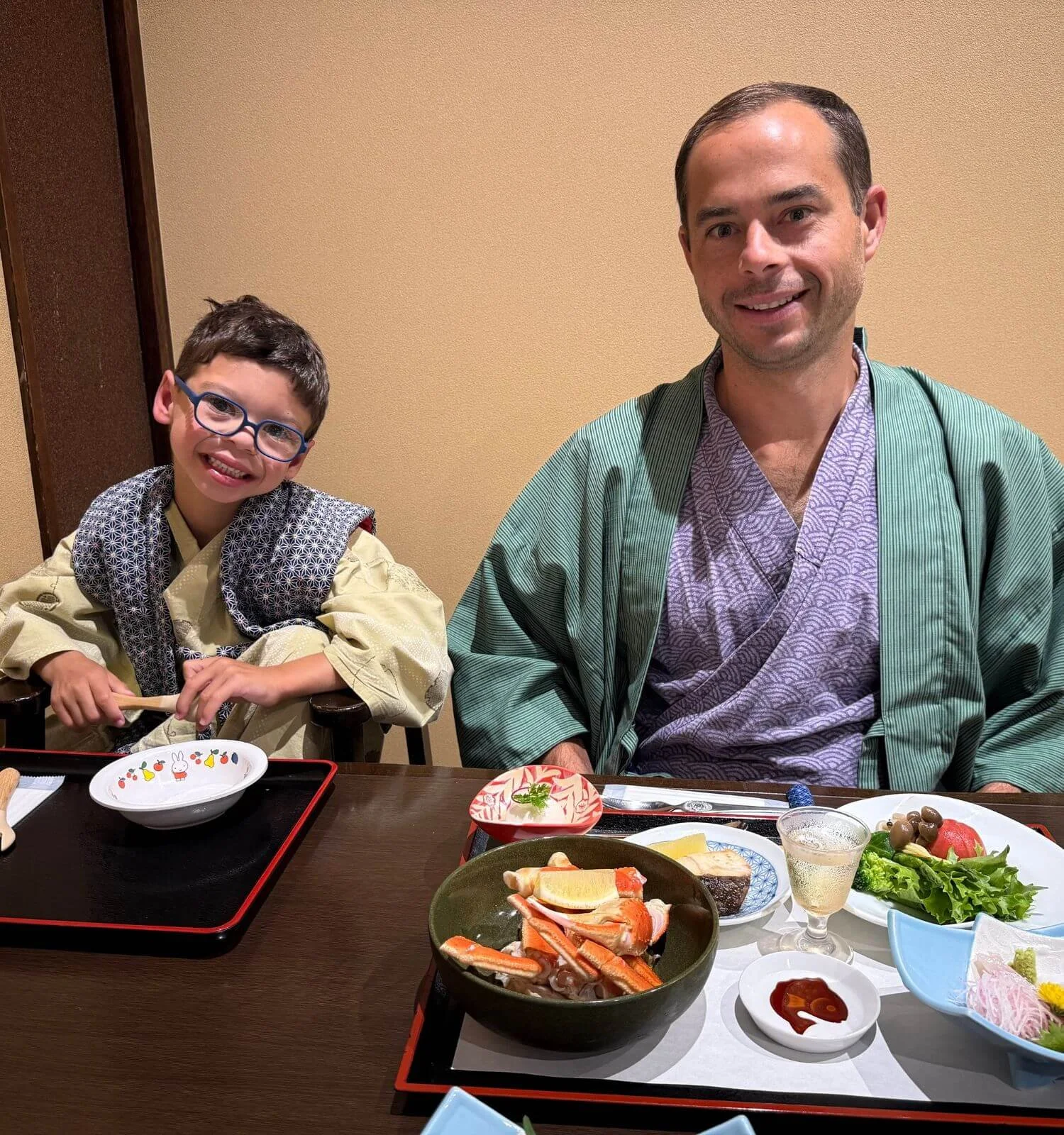
Our stay at a ryokan in Hakone was one of our favorite experiences of the trip!
Where to Stay With Kids
Getting Around Japan With Kids
Suica for local trains, buses and convenience stores
Suica was the single most useful thing we had in Japan. We added it to Apple Wallet before we left, linked a credit card for quick top-ups, and tapped it for trains, subways, buses, the Hiroshima streetcar and our convenience store breakfast every morning.
Kids and train fares
Kids under 6 ride free on local trains and buses with a paying adult (up to two young kids per adult). Jackson walked right through the ticket gates with us. Kids 6 to 11 pay a child fare, about half the adult fare. The catch is that they need a child IC card to get it. Buy one at a staffed station counter with your child’s passport, because a regular Suica charges the full adult fare.
The Shinkansen (bullet train)
We bought individual Shinkansen tickets between cities instead of a Japan Rail Pass. We reserved two seats side by side so we could sit together, and Jackson rode on our laps, which is free for kids under 6 as long as they do not take their own reserved seat. Our rides were short enough that this worked well, and they doubled as rest time after long walking days.
Hold onto your paper Shinkansen ticket until you are through the exit gate. You need it to get out.
Taxis and car seats
Taxis are clean and safe, but most don’t have car seats. We mostly stuck to trains and buses, which worked for everything on our route.
Luggage forwarding (our biggest travel hack)
Instead of hauling bags onto trains, we sent our luggage ahead from hotel to hotel three times, carrying just a small overnight bag for Hakone and Miyajima. It was easily the best decision of the trip. Ask your hotel front desk; they handle it.
Strollers and walking
We did not bring a stroller. We rented one briefly from a hotel, but it was more annoying than just carrying Jackson now and then, so we gave it back. Be ready for a lot of walking, plenty of stairs, and crowded stations where a stroller slows you down.
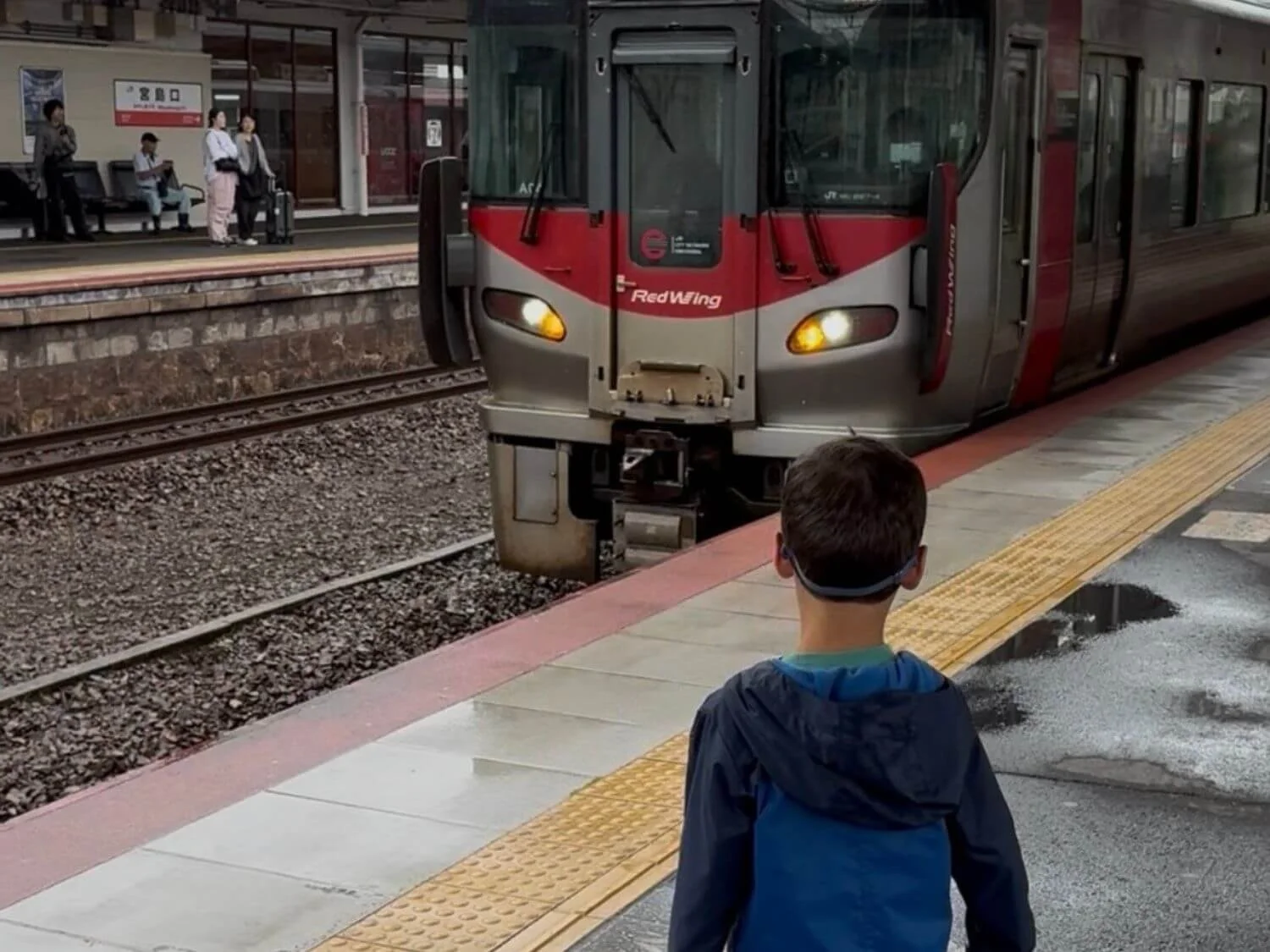
Watching the trains come in, one of our everyday moments in Japan.
What to Pack for Japan With Kids
We traveled for 14 days carry-on only, and we would do it again. Japan has convenience stores and drugstores everywhere, so you can pick up almost anything you forget. The things we were most glad to have: two pairs of comfortable shoes each, a lightweight shawl for cool mornings and temples, and a passport bag.
Eating in Japan With Kids
Food in Japan is easy with kids. Convenience stores like 7-Eleven, Lawson and FamilyMart were our breakfast stop almost every morning, with rice balls, yogurt, smoothies and coffee all in one quick trip. For lunch and dinner, many restaurants have picture menus or plastic food displays out front, which makes ordering easy even if you do not speak Japanese.
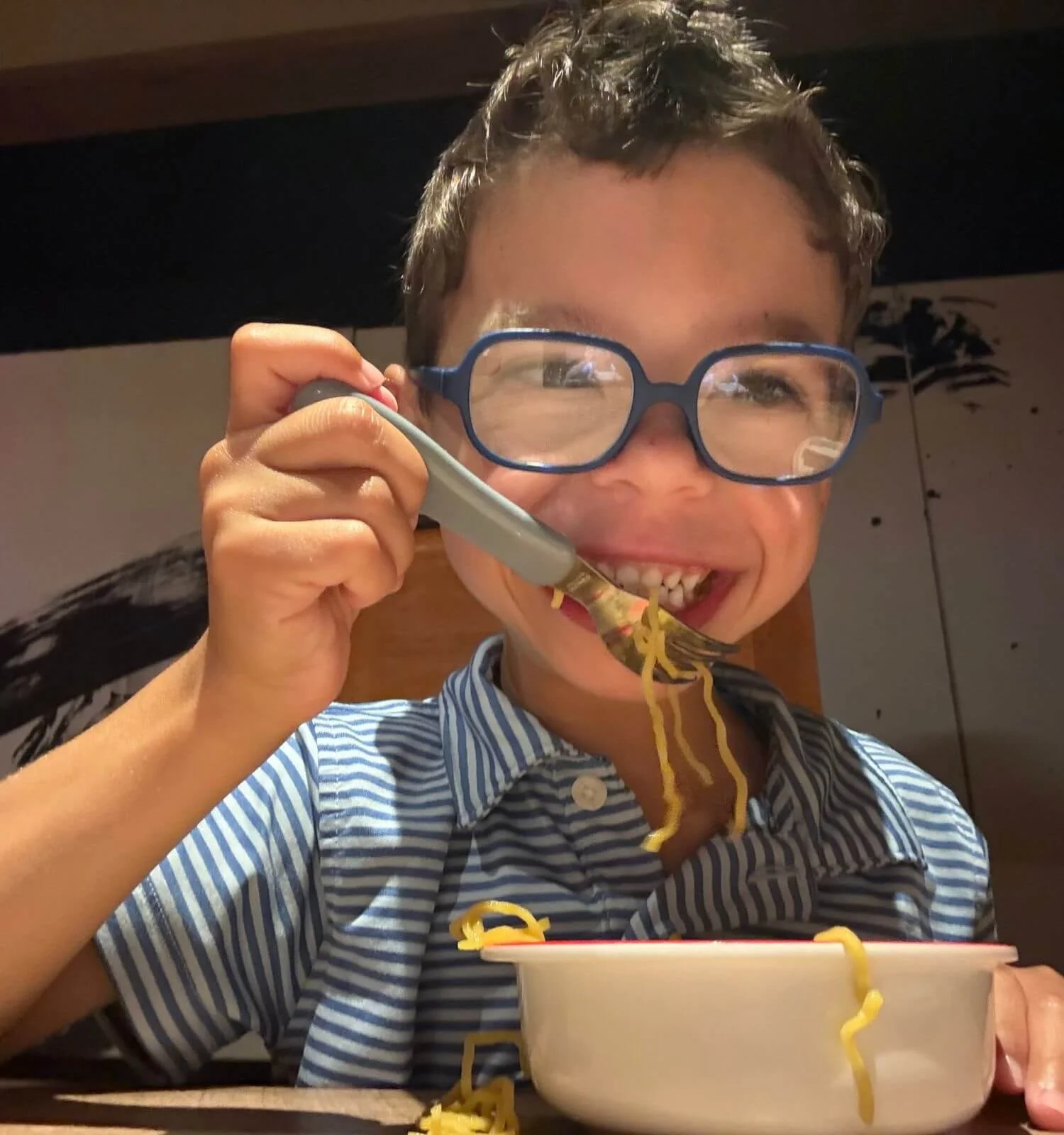
If our picky eater can find something to eat in Japan, yours can too!
Eating gluten-free in Japan
Two of the three of us eat gluten-free, and while it takes more planning in Japan, it is very doable. Soy sauce, which usually contains wheat, is in a lot of dishes, so we researched restaurants ahead of time. Of all the cities, Osaka was the easiest for us to eat gluten-free, and Kyoto had lots of good options. Our free gluten-free dietary card is a good place to start.
Eating Gluten-Free?
Build a personalized dietary card to show your server, so the kitchen knows exactly what you can't eat. The card is in English, so pair it with a translation app if you need it in Japanese. Always double-check ingredients too.
Japan City by City
Tokyo
Huge, exciting and surprisingly easy with kids once you have Suica sorted. We started and ended our trip here.
Hakone
A slower, scenic change of pace after Tokyo, with mountain views and our ryokan night.
Kyoto
Temples, shrines and old streets. Go early, because the famous sights get busy fast.
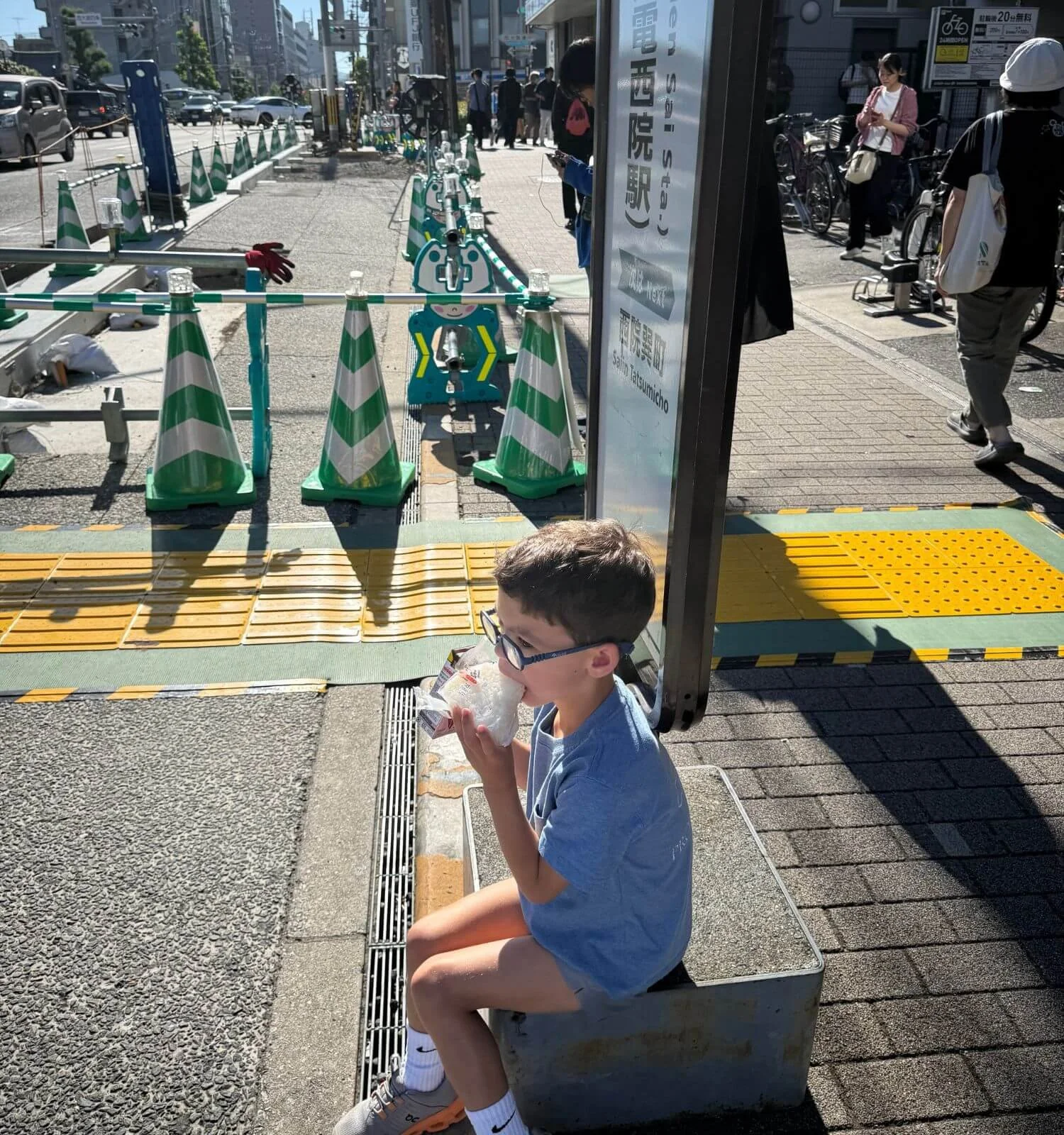
Kyoto is a bus city, and Suica worked on every one we took.
Hiroshima and Miyajima
A meaningful history stop in Hiroshima, then a night on Miyajima Island with its famous floating torii gate and friendly deer.
Osaka
Fun, food-focused and easygoing. Osaka was our easiest city for gluten-free eating and a great base for Nara.
Nara
Home of the famous bowing deer and huge temples, all within reach of Osaka.
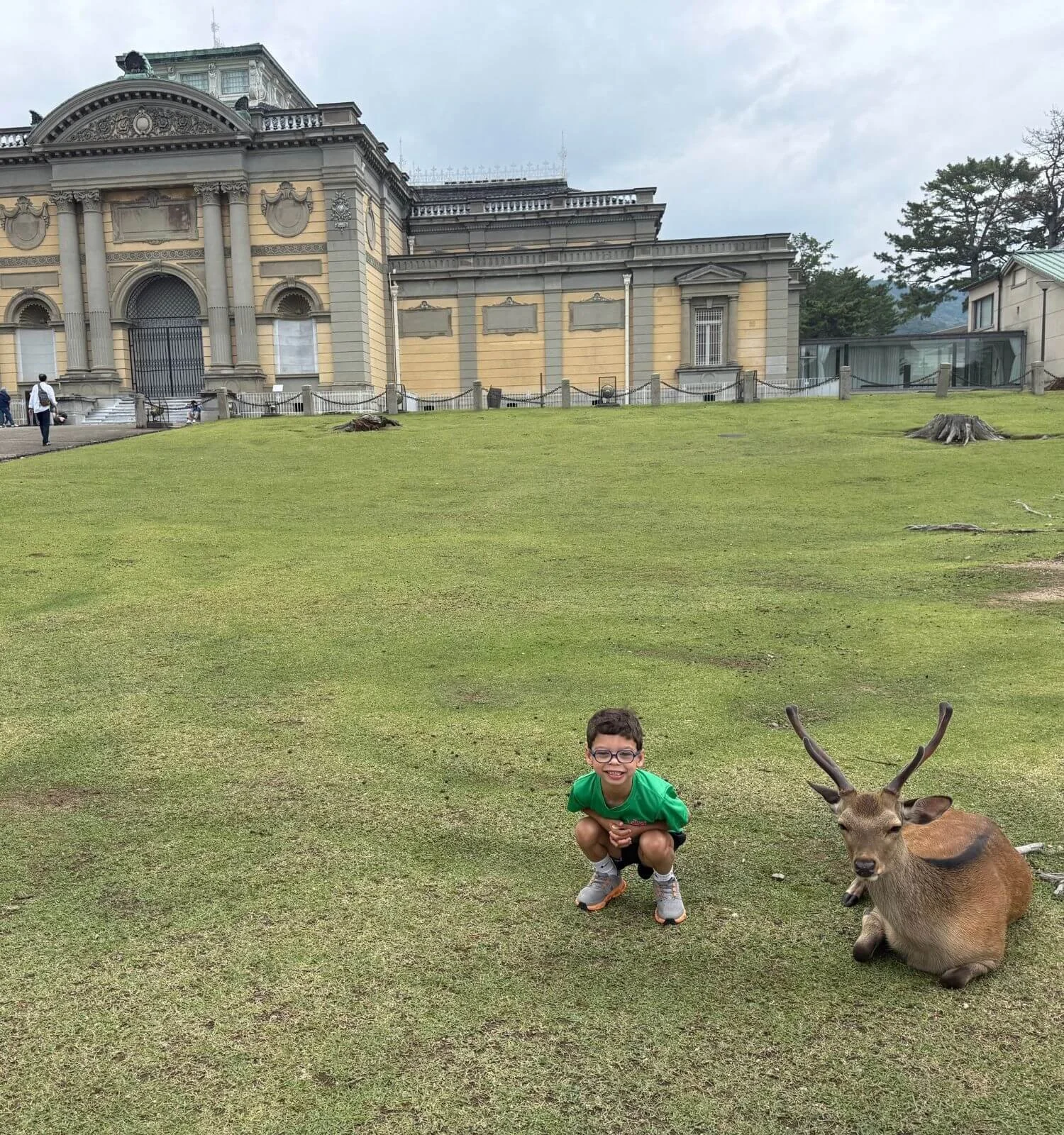
Jackson with one of his friends from Nara.
Japan Etiquette Tips for Families
Keep it quiet on trains. Talking quietly is the norm, and phone calls are a no. Keep kids' videos on low or use headphones.
Carry your trash. Public trash cans are rare, so bring a small bag and toss things at your hotel or a convenience store.
Shoes off in ryokan, some restaurants and temple buildings. Easy-on shoes help a lot with kids.
Stand on the correct side of escalators. Watch what locals do, since it differs by city.
No eating while walking in most places. Eat by the convenience store or vending machine where you bought it.
Good to know with kids
Public restrooms are everywhere and spotless. Many stations, malls and department stores have baby changing areas and nursing rooms.
Japan is very safe, but big stations are packed. Pick a meeting spot and keep little ones close at rush hour.
Emergency numbers: 110 for police, 119 for an ambulance or fire.
Keeping Kids Busy in Japan
Long train rides and restaurant waits go better with something to do. We made a free printable activity pack for kids traveling in Japan, with extra pages for toddlers.
A Few of Our Biggest Tips for Japan With Kids
Set up Suica in Apple Wallet before you land.
Forward your luggage between cities and travel light.
Start early to beat crowds and heat.
Build in afternoon downtime at the hotel.
Reserve Shinkansen seats so you can sit together.
Stay near train stations.
Use convenience stores for easy breakfasts and snacks.
Bring two pairs of comfortable shoes per person.
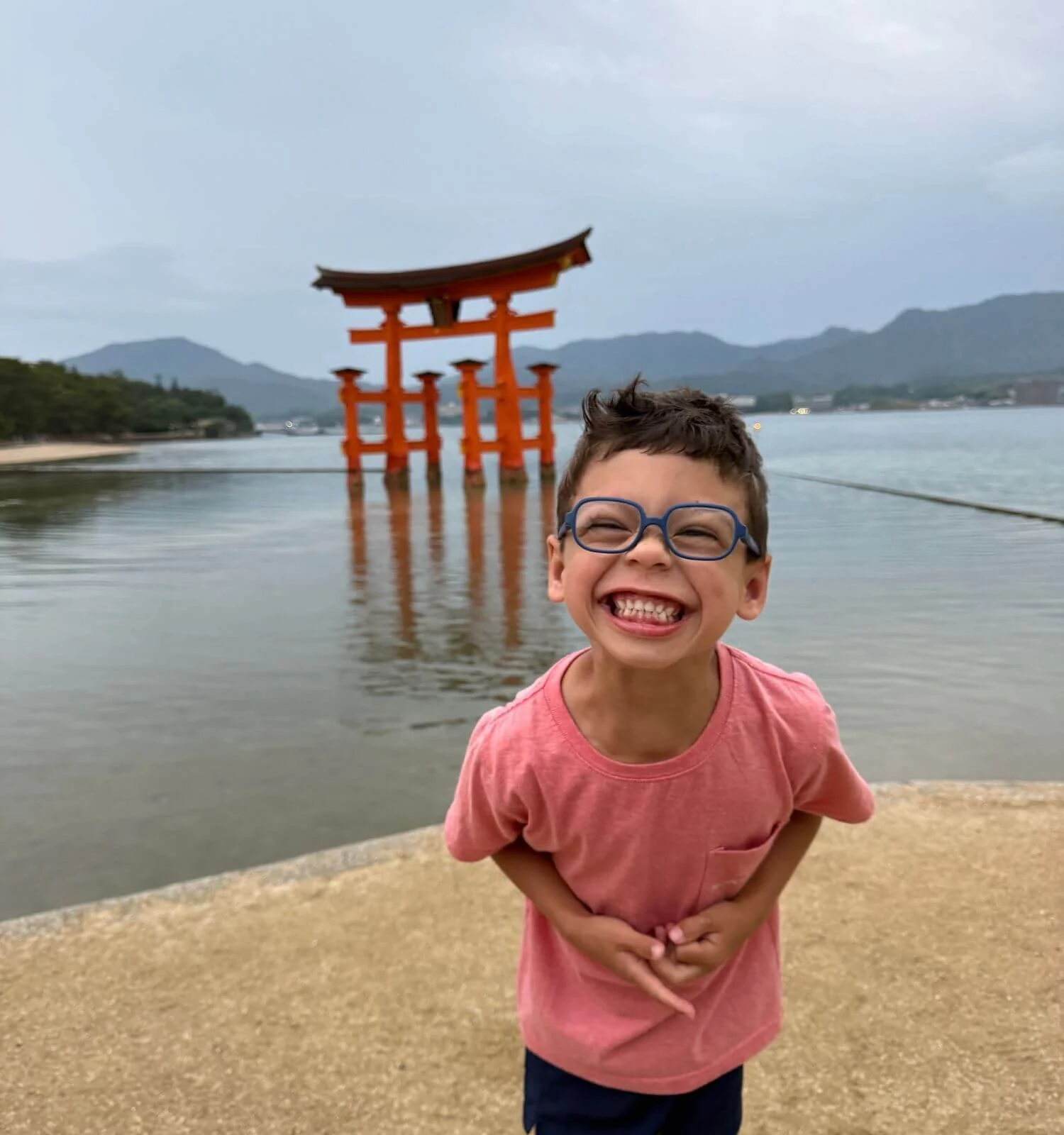
Trust us, your kid will have the best time!
Japan With Kids FAQ
Is Japan good for kids?
Yes. It’s clean, very safe, and easy to get around, with convenience stores and spotless restrooms everywhere. The biggest adjustments are the amount of walking and small hotel rooms.
How many days do you need in Japan with kids?
Two weeks worked well for us with a 5-year-old. It gave us time for five cities with afternoon downtime built in.
Do kids ride free on trains in Japan?
Kids under 6 ride free on local trains and buses with a paying adult, up to two per adult. On the Shinkansen, they ride free on your lap if they don’t take their own reserved seat.
Do you need a stroller in Japan?
We didn’t bring one and didn’t miss it. Stations are crowded and full of stairs, so for kids around 5 and up, a carrier or the occasional piggyback ride is often easier.
Is the JR Pass worth it for families?
It wasn’t for our route. We bought individual Shinkansen tickets, which worked out better for a one-way loop, but it depends on how much distance you cover.
Do I need cash in Japan?
Cards work in most places in the cities, but carry some yen for small shops, shrines, food stalls, and some buses. 7-Eleven ATMs take U.S. cards.
More From Our Japan Trip
This guide links to every deep dive we have written about Japan. You can also find them all in one place on our Japan page.

Your Japan Trip, Already Planned
Skip the hours of research. Our Ultimate 14-Day Japan Travel Guide is the exact route our family followed, laid out day by day from arrival to departure, so you can book with confidence and enjoy the trip.
What an incredibly useful tour book!
Guidebook reader reviewThe Full 14-Day Route
Every stop, every train, and what to book ahead, planned for families.
See the Standard Edition →The Route Plus Where to Eat
Everything in the Standard Edition, plus gluten-free restaurants, cafés, and bakeries for every day.
See the Gluten-Free Edition →Not sure which one fits? Compare both guidebooks
Planning Japan? Keep It All in One Place
Hotels in every city, train legs, timed tickets, and a packing list for the whole crew add up fast. Our free Trip Planning Command Center keeps it organized so you can focus on the fun part.
- Plan each day, city by city
- Track hotels, trains, and tickets you've booked
- Keep everyone's packing in one list
Get the Free Trip Planner →